You’re standing in the grocery store.
You see bacon.
One label says “cured.”
Another says “uncured.”
You pause and think:
“Wait… what does uncured meat mean?”
Is it raw?
Is it healthier?
Or is it just smart marketing?
You’re not alone. Many shoppers feel confused when they see uncured meat labels on bacon, ham, hot dogs, and deli meats. Some believe uncured means chemical-free. Others think it means untreated or unsafe.
This guide clears everything up.
In simple words.
No food science degree needed.
By the end, you’ll fully understand what does uncured meat mean, how it’s made, whether it’s healthy, and how it compares to cured meat.
What Does Uncured Meat Mean?
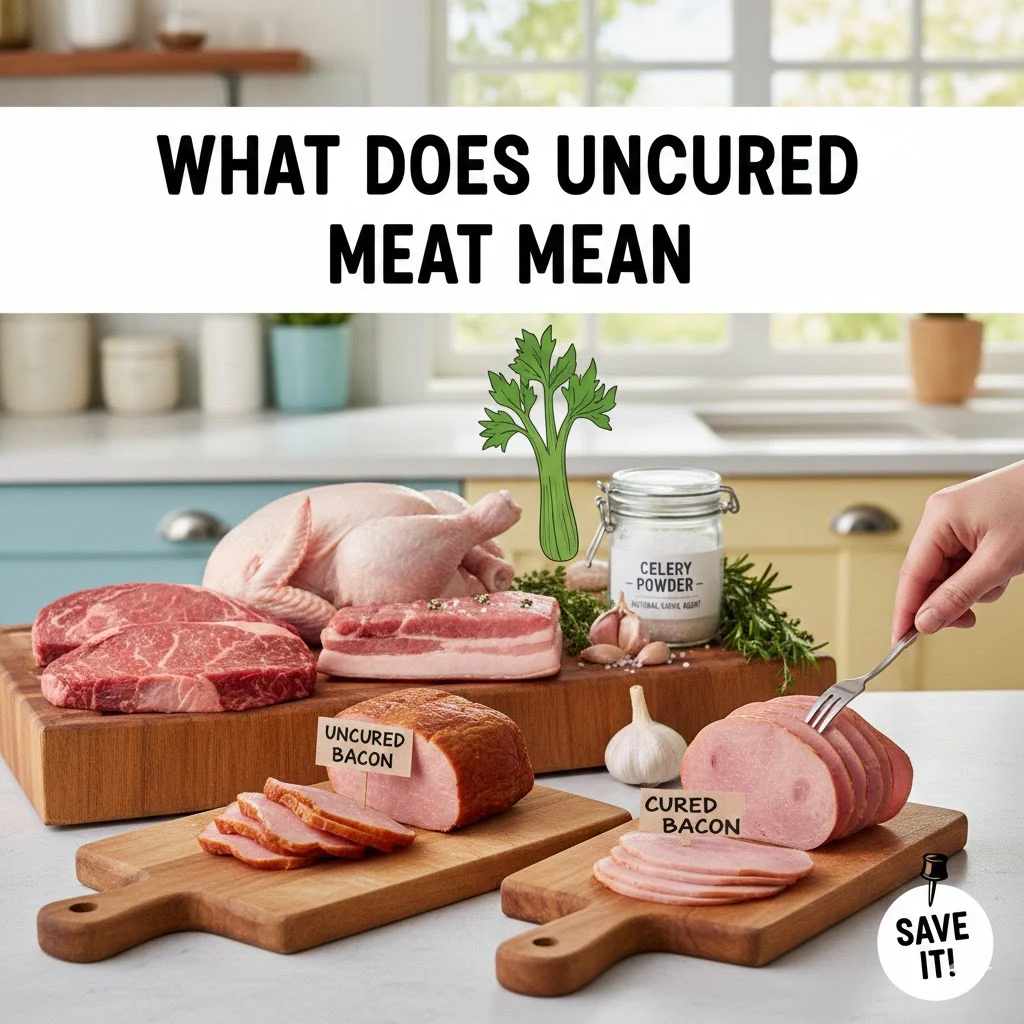
Uncured meat means meat that is not preserved using synthetic curing chemicals, such as sodium nitrite or sodium nitrate.
But here’s the twist 👇
Uncured meat is still preserved.
Instead of artificial curing salts, uncured meat uses natural sources of nitrates, usually from:
- Celery powder
- Celery juice
- Sea salt
- Natural spices
So while it’s called uncured, the meat still goes through a curing process—just with naturally occurring ingredients.
Simple Definition
Uncured meat = meat cured with natural ingredients instead of synthetic chemicals
Why Is It Called “Uncured” If It’s Still Cured?
This confuses almost everyone.
The term “uncured” is a labeling rule, not a literal description.
According to food regulations:
- If meat uses synthetic nitrates or nitrites, it’s labeled cured
- If meat uses natural nitrate sources, it must be labeled uncured
So the name exists because of ingredient sources, not because curing didn’t happen.
👉 Key point:
Uncured meat is cured — just naturally.
What Is Cured Meat?
To understand uncured meat better, let’s quickly explain cured meat.
Cured meat is preserved using:
- Sodium nitrite
- Sodium nitrate
- Artificial curing salts
These chemicals:
- Prevent bacteria growth
- Add pink color
- Improve shelf life
- Enhance flavor
Common cured meats include:
- Bacon
- Ham
- Sausages
- Salami
- Pepperoni
Curing has been used for thousands of years to keep meat from spoiling.
How Uncured Meat Is Made
The process is simple.
Step-by-Step Process
- Fresh meat is prepared
- Natural curing agents are added
- Meat rests to absorb flavors
- Nitrates convert into nitrites naturally
- Meat is cooked or packaged
Common Natural Ingredients Used
- Celery powder (most common)
- Celery juice concentrate
- Cherry powder
- Sea salt
- Vinegar
- Natural spices
These ingredients still create nitrites — just naturally instead of synthetically.
Is Uncured Meat Healthier?
This is the big question.
Short answer: It depends.
Why People Think It’s Healthier
- No artificial preservatives
- Fewer synthetic chemicals
- More “natural” label
- Often organic or minimally processed
The Truth
Uncured meat:
- Still contains nitrites
- Can still form nitrosamines
- Is still processed meat
So nutritionally, cured and uncured meats are very similar.
👉 The real benefit is avoiding synthetic additives — not eliminating nitrites entirely.
Nitrates vs Nitrites Explained Simply
These words scare people, but let’s keep it simple.
Nitrates
- Found naturally in vegetables
- Convert into nitrites
- Not harmful on their own
Nitrites
- Help preserve meat
- Kill harmful bacteria
- Can form harmful compounds when overheated
Both cured and uncured meats contain nitrites.
The difference is where they come from.
| Meat Type | Nitrite Source |
|---|---|
| Cured Meat | Synthetic chemicals |
| Uncured Meat | Natural vegetables |
Does Uncured Meat Have Preservatives?
Yes — natural preservatives.
Uncured meat is preserved using:
- Celery-based nitrates
- Salt
- Vinegar
- Natural antioxidants
So while it’s free from artificial preservatives, it’s not preservative-free.
This is important to understand when reading labels.
Is Uncured Meat Safer?
Food safety depends on:
- Storage
- Cooking temperature
- Freshness
Uncured meat:
- Is safe when handled properly
- Spoils faster than cured meat
- Has a shorter shelf life
Safety Tips
- Keep refrigerated
- Use before expiration date
- Cook thoroughly
- Avoid overheating
When used correctly, uncured meat is just as safe as cured meat.
Taste Difference: Cured vs Uncured Meat
Many people ask if uncured meat tastes different.
Taste Comparison
- Cured meat: Stronger, saltier, classic flavor
- Uncured meat: Milder, fresher, less salty
Some people prefer uncured bacon because it tastes:
- Less artificial
- More meat-forward
- Less processed
Others prefer cured meat for its bold flavor.
Taste is personal.
Shelf Life Differences
Shelf life matters when shopping.
| Meat Type | Shelf Life |
|---|---|
| Cured Meat | Longer |
| Uncured Meat | Shorter |
Uncured meat:
- Requires refrigeration
- Spoils faster once opened
- Needs quicker consumption
Always check dates.
Is Uncured Meat Organic?
Not always.
Uncured ≠ organic
Uncured meat can still come from:
- Conventionally raised animals
- Non-organic farms
If you want organic, look for:
- USDA Organic label
- Grass-fed claims
- No antibiotics or hormones
Uncured is just one piece of the puzzle.
Common Types of Uncured Meat
You’ll often see “uncured” on:
- Bacon
- Ham
- Hot dogs
- Sausages
- Turkey slices
- Deli meats
Labels usually say:
“Uncured — no nitrates or nitrites added except those naturally occurring in celery powder.”
Always read the fine print.
Is Uncured Meat Better for Kids?
Many parents choose uncured meat for children.
Why Parents Prefer It
- Fewer artificial chemicals
- Cleaner ingredient list
- Less processed feel
What Matters More
- Portion size
- Balanced diet
- Cooking method
Uncured meat is fine in moderation — just like cured meat.
Marketing Myths Around Uncured Meat
Some labels can be misleading.
Common Myths
❌ Uncured means nitrate-free
❌ Uncured means unprocessed
❌ Uncured means completely healthy
Reality
✔ Still processed
✔ Still preserved
✔ Still contains nitrites
The difference is source, not presence.
How to Read Uncured Meat Labels
Look beyond the word “uncured.”
Check for:
- Celery powder or juice
- Natural nitrates listed
- Sodium content
- Serving size
The ingredient list tells the real story.
Cured vs Uncured Meat Comparison Table
| Feature | Cured Meat | Uncured Meat |
|---|---|---|
| Preservatives | Synthetic | Natural |
| Nitrites | Yes | Yes |
| Shelf Life | Longer | Shorter |
| Taste | Strong | Mild |
| Processing | High | Slightly lower |
| Label Appeal | Traditional | Natural-focused |
Should You Choose Uncured Meat?
Choose uncured meat if you:
- Want fewer artificial ingredients
- Prefer cleaner labels
- Like milder flavor
Choose cured meat if you:
- Want longer shelf life
- Prefer bold flavor
- Need convenience
Both are okay in moderation.
FAQs About Uncured Meat
Is uncured meat raw?
No. It is fully processed and safe when cooked properly.
Does uncured meat contain nitrites?
Yes, but from natural vegetable sources.
Is uncured bacon healthier?
Slightly cleaner ingredients, but nutritionally similar.
Can uncured meat go bad faster?
Yes, it has a shorter shelf life.
Is uncured meat good for diets?
It can fit into balanced diets when eaten in moderation.
Conclusion
So, what does uncured meat mean?
It means the meat is preserved using natural sources of nitrates instead of synthetic chemicals. It’s not raw. It’s not unprocessed. And it’s not completely nitrate-free. It simply uses ingredients like celery powder instead of artificial curing salts.
Uncured meat offers a cleaner label, a milder taste, and fewer synthetic additives—but it still needs moderation. Whether you choose cured or uncured, the key is balance, proper cooking, and informed choices.