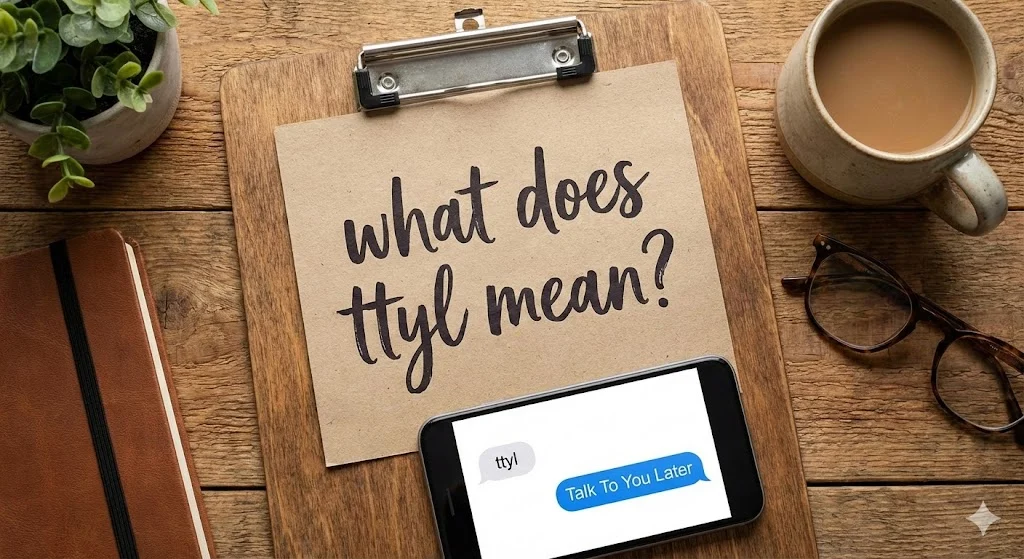
In the fast-paced world of texting, chat apps, and social media, abbreviations have become an essential part of daily communication. Among these, TTYL is one of the most widely used. But what does TTYL mean, and when should you use it? Whether you’re a teen, a professional, or just someone trying to understand modern slang, this guide will break down everything you need to know about TTYL—its meaning, origin, usage, and tips for proper application.
TTYL Meaning and Definition
TTYL stands for “Talk To You Later”. It’s a casual way to signal the end of a conversation without being rude. Instead of abruptly leaving a chat or message, TTYL lets the other person know you’ll reconnect at a later time.
Here’s what you need to know about the term:
- Full Form: Talk To You Later
- Type: Texting abbreviation / Internet slang
- Tone: Casual, friendly
- Usage Context: Text messages, chat apps, social media, informal emails
The abbreviation emerged as texting became popular in the late 1990s and early 2000s, alongside other shorthand terms like BRB (Be Right Back) and LOL (Laugh Out Loud). It quickly became a staple for digital communication due to its simplicity and versatility.
TTYL in Texting, Chat, and Social Media
TTYL isn’t limited to just one platform—it’s used across multiple messaging channels. Let’s break down its usage in different contexts.
TTYL in Texting
Text messaging remains the most common place you’ll see TTYL. It’s perfect for casual conversations with friends or family when you need to step away from your phone.
Examples:
- Friend Chat:
“Gotta go pick up my brother, ttyl!” - Group Chat:
“Meeting started, ttyl everyone.”
TTYL helps keep the conversation polite while signaling a temporary pause.
TTYL in Chat Apps
Messaging apps like WhatsApp, Snapchat, and Facebook Messenger rely heavily on abbreviations. TTYL fits naturally into these casual conversations, especially among younger users.
TTYL usage in apps:
| App | Usage Example | Notes |
|---|---|---|
| “Heading to class, ttyl!” | Common in both personal and group chats | |
| Snapchat | “Snap streak time, ttyl” | Often used between friends |
| Instagram DMs | “Busy today, ttyl 😅” | Casual sign-off with emojis |
The table shows that while the meaning remains the same, the tone may vary slightly depending on the platform. Emojis often accompany TTYL to make it more expressive.
TTYL in Social Media
Beyond direct messaging, TTYL appears in comment sections, threads, and online forums. It’s a quick and friendly way to conclude participation in a conversation.
Examples:
- “That was fun! TTYL” – casual forum post
- “Logging off for now, ttyl!” – Twitter or Reddit comment
Even in public conversations, TTYL maintains its casual, approachable tone.
Examples of TTYL in Conversation
Seeing TTYL in real-life examples helps you understand its proper usage. Here are several scenarios:
Texting Examples:
- “I need to study for my exam, ttyl.”
- “Dinner’s ready, ttyl guys!”
- “Catch you later, ttyl 😊”
Social Media Examples:
- “Off to a meeting, ttyl everyone!”
- “That’s it for today’s livestream, ttyl!”
Professional/Casual Mix:
While TTYL is mostly casual, you might use it in semi-professional settings like team chats to signal temporary unavailability without sounding abrupt:
- “Wrapping up this report, ttyl!”
How to Use TTYL Correctly
Using TTYL seems simple, but context matters. Here’s a guide on proper usage:
Tone and Context
- Casual Conversations: TTYL works perfectly for friends, family, and social chat.
- Professional Chats: Use cautiously. While it’s friendly, it may come off too informal for clients or senior colleagues.
Tips for Teens and Adults
- Combine TTYL with emojis to convey tone.
- Don’t use TTYL in formal emails or business correspondence.
- Match the abbreviation to the recipient’s familiarity with texting slang.
TTYL vs Other Texting Abbreviations
TTYL is one of many shorthand terms in digital communication. Understanding the differences can prevent misunderstandings.
Comparison Table:
| Abbreviation | Full Form | Usage Context | Tone |
|---|---|---|---|
| TTYL | Talk To You Later | Casual chats, texting, social media | Friendly, informal |
| BRB | Be Right Back | Temporary pause in conversation | Neutral, casual |
| GTG | Got To Go | Leaving conversation quickly | Casual, sometimes abrupt |
| CYA | See You | Goodbye sign-off | Very informal, sometimes sarcastic |
TTYL stands out as a polite and friendly way to end a conversation, whereas abbreviations like GTG may sound rushed.
The Evolution of TTYL and Internet Slang
TTYL didn’t appear in isolation. It’s part of a broader evolution in digital communication.
History
- Late 1990s: Early internet chatrooms popularized shorthand like TTYL, BRB, and LOL.
- 2000s: Text messaging became widespread; TTYL became standard in teen and young adult texting culture.
- 2010s–Present: Social media platforms and instant messaging cemented TTYL’s role in casual conversation.
Why TTYL Endures
- Short and easy to type.
- Polite and non-intrusive.
- Universally recognized across English-speaking platforms.
FAQs About TTYL
What does TTYL mean in professional settings?
It can be used in casual team chats but is not recommended in emails or formal messages.
Can TTYL be considered rude?
Not usually. It’s a friendly sign-off, but context matters. Abrupt use without explanation may seem dismissive.
Is TTYL outdated?
No. TTYL remains widely understood, though younger users may prefer alternatives like “ttyl!” with emojis or GIFs.
Can you use TTYL in emails?
Only in informal emails with colleagues or friends. Avoid in formal business communications.
Texting Etiquette: Using TTYL Wisely
Using TTYL appropriately ensures smooth communication. Here are some etiquette tips:
- Match tone to relationship: Close friends vs. colleagues.
- Combine with context: Explain why you’re leaving the chat.
- Avoid in misunderstandings: TTYL without clarity might confuse someone expecting a reply soon.
- Use emojis sparingly: Enhance tone without clutter.
Quick Tips List:
- ✅ Use TTYL to politely end a conversation.
- ✅ Add an emoji for a friendly touch.
- ❌ Don’t use in formal emails.
- ❌ Avoid leaving the chat abruptly after typing TTYL.
Common Misconceptions About TTYL
- Misconception 1: TTYL is outdated.
Fact: Still widely used across social media, texting, and chat apps. - Misconception 2: TTYL is only for teens.
Fact: People of all ages use it to end casual conversations politely. - Misconception 3: TTYL is interchangeable with all abbreviations.
Fact: Each abbreviation has its nuance; TTYL implies a later continuation, unlike GTG or CYA.
Summary of Key Points
Here’s a quick reference table summarizing everything about TTYL:
| Aspect | Details |
|---|---|
| Meaning | Talk To You Later |
| Type | Texting abbreviation / Internet slang |
| Tone | Casual, friendly |
| Platforms | SMS, WhatsApp, Snapchat, Instagram DMs, social media |
| Context | Sign-off for temporary conversation pause |
| Related Abbreviations | BRB, GTG, CYA |
| Usage Tips | Use with emojis for tone, avoid in formal emails, match recipient familiarity |
Conclusion
Understanding what TTYL means is more than just knowing it stands for “Talk To You Later.” It’s about grasping the nuances of casual communication in the digital age. From texting with friends to social media comments, TTYL provides a polite and friendly way to pause a conversation without cutting ties.
By using TTYL appropriately, combining it with context and tone, and understanding its place among other abbreviations, you can communicate clearly and naturally in any digital setting.
Next time you finish a chat or sign off a message, a simple TTYL can keep the conversation friendly, polite, and engaging.