The color purple has captured human imagination for centuries. Whether you spot it in fashion, art, branding, or nature, purple carries deep emotional, psychological, and cultural symbolism. If you’ve ever wondered what does the color purple mean, this guide breaks it down in a simple, friendly way.
Purple blends the calmness of blue with the energy of red, making it one of the most intriguing colors. Teenagers, young adults, creators, spiritual seekers, and professionals all use purple differently—so understanding its meaning helps you express the right mood, message, or aesthetic across social media, design, and even daily life.
Definition & Meaning of the Color Purple
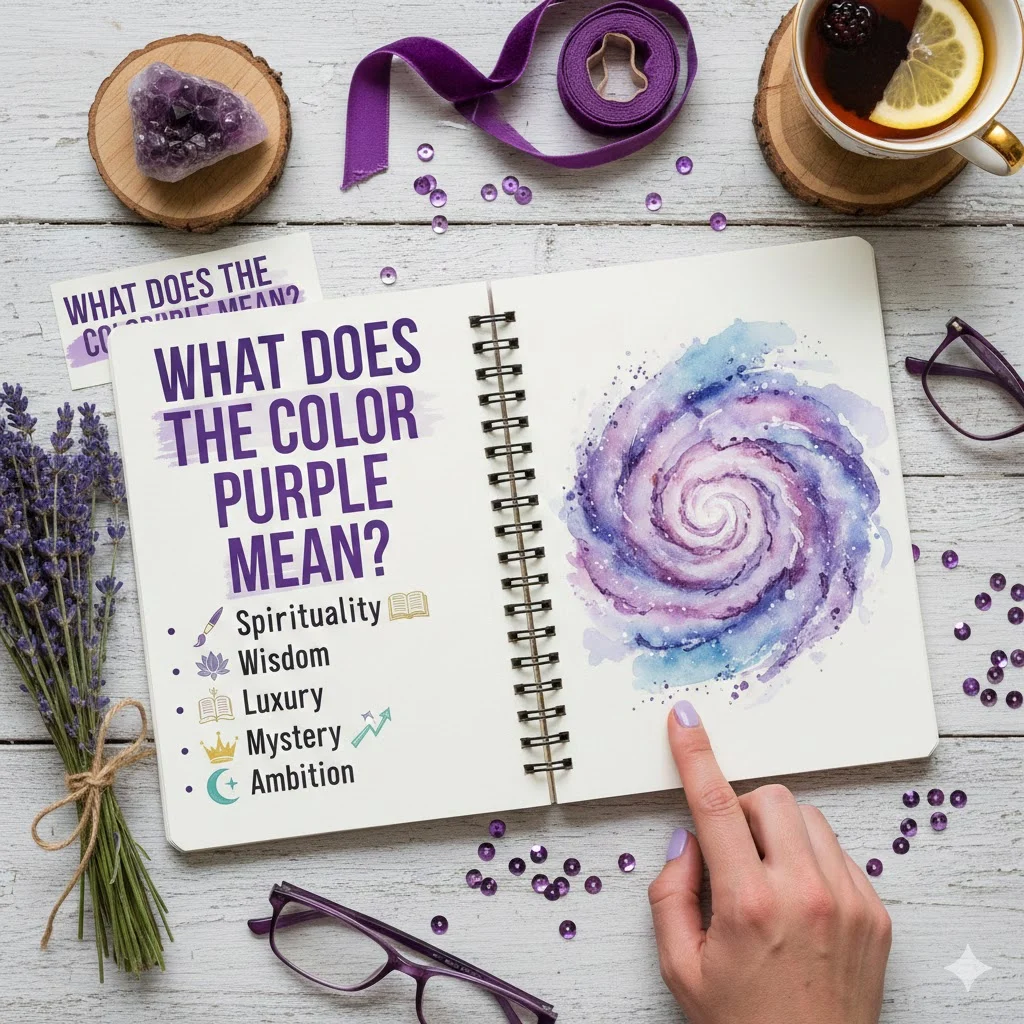
Purple is a powerful color known for symbolizing:
- Royalty and Luxury
- Mystery and Magic
- Creativity and Imagination
- Spirituality and Intuition
- Wisdom and Knowledge
Quick examples in everyday life:
- A brand uses purple for a premium or high-end feel.
- A teen picks a purple profile picture to show creativity.
- Spiritual content creators use purple gradients to signal intuition or mysticism.
In psychology, purple often represents emotional depth, sensitivity, and inner balance. It can feel soothing, elegant, or even mysterious depending on tone—lavender, plum, violet, amethyst, and deep purple all carry slightly different vibes.
Background & History of Purple
Purple has a rich historical story:
- In ancient times, purple dye was extremely expensive and made from rare sea snails.
- Because of this, only kings, queens, and the elite could wear it.
- In the Roman Empire, wearing purple without permission was illegal for ordinary people.
Over time, purple expanded beyond royalty. It became a symbol of:
- Spiritual status (monks, bishops, healers)
- Creativity during the Renaissance
- Mysticism and magic in folklore
- Individuality in modern pop culture
Today, purple is used in branding, fashion, politics, mental health awareness, and more. Its history still influences how we interpret it—elegant, rare, and meaningful.
Usage in Different Contexts
Purple takes on different meanings depending on the situation.
Texting & Social Media
People use purple emojis, filters, and themes to express:
- Calmness
- Spirituality
- Glamour
- Self-confidence
Example:
“New vibe. Purple theme. Feeling magical today 💜✨”
Fashion
- Dark purple = elegance
- Lavender = softness & calm
- Violet = confidence & boldness
Branding
Brands use purple to signal:
| Brand Type | Why Purple? |
|---|---|
| Luxury | Prestige, exclusivity |
| Tech | Innovation, creativity |
| Beauty | Elegance, calm |
| Wellness | Healing, spiritual balance |
Art & Design
Purple is used to create mood, depth, or an ethereal feeling in:
- Posters
- Gaming graphics
- Movie scenes
- Illustrations
Professional Communication
In the workplace, purple is subtle but powerful.
Good uses:
- Presentations needing creativity or leadership energy
- Branding for wellness, therapy, beauty, luxury, or tech companies
- UI/UX to evoke calm, premium feel
Avoid when:
- You need strict professionalism (legal, medical, corporate reports)
- Communicating urgent issues (purple is too calm)
- Your company’s brand identity doesn’t fit emotional colors
Safer alternatives:
- Blue for trust
- Black for professionalism
- Green for growth
Hidden or Negative Meanings
Though mostly positive, purple can also carry negative interpretations depending on tone.
Possible negative associations:
- Arrogance – if used too boldly
- Over-extravagance – deep purple can feel “too much”
- Moodiness – dark tones may appear mysterious or gloomy
- Fantasy over reality – overly mystical or unrealistic feel
Examples:
- Safe: “Purple candles set a relaxing mood.”
- Risky: “The purple theme feels too extravagant for this report.”
Context always determines which side purple represents.
Purple in Online Communities & Dating Apps
Purple is extremely popular online—especially with artistic, aesthetic, and spiritual communities.
On TikTok & Instagram:
- Used in aesthetic edits
- Spiritual reels
- Mood boards
- Quotes and affirmations
On dating apps:
People use purple hearts and tones to show:
- Confidence
- Romantic energy
- Sensitivity
- Mystery
Example:
“Purple is my vibe—creative, calm, and a bit magical 💜”
Comparison with Similar Colors
| Color | Meaning | Tone | Best Used For |
|---|---|---|---|
| Purple | Spirituality, luxury, creativity | Deep, emotional | Art, branding, style |
| Blue | Trust, calm, professionalism | Cool, stable | Work, safety, health |
| Red | Passion, energy, danger | Bold, aggressive | Alerts, love, urgency |
| Pink | Romance, playfulness | Soft, cute | Aesthetics, femininity |
| Black | Power, formality | Strong, serious | Luxury, modern brands |
Purple sits between calmness and intensity—making it a hybrid with unique symbolism.
10 Meanings & Concepts Associated With Purple
- Royalty – historically worn by kings.
- Luxury – premium and elegant.
- Mystery – used in fantasy or magic themes.
- Creativity – artistic and imaginative.
- Wisdom – deep thinking and knowledge.
- Intuition – spiritual insight.
- Sensitivity – emotional depth.
- Calmness – especially lavender tones.
- Transformation – symbolic in healing arts.
- Uniqueness – nontraditional and bold.
Each meaning depends on shade, context, and culture.
How to Respond to Purple Symbolism
When someone uses purple in conversation, posts, or aesthetics, here are possible responses:
Casual
- “Love the purple vibe! 💜”
- “Purple suits your energy.”
Creative
- “This shade hits differently. So calming.”
Professional
- “The purple theme works well for creativity-focused projects.”
Privacy-conscious
- Keep responses neutral: “Nice choice of colors.”
Regional & Cultural Differences
Purple’s meaning varies around the world:
- Japan: Wealth, strength, and power.
- Thailand: Associated with mourning for widows.
- Western cultures: Royalty, magic, luxury.
- Brazil: Sometimes linked to mourning or spirituality.
- India: Wisdom, peace, and nobility.
Always consider cultural background before using purple in global communication.
FAQs
Q1: Is purple a lucky color?
Yes, in many cultures it’s linked to wisdom, prosperity, and spiritual strength.
Q2: What personality is associated with purple lovers?
Creative, intuitive, sensitive, and expressive.
Q3: Is purple masculine or feminine?
It’s considered gender-neutral today.
Q4: What emotion does purple represent?
Calmness, creativity, or mystery depending on shade.
Q5: Why do luxury brands use purple?
To express exclusivity and premium identity.
Conclusion
Purple is a color packed with emotion, history, and symbolism. It blends strength with calmness, making it one of the most expressive colors in human culture. Whether you see it in fashion, branding, art, or social media, purple communicates creativity, luxury, spirituality, and individuality. It adapts beautifully across cultures and contexts, from daily messaging to professional design. Now that you understand what the color purple means, you can use it more intentionally—whether you want to express elegance, calm, or mystery. Let purple help you create mood, meaning, and memorable impact.