Respect is one of the most important values in life, but have you ever wondered what respect truly means? Whether in friendships, family, school, workplace, or social media, respect shapes the way we communicate and interact.
Understanding respect helps you build stronger relationships, avoid conflicts, and show empathy toward others. In this article, we’ll explore the meaning of respect, its different types, cultural significance, and practical examples. By the end, you’ll have a clear understanding of how to show respect in everyday life—both online and offline.
Definition & Meaning of Respect
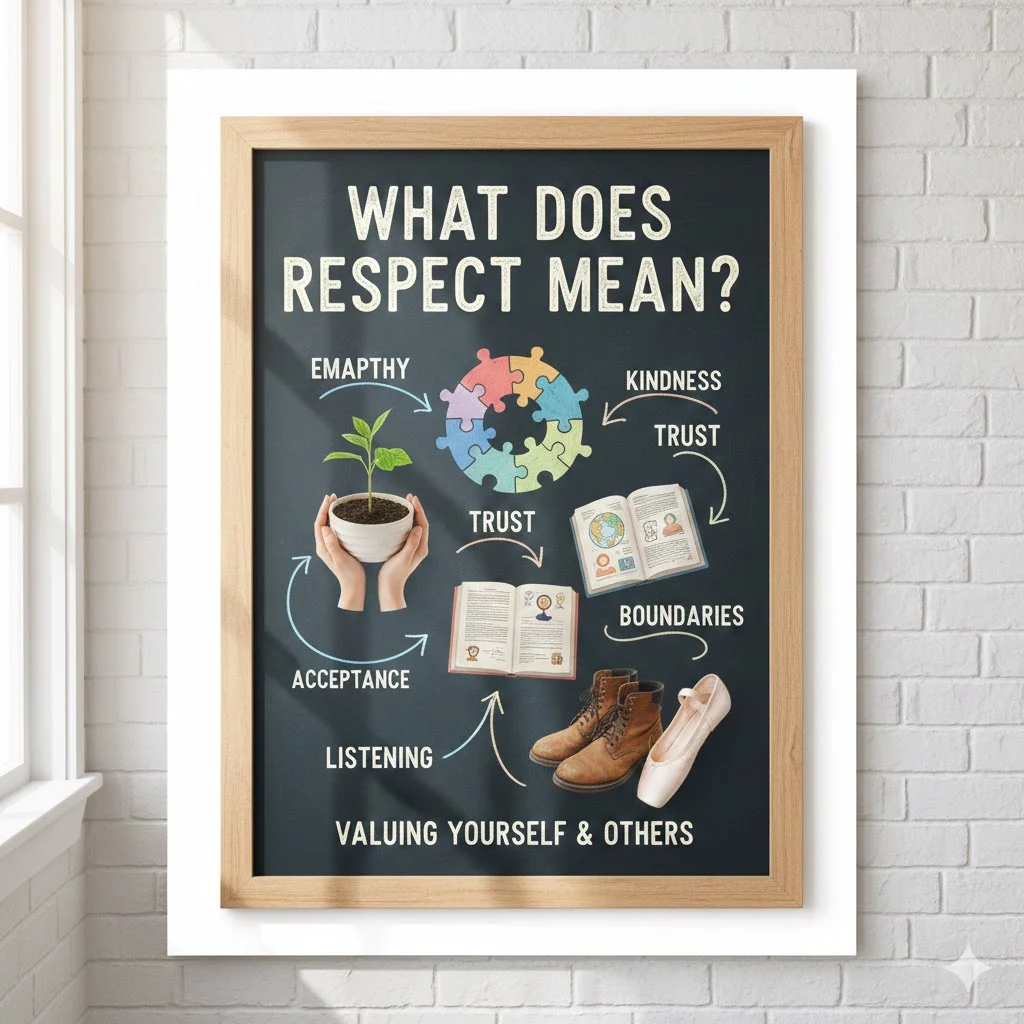
Respect is a feeling of admiration or consideration for someone or something. It involves recognizing the worth, rights, feelings, or qualities of others. Respect is not just about politeness; it is about valuing people and their contributions.
Key points:
- Respect can be self-respect (valuing yourself) or respect for others (valuing others’ opinions and boundaries).
- Respect is demonstrated through words, actions, and attitude.
- It is a core value in relationships, education, and professional life.
Examples in Dialogue:
Casual conversation:
Alex: “I disagree with you on this topic.”
Jamie: “I respect your opinion, even if I think differently.”
Social media:
“Show respect in comments—it makes online spaces positive!”
In Action:
- Listening without interrupting
- Appreciating someone’s effort
- Using polite language
Background & History of Respect
The concept of respect dates back to ancient civilizations and philosophies. Many cultures emphasized respect for elders, leaders, and social norms.
- Historical influence: Ancient texts, religious teachings, and social codes highlighted respect as a moral duty.
- Cultural significance: In Eastern cultures, respect for elders is central; in Western cultures, respect is often tied to equality and rights.
- Modern evolution: Today, respect extends beyond hierarchy to include gender equality, diversity, and online interactions.
Understanding respect’s history helps us appreciate why it is essential in personal and professional relationships today.
Types of Respect
Respect can take several forms depending on context and relationships:
1. Self-Respect:
- Valuing your own worth and setting healthy boundaries.
- Example: Saying “no” when needed without guilt.
2. Respect for Others:
- Acknowledging other people’s feelings, opinions, and rights.
- Example: Listening actively in a conversation.
3. Professional Respect:
- Treating colleagues with fairness, courtesy, and integrity.
- Example: Giving credit for work or ideas.
4. Social Respect:
- Following social rules and norms to coexist peacefully.
- Example: Being polite in public spaces.
5. Online Respect:
- Engaging responsibly on social media or gaming platforms.
- Example: Avoiding offensive comments or cyberbullying.
Importance of Respect
Respect strengthens relationships, trust, and cooperation in society.
Benefits of practicing respect:
- Reduces conflicts and misunderstandings
- Encourages open communication
- Boosts self-esteem and confidence
- Promotes harmony in families, workplaces, and communities
Respect is also crucial for online communication, where tone and intent can be easily misinterpreted.
How to Show Respect in Everyday Life
Simple ways to show respect:
- Listen actively: Give your full attention when someone speaks.
- Use polite language: Say “please,” “thank you,” and “excuse me.”
- Acknowledge differences: Accept diverse opinions and lifestyles.
- Keep promises: Reliability builds respect.
- Practice empathy: Try to understand others’ perspectives.
Dialogue Example:
Sam: “I think we should try a new strategy for the project.”
Riley: “I respect your idea. Let’s discuss how we can implement it.”
Respect in Professional Communication
Respect is essential in workplaces to maintain professionalism and collaboration.
Professional tips:
- Avoid interrupting colleagues in meetings.
- Appreciate team contributions.
- Address conflicts calmly and politely.
- Use respectful language in emails, reports, and presentations.
Example:
“I value your feedback on this report and will incorporate your suggestions.”
Respect in professional settings enhances credibility and promotes a positive work culture.
Hidden or Misunderstood Meanings of Respect
Sometimes, respect can be misinterpreted if actions or words are unclear.
Risks:
- Overly formal behavior may seem distant.
- Insincere praise can appear fake.
Safe usage examples:
- Respectful: “I respect your effort on this project.”
- Risky: “Good job, I guess…”
Tone and sincerity are key to showing true respect.
Respect in Online Communities & Social Media
Online platforms require digital etiquette and respect.
Tips:
- Avoid offensive comments, trolling, and cyberbullying.
- Give credit when sharing content.
- Engage politely even in debates.
Dialogue Example:
User1: “I disagree with this opinion.”
User2: “I respect your viewpoint; here’s my perspective.”
Respectful online communication fosters safe and supportive communities.
Comparison with Similar Values
| Term | Meaning | Tone | Usage |
|---|---|---|---|
| Respect | Admiration, consideration, and valuing others | Positive | Personal, social, professional life |
| Courtesy | Polite behavior toward others | Polite | Daily interactions, formal settings |
| Tolerance | Acceptance of different opinions or behaviors | Neutral | Cultural or ideological differences |
| Empathy | Understanding others’ feelings | Emotional | Personal, professional, online |
Key takeaway: Respect combines politeness, empathy, and recognition of worth, unlike related values that may focus on one aspect.
10 Ways to Practice Respect in Daily Life
- Listen actively without interrupting.
- Use polite words consistently.
- Appreciate others’ contributions.
- Accept different opinions.
- Keep your promises.
- Acknowledge cultural differences.
- Maintain professional boundaries.
- Respond calmly in conflicts.
- Avoid gossip or criticism behind backs.
- Support others’ achievements sincerely.
Discover related article:-
- What Does Torta Mean? Definition, Origins, Food Uses & Cultural Differences
- What Does a Butterfly Tattoo Mean? | Symbolism, Types & Deep Meanings Explained
How to Respond Respectfully
Responses vary by context:
Casual conversation:
- “I respect your choice.”
- “That’s a great idea; I appreciate your perspective.”
Professional:
- “Thank you for your input; it’s very valuable.”
Online:
- Use emojis to show appreciation: “👍😊”
- Comment constructively instead of criticizing harshly.
Privacy-conscious:
- Respond thoughtfully, avoid sharing private opinions unnecessarily.
Regional & Cultural Differences
- Western cultures: Respect is often tied to equality and fairness.
- Eastern cultures: Respect for elders and hierarchy is emphasized.
- Online communities: Respect may vary based on platform norms and local culture.
Example:
In Japan, bowing shows respect; in the US, a handshake or verbal acknowledgment may suffice.
FAQs
Q1: Why is respect important?
A: It builds trust, strengthens relationships, and promotes social harmony.
Q2: Can respect be taught?
A: Yes, through modeling behavior, guidance, and reinforcement in daily life.
Q3: How do you show respect online?
A: Avoid offensive comments, acknowledge contributions, and engage politely.
Q4: Is respect the same as obedience?
A: No, respect involves valuing someone, while obedience is following instructions.
Q5: Can self-respect conflict with respect for others?
A: Sometimes, but healthy boundaries ensure both can coexist.
Conclusion
Respect is more than politeness—it is recognizing the value, rights, and feelings of yourself and others. It strengthens relationships, promotes trust, and enhances social and professional interactions. By practicing respect daily, whether in casual chats, professional settings, or online communities, you create a positive and supportive environment. Understanding what respect means and how to demonstrate it empowers you to communicate effectively, avoid conflicts, and foster meaningful connections. Start small—listen actively, acknowledge differences, and act with empathy. Respect is a lifelong skill that shapes how others perceive and interact with you.