Feeling overstimulated is more common than most people realize. From hectic workplaces to bustling social events, our minds and bodies are constantly bombarded by sensory input, emotional challenges, and mental tasks. But what does it really mean to be overstimulated? And how can you recognize it before it impacts your health and daily life?
In this post, we’ll explore the meaning of overstimulation, its types, causes, signs, and practical strategies to manage it effectively.
What Does Overstimulated Mean?
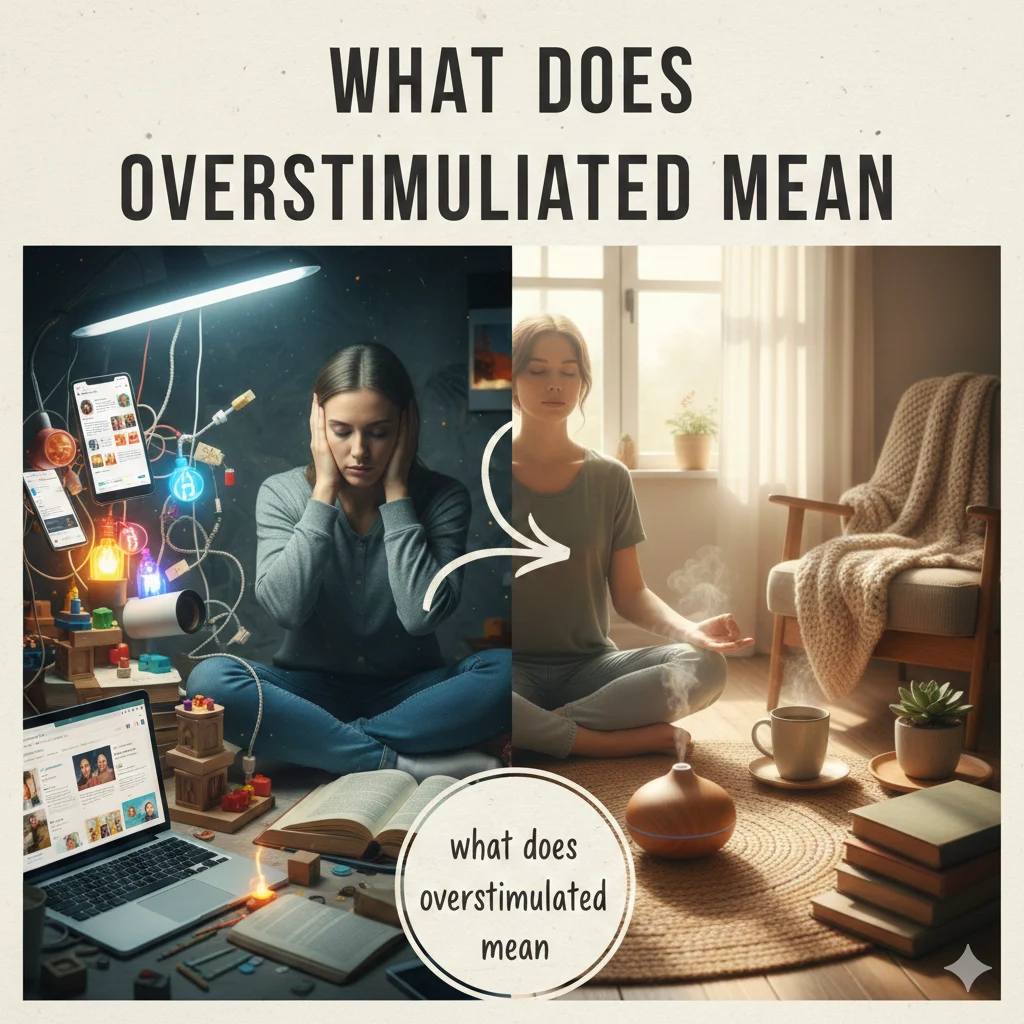
Overstimulation occurs when your brain or body receives more input than it can process. This can be mental, emotional, or sensory, often leading to fatigue, irritability, or anxiety. It’s not just being busy—it’s when your nervous system feels overloaded and you can’t cope with incoming stimuli.
- Temporary overstimulation is short-term and usually resolves with rest or calming activities.
- Chronic overstimulation is long-term and can contribute to stress-related disorders, anxiety, or burnout.
Think of your brain like a computer: too many programs running at once can slow everything down. Overstimulation is like hitting the limit, leaving your system exhausted.
Key point: Being overstimulated is not a weakness; it’s a signal from your body that your nervous system needs a break.
Types of Overstimulation
Understanding the different types helps identify the exact triggers and tailor coping strategies.
Sensory Overstimulation
Sensory overstimulation happens when your senses are overwhelmed by noise, light, touch, or visual input.
Common triggers:
- Crowded public places
- Loud music or traffic
- Bright or flashing lights
- Strong smells or overwhelming tastes
- Prolonged screen time
Signs:
- Headaches
- Restlessness or fidgeting
- Sensitivity to light or sound
- Feeling “on edge”
Fact: Studies show that sensory overstimulation activates the amygdala—the part of the brain responsible for stress and fight-or-flight responses—making you feel anxious or irritable.
Quick table: Sensory vs Mental Overstimulation
| Type | Causes | Signs | Immediate Relief |
|---|---|---|---|
| Sensory | Loud noises, bright lights, multitasking | Headache, irritability, nausea | Dim lights, quiet space, earplugs |
| Mental | Too much information, multitasking | Racing thoughts, forgetfulness, fatigue | Short breaks, journaling, meditation |
Mental Overstimulation
Mental overstimulation occurs when your brain processes more information than it can handle. This can be from multitasking, constant notifications, or overwhelming responsibilities.
Signs of mental overstimulation:
- Racing or scattered thoughts
- Difficulty focusing or making decisions
- Forgetfulness or mistakes
- Feeling mentally exhausted
Example: Checking emails constantly while attending meetings can overload the brain, decreasing productivity and increasing stress levels.
Fact: Research suggests multitasking reduces IQ by 10 points temporarily, similar to losing a night’s sleep, because the brain struggles to process multiple streams of information simultaneously.
Emotional Overstimulation
Emotional overstimulation happens when your feelings are intense or you’re under constant emotional pressure.
Causes:
- Arguments or conflicts
- Intense caregiving responsibilities
- Stressful news or events
- Personal life challenges
Symptoms:
- Mood swings
- Irritability or anger
- Anxiety or panic
- Emotional exhaustion
Insight: Emotional overstimulation can impact physical health, including sleep disturbances, hormonal imbalances, and increased cortisol levels.
Signs and Symptoms of Overstimulation
Recognizing overstimulation early can prevent negative physical and mental consequences.
Common Signs
- Physical: headaches, nausea, fatigue, increased heart rate, muscle tension
- Mental: racing thoughts, inability to focus, memory issues
- Emotional: irritability, anxiety, mood swings, feeling overwhelmed
- Behavioral: withdrawal, snapping at others, restlessness
Overstimulation in Adults vs Children
| Group | Typical Signs | Extra Indicators |
|---|---|---|
| Adults | Fatigue, irritability, mental fog | Difficulty concentrating at work, social withdrawal |
| Children | Tantrums, hyperactivity, irritability | Trouble sleeping, sensory avoidance, withdrawal in class |
Quote: “Your nervous system is like a sponge—soak up only what you can handle before it overflows.”
Tip: Keep a symptom journal to track patterns of overstimulation and identify triggers.
Causes of Overstimulation
Overstimulation can stem from environmental, technological, social, and biological factors.
Environmental Causes
- Busy workplaces
- Loud traffic or crowded areas
- Bright lights and constant movement
Technological Causes
- Constant notifications from phones and apps
- Excessive social media use
- Multitasking with screens
Psychological Causes
- Anxiety or chronic stress
- ADHD or sensory processing challenges
- High cognitive load from multitasking
Social Causes
- Crowded events
- Social obligations beyond comfort level
- Conflict or interpersonal stress
Biological Causes
- Fatigue or poor sleep
- Hormonal changes
- Nutritional deficiencies
Fact: Studies indicate prolonged overstimulation can lead to cognitive fatigue, decreasing memory, problem-solving skills, and emotional regulation.
Overstimulation and Mental Health
Overstimulation affects mental health significantly. It can exacerbate conditions like anxiety, ADHD, depression, and PTSD.
- Anxiety: Overstimulation triggers heightened fight-or-flight responses.
- ADHD: Sensory and mental overload increase distractibility and impulsivity.
- Depression: Chronic overstimulation can cause fatigue and emotional blunting.
Fact: A study published in the Journal of Neuroscience shows that chronic overstimulation changes brain connectivity, particularly in the prefrontal cortex, impacting focus and emotional regulation.
How to Know if You Are Overstimulated
Recognizing overstimulation before it escalates is crucial. Ask yourself these questions:
- Do I feel mentally or physically exhausted after small tasks?
- Am I irritable or anxious without clear reason?
- Do I avoid social situations or noisy environments?
- Do I have trouble sleeping or relaxing?
Self-assessment table:
| Symptom | Mild | Moderate | Severe |
|---|---|---|---|
| Irritability | Occasionally | Frequently | Almost constantly |
| Fatigue | Low energy | Hard to focus | Exhaustion affecting daily life |
| Anxiety | Mild | Noticeable | Disabling |
| Physical tension | Muscle stiffness | Headaches | Chronic pain |
If most of your answers fall in the moderate or severe range, you are likely experiencing overstimulation and should implement coping strategies.
Coping Strategies and Remedies
Managing overstimulation involves immediate relief, long-term planning, and environmental adjustments.
Immediate Relief Techniques
- Deep breathing: Try 4-7-8 breathing or box breathing for 2–5 minutes.
- Meditation: Focused attention or body-scan meditation reduces mental overload.
- Short breaks: Step outside or rest in a quiet room.
- Dim lights and reduce noise: Lower sensory input immediately.
Long-Term Strategies
- Time management: Prioritize tasks and schedule breaks.
- Mindfulness practice: Daily mindfulness or yoga strengthens stress resilience.
- Therapy: Cognitive-behavioral therapy (CBT) or occupational therapy helps regulate overstimulation.
- ADHD-specific approaches: Structured routines, visual schedules, and sensory-friendly environments.
Environmental Adjustments
- Create quiet zones at home or work.
- Limit screen time and notifications.
- Use earplugs, noise-canceling headphones, or soft lighting to reduce triggers.
Recommended Tools and Products
- Weighted blankets for sensory calming
- Fidget toys or stress balls
- Meditation apps or guided relaxation recordings
Table: Coping Techniques for Overstimulation
| Technique | Type | Benefit |
|---|---|---|
| Deep breathing | Immediate | Lowers heart rate and stress hormones |
| Meditation | Immediate/Long-term | Improves focus and emotional regulation |
| Quiet space | Immediate | Reduces sensory input and fatigue |
| Weighted blanket | Long-term | Provides calming pressure to nervous system |
| Time management | Long-term | Prevents cognitive overload |
| Therapy | Long-term | Trains coping and emotional regulation skills |
Special Considerations
Overstimulation in Children
Children are especially vulnerable to overstimulation because their nervous systems are still developing.
Signs in children:
- Tantrums or crying over minor issues
- Overreaction to noise or crowded places
- Difficulty concentrating at school
Tips for parents:
- Limit screen time and loud activities
- Provide quiet time daily
- Introduce sensory toys or calming routines
Overstimulation in the Workplace
Many adults experience overstimulation at work. Signs include:
- Fatigue after meetings or long tasks
- Irritability with colleagues
- Difficulty focusing
Tips:
- Schedule short breaks every 60–90 minutes
- Reduce multitasking and emails
- Use noise-canceling headphones
Social Overstimulation
Extroverted and introverted individuals experience social overstimulation differently.
- Introverts: Social events can drain energy quickly.
- Extroverts: Excessive sensory input can cause mental fatigue even if socially enjoyable.
Strategy: Balance social engagements and allow downtime to recharge.
Conclusion
Being overstimulated is a common, yet often overlooked experience. It affects your mental, emotional, and physical health. Recognizing the signs early and applying effective coping strategies is key to maintaining balance.
Key takeaways:
- Overstimulation occurs when your brain or nervous system receives too much input.
- It can be sensory, mental, or emotional.
- Signs include irritability, fatigue, racing thoughts, and mood swings.
- Causes range from environmental noise and technology to social and psychological stress.
- Coping strategies include deep breathing, meditation, environmental adjustments, therapy, and structured routines.
Remember: Your nervous system is giving you signals. Listening and responding to them is not just helpful—it’s essential for your well-being.
Final Quote:
“You can’t pour from an empty cup. Protect your energy, and your mind and body will thank you.”