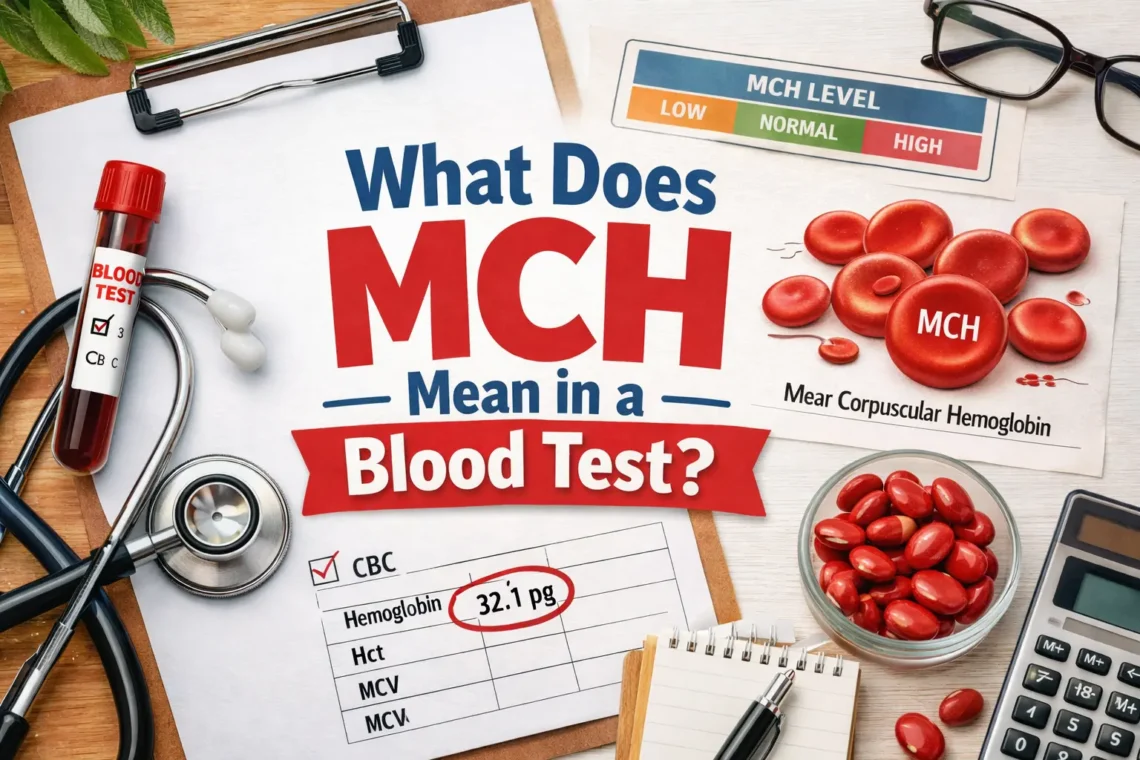
Blood test reports can feel confusing. They are full of short words, numbers, and medical terms. One common term that raises questions is MCH. Many people ask, what does MCH mean in a blood test, and whether they should be worried about it.
MCH is part of a complete blood count (CBC) test. Doctors use it to understand your red blood cells and overall health. A high or low MCH value does not always mean something serious. But it can point to vitamin deficiencies, anemia, or other health conditions.
In this article, we’ll explain what MCH means in a blood test in simple language. You’ll learn the normal range, causes of abnormal results, symptoms, treatment options, and when to see a doctor. No medical background needed.
What Does MCH Mean in a Blood Test?
MCH stands for Mean Corpuscular Hemoglobin.
It tells doctors how much hemoglobin is present in each red blood cell.
Hemoglobin is the protein that:
- Carries oxygen from your lungs
- Delivers oxygen to your organs and tissues
- Gives blood its red color
In simple words:
MCH shows how much oxygen-carrying protein is inside one red blood cell.
Doctors use MCH to:
- Diagnose different types of anemia
- Check nutritional deficiencies
- Monitor chronic illnesses
- Understand fatigue and weakness
MCH is not measured alone. It is reviewed along with:
- RBC (Red Blood Cell count)
- Hemoglobin
- Hematocrit
- MCV (Mean Corpuscular Volume)
- MCHC (Mean Corpuscular Hemoglobin Concentration)
Why Is MCH Important?
MCH helps doctors understand red blood cell quality, not just quantity.
Even if your red blood cell count is normal:
This affects how well oxygen moves through your body.
Key reasons MCH matters:
- Explains tiredness and weakness
- Helps identify anemia type
- Guides treatment decisions
- Tracks response to supplements or medication
Normal MCH Range
The normal MCH range for adults is:
27 to 33 picograms (pg) per cell
Important notes:
- Ranges may vary slightly by lab
- Age and pregnancy can affect results
- One abnormal value does not confirm disease
MCH Value Meaning
| MCH LevelWhat It Usually Means | |
|---|---|
| Below 27 pg | Low MCH |
| 27–33 pg | Normal |
| Above 33 pg | High MCH |
Doctors always compare MCH with other CBC values before diagnosis.
What Causes Low MCH?
Low MCH means each red blood cell has less hemoglobin.
This is called hypochromic anemia.
Common causes of low MCH:
- Iron deficiency anemia (most common)
- Chronic blood loss (heavy periods, ulcers)
- Poor iron absorption
- Thalassemia
- Chronic kidney disease
- Long-term inflammation
Symptoms of low MCH:
- Fatigue
- Pale skin
- Dizziness
- Shortness of breath
- Headaches
- Cold hands and feet
Low MCH often develops slowly, so symptoms may be mild at first.
What Causes High MCH?
High MCH means red blood cells contain more hemoglobin than normal.
This is often linked to larger red blood cells.
Common causes of high MCH:
- Vitamin B12 deficiency
- Folate deficiency
- Liver disease
- Hypothyroidism
- Alcohol use disorder
- Certain medications
Symptoms of high MCH:
- Weakness
- Numbness or tingling
- Memory problems
- Pale or yellowish skin
- Heart palpitations
High MCH usually appears alongside a high MCV value.
MCH vs MCV vs MCHC (Key Differences)
These values are often confused.
| Test | Full Form | What It Measures |
|---|---|---|
| MCH | Mean Corpuscular Hemoglobin | Hemoglobin per red cell |
| MCV | Mean Corpuscular Volume | Size of red blood cells |
| MCHC | Mean Corpuscular Hemoglobin Concentration | Hemoglobin concentration inside cells |
Why this matters:
- Low MCH + low MCV → Iron deficiency anemia
- High MCH + high MCV → B12 or folate deficiency
Doctors read these together, not separately.
MCH in Different Types of Anemia
MCH helps identify anemia type.
Iron Deficiency Anemia
- Low MCH
- Low MCV
- Pale, small red cells
Vitamin B12 or Folate Deficiency
- High MCH
- High MCV
- Large red cells
Thalassemia
- Low MCH
- Normal or high RBC count
This helps doctors choose the right treatment, not guess.
Symptoms Linked to Abnormal MCH
Symptoms depend on whether MCH is low or high.
Common symptoms include:
- Extreme tiredness
- Weakness
- Shortness of breath
- Poor concentration
- Pale or yellow skin
- Cold intolerance
Some people have no symptoms and discover abnormal MCH during routine tests.
How Is MCH Tested?
MCH is measured through a Complete Blood Count (CBC) test.
The process:
- Blood sample is taken from a vein
- Sample is analyzed in a lab
- MCH is calculated automatically
No fasting is usually required unless combined with other tests.
Can Diet Affect MCH Levels?
Yes. Diet plays a big role.
Foods that help low MCH:
- Red meat
- Spinach
- Lentils
- Beans
- Eggs
- Iron-fortified cereals
Foods for high MCH (B12/Folate deficiency):
- Fish
- Dairy products
- Eggs
- Leafy greens
- Whole grains
Supplements should only be taken after medical advice.
Treatment Options for Abnormal MCH
Treatment depends on the cause.
Low MCH treatment:
- Iron supplements
- Treating blood loss
- Improving iron absorption
- Managing chronic conditions
High MCH treatment:
- Vitamin B12 injections or tablets
- Folate supplements
- Treating liver or thyroid issues
- Reducing alcohol intake
MCH usually improves once the root cause is treated.
When Should You Worry About MCH?
You should talk to a doctor if:
- MCH is abnormal and symptoms exist
- Levels stay abnormal over time
- You feel extremely weak or dizzy
- There is unexplained weight loss
One abnormal result alone is not an emergency.
MCH in Pregnancy
During pregnancy:
- MCH may drop due to increased iron needs
- Iron deficiency is common
- Doctors monitor CBC regularly
Early treatment prevents complications for both mother and baby.
MCH and Chronic Diseases
Chronic illnesses can affect MCH, such as:
- Kidney disease
- Autoimmune disorders
- Inflammatory conditions
- Cancer
In such cases, MCH helps monitor disease progression.
Frequently Asked Questions (FAQs)
1. What does MCH mean in a blood test?
MCH shows how much hemoglobin is in each red blood cell.
2. Is low MCH dangerous?
It can be if untreated, especially when caused by iron deficiency.
3. Can MCH be normal but hemoglobin low?
Yes. Doctors look at all CBC values together.
4. Does dehydration affect MCH?
Usually no, but it may affect other blood values.
5. Can stress change MCH?
Stress alone does not change MCH significantly.
6. How long does it take to fix low MCH?
With treatment, improvement is often seen in 4–8 weeks.
Conclusion
Understanding what does MCH mean in a blood test helps you make sense of your health reports. MCH shows how much hemoglobin your red blood cells carry and plays a key role in diagnosing anemia and nutritional deficiencies. A low or high MCH is not always serious, but it should never be ignored. Doctors always review MCH along with other CBC values before making decisions. With proper diagnosis, diet changes, or treatment, abnormal MCH levels can usually be corrected. Always consult a healthcare professional for accurate guidance.