If you’ve seen someone type ISTG in a text or social media comment, you might’ve wondered what it means. This acronym is everywhere—TikTok, Instagram, Snapchat, Discord, and even gaming chats. Teens, young adults, and online communities use it to express strong emotion, frustration, honesty, or emphasis.
In this guide, we’ll break down what ISTG means in text, where it comes from, how people use it, when to avoid it, and how to respond safely. By the end, you’ll understand exactly what it means—without guessing or misreading tone.
Definition & Meaning of ISTG
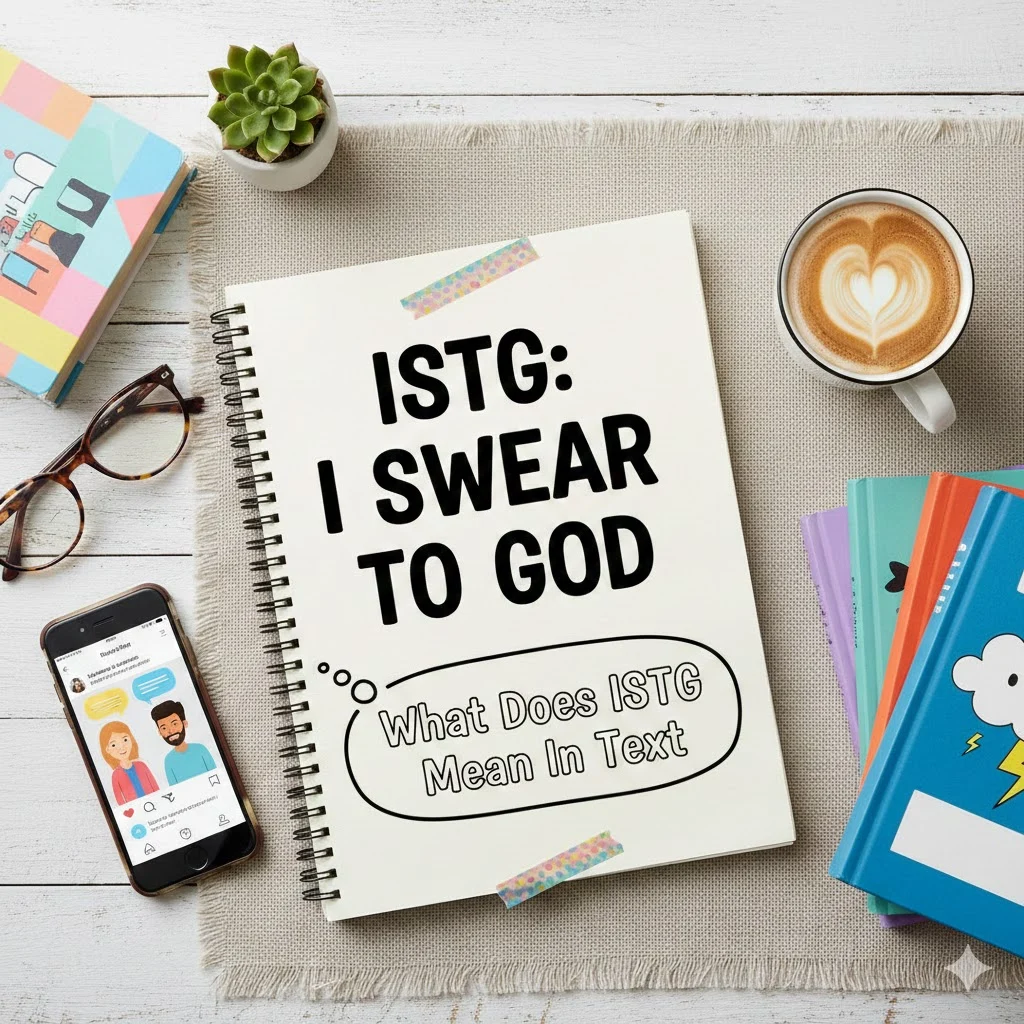
ISTG stands for “I Swear To God.”
It’s used to show strong emotion—usually seriousness, frustration, or emphasis.
Main Uses:
- Stress or frustration: “ISTG this homework is killing me.”
- Emphasis: “ISTG that was the funniest thing ever.”
- Honesty: “ISTG I’m not lying.”
Examples:
Casual Chat:
A: “Bro you ate my chips?”
B: “No ISTG 😭”
Funny Situation:
“ISTG my cat acts like she pays rent.”
Key Points:
- Tone shifts based on punctuation and emojis.
- It can sound intense if used without emojis.
- Not ideal for professional or formal chats.
Background & History of ISTG
ISTG grew out of early internet slang, especially in AOL chats, gaming forums, and teen texting culture. It spread through Tumblr, Twitter, and later TikTok, becoming a go-to expression for strong emotion.
Why it became popular:
- Short, powerful expression
- Works for humor, anger, or emphasis
- Fits the fast pace of digital communication
Over time, the meaning stayed the same, but tone became more flexible. Today, ISTG can sound angry, funny, or dramatic depending on how it’s written. Emojis often soften it:
- “ISTG 😭” = funny, dramatic
- “ISTG.” = serious
- “ISTG bro 😭💀” = playful exaggeration
See also Related:-
Click Here: What Does “DTF” Mean in Text, Chat, and Social Media?
See Also: What Does “In Transit” Mean? A Complete Guide to Tracking Packages
Click Here: What Does “XD” Mean in Text, Chat, and Social Media?
Usage in Different Contexts
ISTG behaves differently depending on where it’s used.
Texting
- Used to express frustration or honesty.
“ISTG if my alarm doesn’t ring tomorrow…”
Social Media
Common in comments, captions, and reactions.
“ISTG this trend needs to stop 😭”
Gaming
Used when teammates troll, lag hits, or something shocking happens.
“ISTG that dude came out of nowhere 😂”
Comparison Table
| Context | Example | Tone |
|---|---|---|
| Texting | “ISTG I’m done with today” | Frustrated / exhausted |
| “ISTG this filter is wild 😭” | Playful / dramatic | |
| Gaming | “ISTG he hacks fr” | Suspicious / annoyed |
Professional Communication
Using ISTG with managers, clients, or formal emails is generally a bad idea. It may sound disrespectful, immature, or emotionally intense.
Examples to Avoid:
- “ISTG I completed the report.”
- “ISTG this meeting took forever.”
Better Alternatives:
- “I assure you…”
- “Honestly…”
- “Just to clarify…”
Tip:
Only use slang like ISTG with coworkers you know very well—and only in casual, private chats.
Hidden or Offensive Meanings
While ISTG isn’t a curse word, it can feel aggressive or dramatic because it references swearing to God.
Situations where it may feel offensive:
- Messaging someone religious or sensitive to swear phrases
- Using it during arguments
- Typing it without emojis or warmth
Safe Example:
“ISTG my WiFi hates me 😭”
Risky Example:
“ISTG if you say that again.”
Tone matters more than the acronym itself.
Usage in Online Communities & Dating Apps
On dating apps or online communities, ISTG appears often in playful or dramatic messages.
Examples:
“ISTG your profile pic is adorable 😭💗”
“ISTG I’ve never laughed this hard.”
Tips:
- Avoid using it aggressively—it can turn people off.
- Add emojis to show softness.
- Keep tone friendly, not intense.
Comparison with Similar Terms
| Acronym | Meaning | Tone | Usage |
|---|---|---|---|
| ISTG | I Swear To God | Intense / dramatic | Texts, chats, memes |
| FR | For Real | Neutral | Agreement |
| IMO | In My Opinion | Soft | Conversations |
| SMH | Shaking My Head | Annoyed | Criticism or disbelief |
| IDC | I Don’t Care | Blunt | Casual or rude |
Difference:
ISTG expresses emotional intensity, while others focus on opinion, agreement, or reaction.
10 Slang Terms & Acronyms Related to ISTG
- OMG – Oh My God
- OMFG – Oh My Freaking God
- IDK – I Don’t Know
- IDC – I Don’t Care
- SMH – Shaking My Head
- FR – For Real
- TF – The Freak
- WTH – What The Heck
- IMD – I’m Dead (laughing)
- S2G – Swear to God (ISTG’s shorter cousin)
How to Respond
Casual Replies
- “Same ISTG 😭”
- “Bro I feel that istg”
Funny Replies
- “ISTG you’re hilarious 😂💀”
Neutral
- “Really?”
- “Are you serious?”
Professional
- Avoid ISTG entirely. Use:
- “Understood.”
- “Got it.”
Emoji-Only Safe Choices
- 😭
- 💀
- 🤣
- 😭✋
Regional & Cultural Differences
ISTG is widely understood across English-speaking countries but tone varies.
- US/Canada: Mostly dramatic or funny.
- UK: Often feels more intense or sarcastic.
- Australia: Used casually with humor.
- Religious regions: May be considered disrespectful.
Example:
US teen: “ISTG I’m starving 😭”
UK teen: “ISTG.” (serious tone)
Understanding cultural sensitivity helps avoid misunderstandings.
FAQs
1. Is ISTG rude?
Sometimes. Tone decides. Without emojis, it can seem harsh.
2. Is ISTG appropriate for school or work?
Avoid it. It may appear unprofessional.
3. Does ISTG always mean “I Swear To God”?
Yes—other meanings are extremely rare.
4. Is ISTG more serious than OMG?
Usually yes, because it expresses stronger emotion.
5. What’s the softer alternative to ISTG?
Try “fr,” “tbh,” or “honestly.”
Conclusion
Understanding what ISTG means in text helps you read tone, emotion, and intent more accurately. Whether someone is being dramatic, funny, honest, or frustrated, ISTG adds intensity to a message. But because the phrase “I Swear To God” can sound serious or even aggressive in certain situations, knowing when to use it—and when to avoid it—is essential. Add emojis to soften it, skip it at work, and always read the conversation’s mood. With this knowledge, you can communicate clearly, avoid misunderstandings, and respond naturally in any texting or social media context.