In the world of texting, social media, and online chats, acronyms have become the secret language of digital communication. Among the many abbreviations that flood our messages, ISTG stands out as one that you might see daily but not fully understand.
Whether your friend texts it in frustration or excitement, knowing the meaning and proper usage of ISTG can save you from confusion—and help you blend seamlessly into modern digital conversations.
This guide dives deep into everything you need to know about ISTG—from its meaning and origins to usage examples, common mistakes, and why it has become so popular in the digital era.
What ISTG Stands For
At its core, ISTG is an abbreviation for:
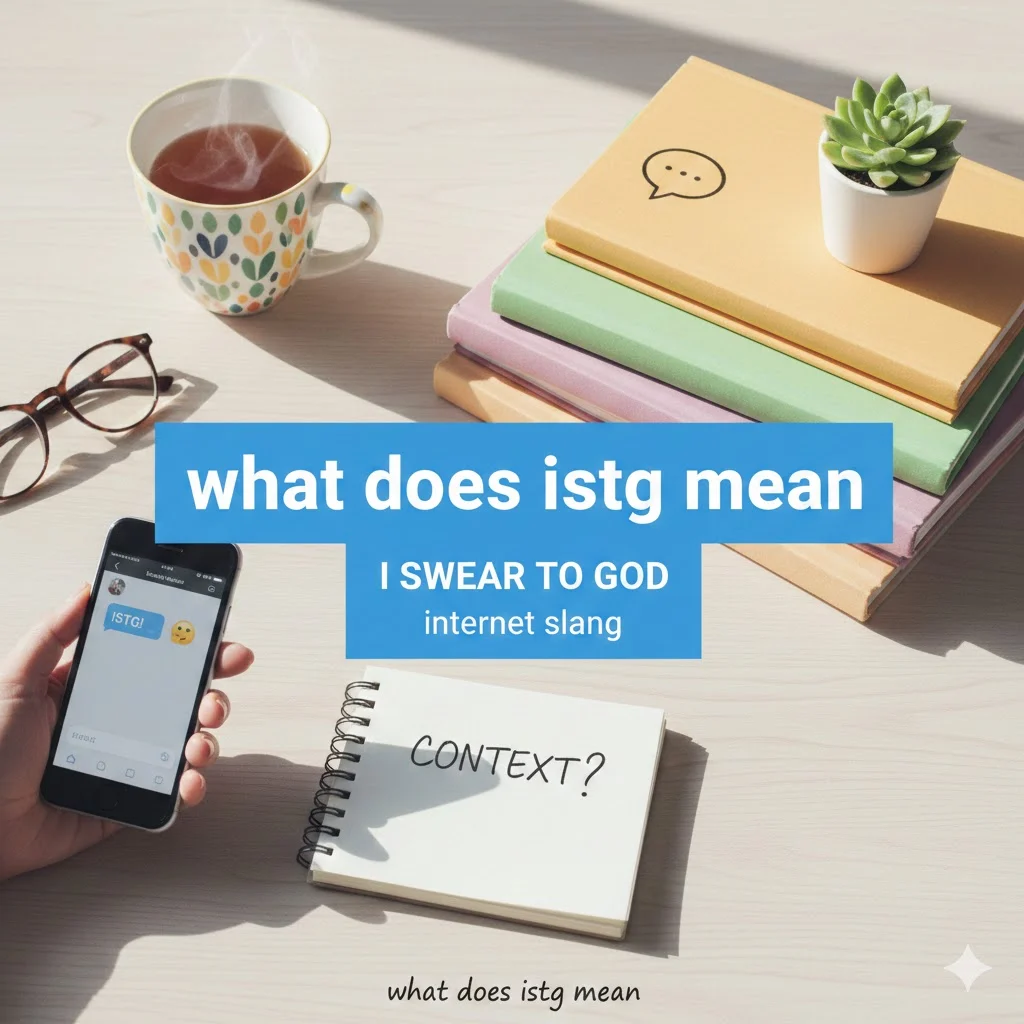
I Swear To God
This phrase is used to emphasize truthfulness, frustration, annoyance, or strong emotion in a statement. Unlike simple affirmations like “yes” or “really,” ISTG conveys an added layer of intensity and sincerity.
For example:
- “ISTG, if I miss this bus, I’m walking home!”
- ISTG, she didn’t even text me back.”
The abbreviation makes typing faster and allows users to communicate emotion efficiently in casual conversations, texts, and social media posts.
Key Notes About ISTG
- Type: Internet slang, text abbreviation
- Purpose: Emphasizes truthfulness or frustration
- Tone: Informal and casual
- Audience: Mostly younger generations on social media and messaging apps
Using ISTG properly signals that you understand internet slang, making your digital communication more natural and relatable.
The Origin of ISTG
Every acronym has a story, and ISTG is no exception. This abbreviation emerged as part of the rise of texting culture in the early 2000s, when character limits, speed, and casual tone shaped how people communicated online.
- Early Chatrooms and Forums: Users sought ways to express emotions quickly. Long phrases like “I swear to God” were shortened to ISTG to save time.
- Text Messaging Era: SMS platforms often had 160-character limits, encouraging shorthand like ISTG.
- Social Media Integration: With platforms like Twitter, Instagram, and TikTok, ISTG became a staple for captions, comments, and replies.
ISTG shares its roots with other popular internet acronyms like OMG (Oh My God), SMH (Shaking My Head), and TBH (To Be Honest). All these abbreviations reflect a culture that values brevity without losing expressive power.
ISTG Meaning in Different Contexts
In Text Messages
Text messages remain the primary medium for ISTG usage. It is typically used to emphasize sincerity or frustration in a conversation.
Example Scenarios:
- A friend repeatedly cancels plans: “ISTG, if you bail again, I’m telling everyone.”
- You witness something unbelievable: “ISTG, I just saw a dog skateboarding!”
In texting, ISTG allows the writer to convey tone without voice inflection or body language, which are absent in digital communication.
See also Related:-
Click Here: What Does “DTF” Mean in Text, Chat, and Social Media?
See Also: What Does “In Transit” Mean? A Complete Guide to Tracking Packages
Click Here: What Does “XD” Mean in Text, Chat, and Social Media?
On Social Media
Platforms like Instagram, Twitter, TikTok, and Facebook have transformed how slang is used. ISTG is often used in:
- Captions: To dramatize a story or express disbelief.
- Comments: Emphasizing agreement, frustration, or humor.
- Reactions: Quick replies in DMs or posts.
Example:
“ISTG, this TikTok trend is going to be everywhere next week 😂”
Here, ISTG signals strong emotion and relatability to a digital audience.
In Chats and Online Forums
Online forums, Discord servers, and group chats also see ISTG frequently. In these spaces, tone matters—ISTG helps convey sarcasm, annoyance, or excitement clearly.
Example:
“ISTG, if this server glitches one more time, I’m quitting!”
In forums or discussion threads, ISTG allows participants to emphasize points without typing long paragraphs, keeping communication quick and expressive.
How to Use ISTG Correctly
Using ISTG properly requires understanding its tone and context. Misuse can make you appear insincere, confused, or out of touch.
Guidelines for Correct Usage:
- Keep it casual – ISTG is informal; avoid using it in professional emails or serious conversations.
- Use it for emphasis – Only use ISTG when you want to underscore honesty, frustration, or excitement.
- Combine with relatable situations – Pair ISTG with events, observations, or complaints.
- Avoid overuse – Using ISTG in every message dilutes its impact.
Correct Examples:
- “ISTG, this is the best pizza I’ve ever had!”
- “ISTG, I can’t believe she said that in class.”
Incorrect Examples:
- “ISTG, the quarterly report is due tomorrow.” (Too formal/professional)
- “ISTG, I am writing this blog post.” (Unnecessary emphasis)
Examples of ISTG in Sentences
Here are 10 practical examples showing how ISTG is used in everyday digital conversations:
| Example Sentence | Meaning/Context |
|---|---|
| ISTG, I can’t find my keys anywhere | Expressing frustration |
| ISTG, he’s lying about what happened | Expressing disbelief |
| ISTG, that movie was amazing! | Showing excitement |
| ISTG, I didn’t eat your snack | Denying accusation |
| ISTG, this line at Starbucks is ridiculous | Complaining |
| ISTG, I’m never going there again | Emphasizing resolve |
| ISTG, my phone just died | Sharing frustration |
| ISTG, I’ve never laughed so hard | Expressing amusement |
| ISTG, she didn’t reply to my text | Showing annoyance |
| ISTG, the dog is actually dancing | Expressing disbelief and humor |
Quote: “Slang like ISTG is a shortcut to emotion in the digital age—brevity with emphasis.”
Common Mistakes and Misunderstandings
Even common acronyms like ISTG can be misused. Here are frequent mistakes:
1. Using ISTG in Formal Settings
- Avoid in emails, job applications, or professional messages.
- Example: “ISTG, the project deadline is tough.” → Too casual.
2. Confusing ISTG With Similar Acronyms
- IKR (I Know, Right?) – Agreement rather than emphasis.
- IDK (I Don’t Know) – Expressing uncertainty, not emphasis.
- OMG (Oh My God) – Shock without promise of sincerity.
3. Overusing ISTG
- Excessive use diminishes its impact and can make text sound dramatic or immature.
Tips to Avoid Mistakes
- Use ISTG sparingly.
- Check context: casual conversation vs. serious discussion.
- Pair with an emoji when appropriate for tone: 😂, 😡, 😱.
Why ISTG Became Popular
ISTG’s rise in popularity isn’t random—it reflects modern communication trends:
- Brevity: People want to communicate feelings quickly.
- Expressiveness: Text alone lacks tone; ISTG adds emotion.
- Relatability: Younger generations love shorthand that signals belonging.
- Memes and Social Media Trends: Platforms amplify slang adoption.
Fun Fact: Surveys show that internet slang like ISTG increases engagement in social media posts by up to 30% when used naturally.
ISTG Dictionary and Quick Reference
Here’s a mini dictionary of ISTG and related acronyms for easy reference:
| Acronym | Full Form | Meaning/Use |
|---|---|---|
| ISTG | I Swear To God | Emphasizes truthfulness or frustration |
| OMG | Oh My God | Expresses surprise or shock |
| SMH | Shaking My Head | Shows disbelief or disappointment |
| TBH | To Be Honest | Conveys honesty or personal opinion |
| IKR | I Know, Right? | Agreement with a statement |
| IDK | I Don’t Know | Expressing uncertainty |
Tip: Keep a small list of popular acronyms to stay fluent in digital conversations.
FAQs About ISTG
Is ISTG formal or informal?
ISTG is strictly informal. Use it only in casual digital conversations.
Can you use ISTG professionally?
No. It’s slang designed for casual, social, or entertainment contexts.
What are alternatives to ISTG?
Depending on context: OMG, I swear, seriously, TBH.
Can ISTG be used in humor?
Absolutely! ISTG often appears in memes, jokes, and funny social media posts to exaggerate a point.
Quick Quiz: Identify the Correct Use of ISTG
Which of the following uses ISTG correctly?
- ISTG, I finished my taxes on time.
- ISTG, my dog just learned a new trick!
- ISTG, I’m reporting to HR tomorrow.
- ISTG, this pizza is amazing!
Answer: 2 & 4. The other examples are too formal or professional.
Conclusion
ISTG, short for I Swear To God, has become an essential part of online and texting culture. It’s a tool to emphasize sincerity, frustration, humor, or excitement. Understanding how to use it properly lets you communicate clearly, avoid misunderstandings, and fit naturally into digital conversations.
Remember: ISTG is casual, emotional, and context-sensitive. Use it sparingly, pair it with emojis when needed, and enjoy the expressive power it adds to your texts, chats, and social media posts.
Summary Table: Key Points About ISTG
| Feature | Detail |
|---|---|
| Full Form | I Swear To God |
| Usage | Emphasize sincerity, frustration, excitement |
| Tone | Casual, informal |
| Platforms | Text messages, social media, chats, forums |
| Common Mistakes | Overuse, formal contexts, confusing with other acronyms |
| Related Acronyms | OMG, SMH, TBH, IKR, IDK |
| Tips | Use sparingly, match context, pair with emojis |