You may have heard someone say “I’m your huckleberry” in a movie, meme, or casual conversation and wondered what it actually means. It sounds old-fashioned. A little mysterious. But surprisingly powerful.
So, what does “I’m your huckleberry” mean in modern language?
This phrase is more than just cowboy talk. It carries meanings like loyalty, confidence, and readiness. Today, people still use it in jokes, pop culture references, and even romantic conversations.
In this guide, we’ll break it down in simple, clear language. You’ll learn its true meaning, its Wild West origins, how it’s used today, and when it’s appropriate—or not—to say it. By the end, you’ll understand this iconic phrase like a pro.
Definition & Meaning of “I’m Your Huckleberry”
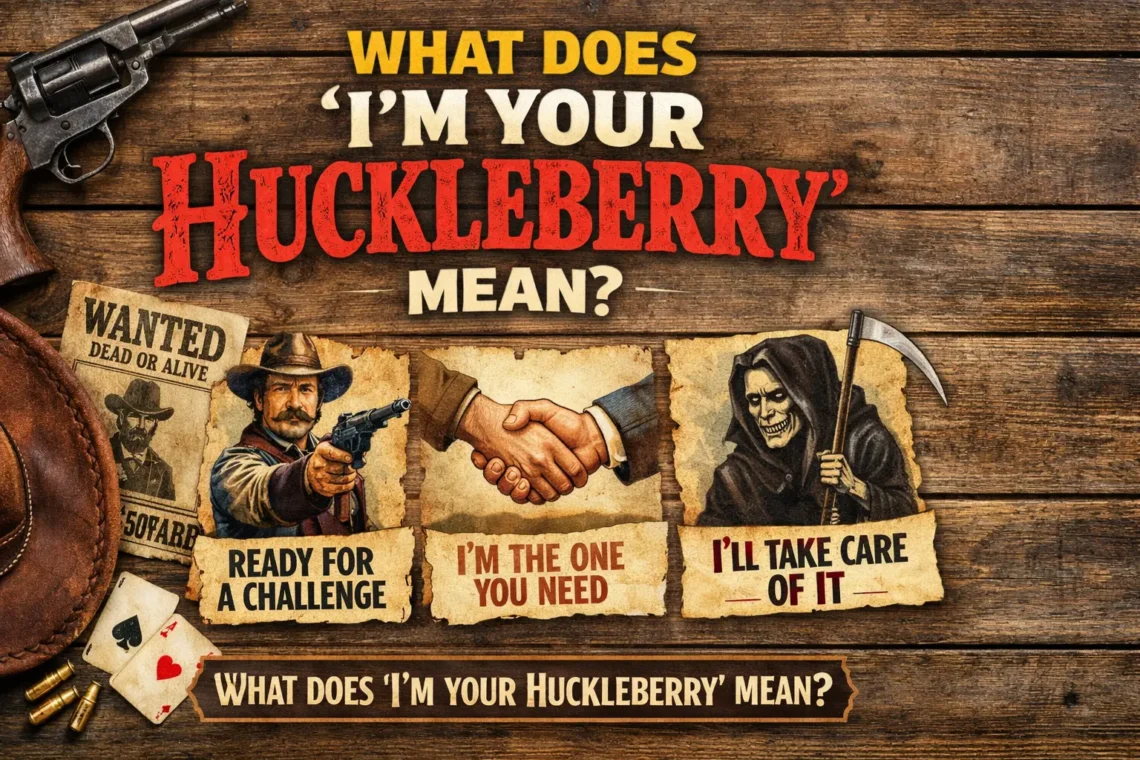
At its core, “I’m your huckleberry” means:
“I’m the right person for the job.”
“I’m the one you’re looking for.”
“I’m ready to help or take on the challenge.”
It’s a confident way of saying “You can count on me.”
Simple Breakdown
- “I’m” = I am
- “Your” = for you
- “Huckleberry” = the perfect match or solution
So together, it means:
“I’m exactly what you need.”
Real-Life Examples
Casual conversation:
“Need help moving this weekend?”
“Yep.”
“Cool. I’m your huckleberry.”
Funny tone:
“Who wants the last slice of pizza?”
“I’m your huckleberry 🍕”
Romantic tone:
“Looking for someone who’s always got your back?”
“I’m your huckleberry.”
Key Takeaways
- It expresses confidence and loyalty
- Often used in a playful or bold way
- Meaning depends heavily on tone and context
Background & History of “I’m Your Huckleberry”
The phrase comes from 19th-century American slang, especially during the Wild West era.
The Historical Meaning
Back then, “huckleberry” didn’t just mean a fruit. It also meant:
- Something small but important
- The right or fitting thing
Saying “I’m your huckleberry” was similar to saying:
“I’m just the person you need.”
The Famous Movie Connection
The phrase became legendary thanks to the 1993 film Tombstone, where Val Kilmer’s character, Doc Holliday, says:
“I’m your huckleberry.”
This line turned the phrase into a pop culture icon.
How It Evolved
- Old Western slang → Movie quote
- Movie quote → Internet memes
- Memes → Modern casual slang
Today, people use it mostly as a fun, confident expression, often with a hint of humor.
Usage in Different Contexts
1. Casual Conversations
Used jokingly or confidently among friends.
Example:
“Who’s down for road trip planning?”
“I’m your huckleberry.”
2. Social Media & Memes
Often paired with cowboy images or confident captions.
Example caption:
“Need a weekend adventure buddy? I’m your huckleberry 🤠”
3. Pop Culture References
Used by movie fans to reference Tombstone or Western themes.
4. Humor & Sarcasm
Sometimes said sarcastically.
Example:
“Someone has to do the dishes.”
“Well… I guess I’m your huckleberry.”
Professional Communication
In professional settings, use caution.
When It’s NOT Appropriate
- Formal emails
- Job interviews
- Business proposals
It may sound too casual or unclear.
When It Might Work
- Informal team chats
- Creative industries
- Friendly internal discussions
Safer Professional Alternatives
- “I can take care of that.”
- “I’m happy to help.”
- “I’m the right person for this task.”
Hidden or Offensive Meanings
Is the phrase offensive?
No—by default, it’s harmless.
However, problems can arise if:
- The listener doesn’t understand the reference
- Tone sounds sarcastic or mocking
- Used in serious or sensitive discussions
Safe vs Risky Usage
Safe:
“Need a teammate for this project? I’m your huckleberry.”
Risky:
“Oh sure, I’m your huckleberry,” (said with eye-roll)
Tone changes everything.
Usage in Online Communities & Dating Apps
Dating Apps
The phrase is often used playfully or flirtatiously.
Example:
“Looking for someone who loves movies and road trips.”
“I’m your huckleberry 😉”
Online Communities
- Discord
- Meme pages
Often used as a confident response or joke.
Tips
- Add emojis to soften tone
- Use it sparingly
- Make sure the other person gets the reference
Comparison with Similar Phrases
| Phrase | Meaning | Tone | Usage |
|---|---|---|---|
| I’m your huckleberry | I’m the right person | Playful, confident | Casual |
| I’ve got this | I can handle it | Direct | Casual & professional |
| Count on me | You can rely on me | Trustworthy | Professional |
| Say no more | I understand | Casual | Informal |
| I’m your guy | I’ll do it | Friendly | Casual |
10 Slang & Expressions Similar to “I’m Your Huckleberry”
- I’m your guy – Casual confidence
- I’ve got you – Supportive tone
- Count me in – Willing participation
- I’m on it – Task acceptance
- Say less – Understanding without explanation
- I’m down – Casual agreement
- Leave it to me – Responsibility
- Your wish is my command – Playful exaggeration
- I’m the one – Confident claim
- Handled – Task completed or accepted
How to Respond When Someone Says “I’m Your Huckleberry”
Casual Responses
- “Love the confidence 😄”
- “Alright, cowboy!”
Funny Responses
- “Easy there, Doc Holliday 🤠”
- “That’s a bold statement!”
Professional Responses
- “Thanks, I appreciate it.”
- “Great, let’s move forward.”
Privacy-Conscious Responses
- A simple 👍 or 😊 emoji works too.
Regional & Cultural Differences
United States
- Strongly associated with Western culture
- Often recognized due to movies
UK & Australia
- Less common
- Often misunderstood without context
Non-Native English Speakers
- Phrase may sound confusing or literal
- Best explained before use
Tip: If your audience isn’t familiar with American slang, avoid using it.
FAQs
Q1: Is “I’m your huckleberry” a romantic phrase?
It can be, depending on tone and context.
Q2: Is it outdated?
Not really. It’s old, but still popular through pop culture.
Q3: Can I use it jokingly?
Yes, humor is one of its most common uses.
Q4: Is it slang or idiom?
It’s best described as an idiomatic expression.
Q5: Why do people still use it today?
Because it sounds confident, unique, and memorable.
Conclusion
So, what does “I’m your huckleberry” mean today? It’s a bold, friendly way to say “I’m the right person for this” or “You can count on me.” Rooted in Old West slang and made famous by pop culture, the phrase has survived because it’s confident, playful, and expressive. While it works best in casual settings, understanding the tone and audience is key. Use it wisely, and it can add charm, humor, and personality to your conversations—online or offline.