You’ve probably heard someone say “I plead the fifth” in a movie, meme, or even a group chat. It sounds serious. Almost dramatic. But what does it actually mean, and why do people use it outside of courtrooms?
The phrase “I plead the fifth” comes from U.S. law, but today it’s widely used in everyday conversation, texting, social media, and even jokes. People use it to avoid answering awkward, personal, or risky questions.
In this guide, you’ll learn what does I plead the fifth mean, where it comes from, how it’s used online, and when it’s okay—or not okay—to say it. By the end, you’ll know exactly how to use it correctly without sounding confusing or out of place.
Definition & Meaning of “I Plead the Fifth”
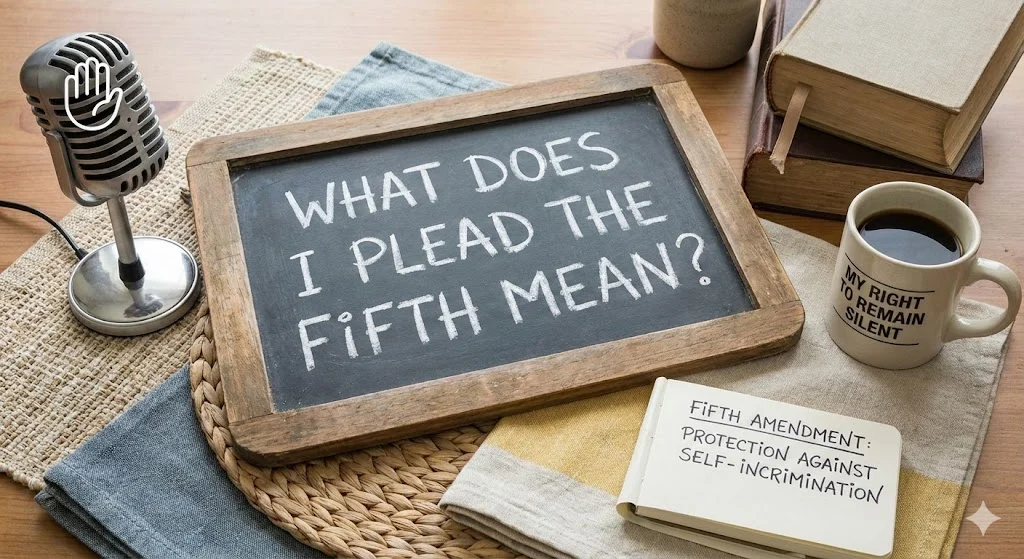
“I plead the fifth” means refusing to answer a question to avoid self-incrimination, embarrassment, or trouble.
Literal Meaning (Legal)
In law, it refers to the Fifth Amendment of the U.S. Constitution, which protects people from being forced to testify against themselves.
Simple meaning:
👉 “I choose not to answer because it could get me in trouble.”
Modern & Slang Meaning
Outside court, the phrase is used humorously or casually.
People use it when:
- A question is too personal
- The answer might cause drama
- They want to avoid responsibility
- They’re joking about being “guilty”
Text & Chat Examples
Friend: “Did you eat the last slice of pizza?”
You: “I plead the fifth 😅”
Coworker: “Who forgot to send the email?”
Reply: “I plead the fifth.”
Key Points
- It means refusal to answer
- Often playful in casual settings
- Serious in legal situations
- Context matters a lot
Background & History of the Phrase
The phrase comes directly from American constitutional law.
Legal Origin
The Fifth Amendment (ratified in 1791) states that no person:
“shall be compelled in any criminal case to be a witness against himself.”
This protection allows individuals to remain silent during questioning.
How the Phrase Became Popular
- Used in courtrooms
- Popularized by crime shows, movies, and TV dramas
- Adopted into everyday speech as slang
- Spread through internet culture and memes
Cultural Influence
- Strongly tied to U.S. legal system
- Recognized globally due to Hollywood
- Often misunderstood outside America
Today, the phrase has shifted from a legal defense to a social shortcut for avoiding answers.
Usage in Different Contexts
Texting & Messaging
Used playfully or defensively.
Example:
“Did you text your ex last night?”
“I plead the fifth.”
Social Media
Common in memes, comments, and captions.
Example caption:
“How many snacks I ate today? I plead the fifth.”
Casual Conversations
Used jokingly among friends.
Serious Conversations
Can signal discomfort or boundaries.
⚠️ Tone is key. It can sound funny—or evasive.
Professional Communication
In professional settings, saying “I plead the fifth” can be risky.
When It’s NOT Appropriate
- Job interviews
- Client meetings
- Emails
- Legal or HR discussions
It may sound:
- Defensive
- Uncooperative
- Unprofessional
Safer Alternatives
Instead of saying:
“I plead the fifth”
Say:
- “I’m not comfortable discussing that.”
- “I don’t have that information right now.”
- “I’d prefer not to comment.”
When It Might Be Okay
- Casual team chats
- Light humor with close colleagues
- Non-serious situations
Hidden or Misinterpreted Meanings
While usually harmless, the phrase can carry implied guilt.
Why Context Matters
Saying “I plead the fifth” can suggest:
- You did something wrong
- You’re hiding information
- You feel accused
Risky Example
Boss: “Did you miss the deadline?”
You: “I plead the fifth.”
This sounds irresponsible.
Safe Example
Friend: “Who has a crush on the teacher?”
You: “I plead the fifth 😂”
Same phrase. Totally different impact.
Usage in Online Communities & Dating Apps
The phrase is popular in:
- Twitter/X
- TikTok comments
- Dating apps
Dating App Example
Match: “So… how many dates do you have this week?”
You: “I plead the fifth 😏”
It adds:
- Mystery
- Playfulness
- Flirting energy
Online Community Tip
Use emojis to soften tone:
- 😅
- 😂
- 😏
This helps avoid sounding rude or suspicious.
Comparison with Similar Phrases
| Phrase | Meaning | Tone | Usage |
|---|---|---|---|
| I plead the fifth | Refuse to answer | Casual / Serious | Text, speech |
| No comment | Decline to respond | Formal | Media, work |
| Pass | Skip question | Casual | Games, chats |
| That’s classified | Joke refusal | Humorous | Friends |
| I can’t say | Neutral refusal | Polite | Professional |
Key Difference:
“I plead the fifth” carries legal and humorous weight that others don’t.
10 Slang & Expressions Related to “Plead the Fifth”
- No comment – Formal refusal
- Pass – Casual avoidance
- Can’t say – Neutral response
- That’s classified – Playful secrecy
- I’m staying quiet – Direct
- Ask me later – Delayed answer
- Let’s skip that – Polite avoidance
- I’d rather not say – Respectful
- Top secret – Joke response
- I’m innocent 😇 – Humorous denial
How to Respond When Someone Says “I Plead the Fifth”
Casual Response
- “Fair enough 😄”
- “That tells me everything.”
Funny Response
- “Suspicious!”
- “Guilty confirmed 😂”
Respectful Response
- “No worries.”
- “Got it, we can move on.”
Professional Response
- “Understood.”
- “Let’s discuss something else.”
Knowing how to respond avoids awkward moments.
Regional & Cultural Differences
This phrase is strongly American.
United States
- Very common
- Everyone understands the reference
UK, Canada, Australia
- Understood due to media
- Used mostly jokingly
Non-English or Non-US Regions
- Often misunderstood
- May require explanation
Tip: If your audience isn’t familiar with U.S. law, avoid using it.
See Also Related: Mean Platelet Volume Low (MPV) 🩸 — Full Explanation, Causes & Quiz
FAQs
Q1: Is “I plead the fifth” only for court cases?
No. It’s commonly used as slang in everyday conversation.
Q2: Does it mean you’re guilty?
Not legally. Socially, it can imply joking guilt.
Q3: Can I use it in text messages?
Yes, it’s very common in texting and social media.
Q4: Is it rude to say?
It can be, depending on tone and situation.
Q5: Is it okay at work?
Usually no. Use professional alternatives instead.
Q6: Do other countries use this phrase?
Mostly in the U.S., but globally recognized due to movies.
Conclusion
So, what does I plead the fifth mean? At its core, it means choosing not to answer a question to avoid trouble, discomfort, or embarrassment. While the phrase comes from serious legal roots, today it’s widely used as playful slang in texts, social media, and casual conversations. Still, context matters. What sounds funny among friends can feel unprofessional at work. Use it wisely, read the room, and when in doubt, choose a clearer alternative. Understanding this phrase helps you communicate confidently—online and offline.