If someone texted you “HRU?”, you’re not alone if you paused for a moment. Slang and texting shortcuts are everywhere today, and missing even one can leave you confused during chats, gaming sessions, or social media replies.
The acronym HRU is one of the most common greetings online, yet many people still search for what does HRU mean because it appears in casual messages more than you might expect. This simple guide breaks down its meaning, how to use it, when not to use it, and how to respond like a pro.
Definition & Meaning of HRU
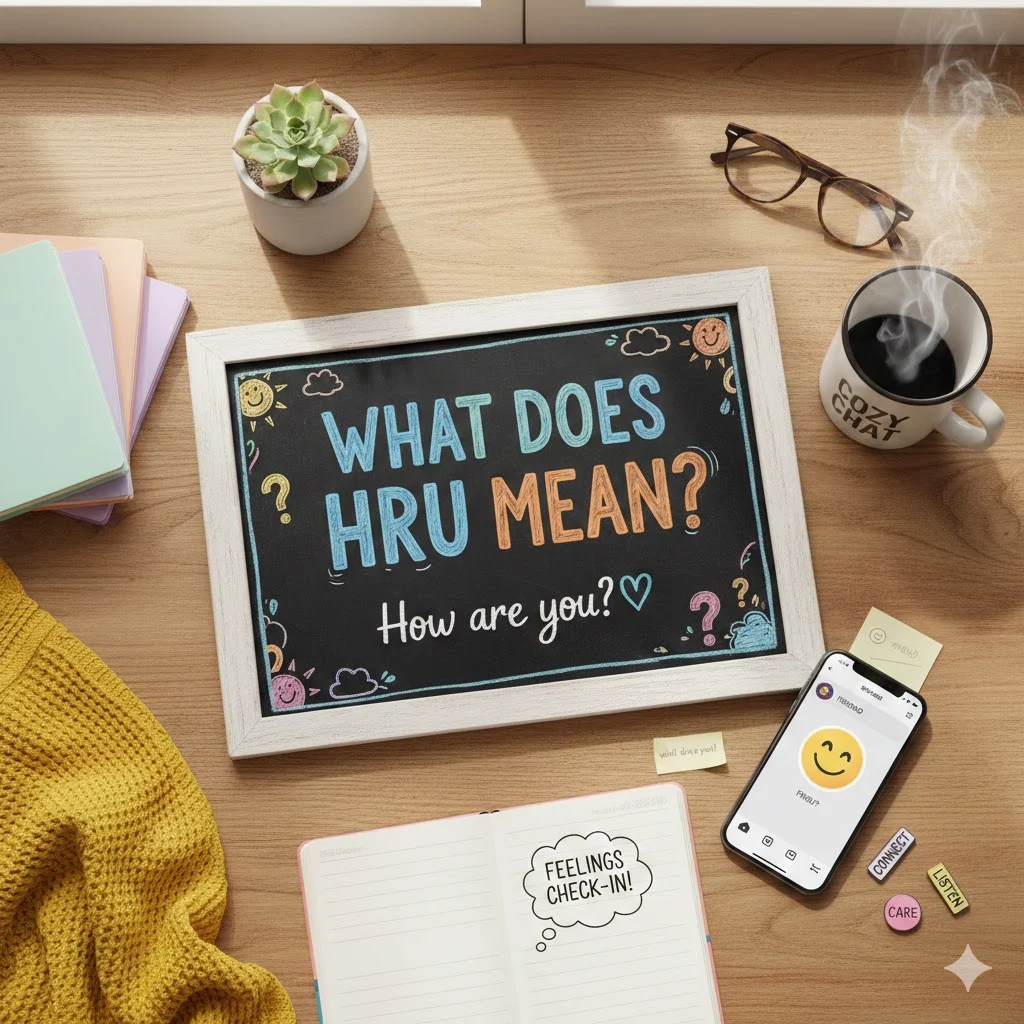
HRU stands for “How Are You?”
It’s a quick, friendly way to ask about someone’s well-being in texting, chatting, gaming, and social media conversations. Teens, young adults, and online communities use it to keep messages fast, casual, and chill.
Examples in Dialogue:
Text:
Aiden: “Hey! HRU?”
Mia: “I’m good! You?”
Instagram DM:
“HRU after the exam? 😅”
Key Points:
- HRU = How Are You?
- Casual, warm, and easygoing.
- Perfect for friendly chats.
- Not suitable for formal or professional communication.
Background & History of HRU
HRU began appearing in early SMS texting when phones had numeric keypads and people relied on short abbreviations to type faster.
As texting evolved into instant messaging, gaming chats, and social media, HRU stayed popular because of its simplicity. It became a universal shortcut across:
- Snapchat
- TikTok
- Discord
- Online forums & gaming chats
HRU is now part of modern digital language—similar to LOL, BRB, and TTYL.
Its quick rise is due to digital communication culture valuing speed and convenience. As keyboards changed, the abbreviation stayed because it already felt natural in casual online conversations.
Usage in Different Contexts
HRU works almost anywhere casual conversations happen.
Texting
“Just saw your status. HRU feeling today?”
Social Media
Used in comments or DMs for quick check-ins:
“Loved your pic! HRU though?”
Gaming Chats
“GG bro! HRU after that match?”
Table: HRU by Context
| Context | Example | Tone |
|---|---|---|
| Text Message | “HRU today?” | Friendly |
| Instagram DM | “HRU? Long time!” | Casual |
| Gaming Chat | “HRU before we queue?” | Informal |
| Snapchat | “HRU rn?” | Chill & quick |
Professional Communication
HRU is too informal for business or workplace conversations.
Avoid using it in:
- Emails
- Customer service chats
- Job applications
- Work-related group chats
Professional Alternatives:
- “How are you?”
- “Hope you’re doing well today.”
- “How have you been?”
Tip: If you’re messaging a colleague you know well, writing the full phrase is still safer and clearer.
Hidden or Offensive Meanings
HRU itself is not offensive, but tone and timing matter.
Risky situations
- Messaging HRU to someone upset or stressed may feel shallow.
- Using HRU repeatedly without context can seem robotic or disinterested.
Safe usage
“Hey! HRU? Just checking in.”
Adding a reason softens the message and feels more genuine.
Ambiguous usage
“HRU with that?”
This can confuse some people because HRU isn’t meant for tasks or updates.
Usage in Online Communities & Dating Apps
HRU is common on dating apps like Tinder, Bumble, and Hinge—but it can feel too generic if overused.
Better options:
- “HRU today?”
- “HRU this evening?”
- “HRU after your trip?”
Dating App Chat Example:
Jordan: “Hey! Cute profile. HRU?”
Alex: “Doing great! You?”
Tip: Personalizing HRU increases reply chances.
Comparison with Similar Terms
| Term | Meaning | Tone | When to Use |
|---|---|---|---|
| HRU | How Are You? | Friendly | Casual chats |
| HBY | How About You? | Friendly | Follow-up to HRU |
| HYD | How You Doing? | Casual, warmer | Friends or flirty |
| WYD | What You Doing? | Curious, casual | Close friends |
| SUP | What’s Up? | Chill | Small talk |
Key difference:
HRU asks about well-being, not activity.
10 Slang Terms & Acronyms Containing HRU
- HRU – How Are You?
- HRUM – How Are You, Man?
- HRUH – How Are You, Hun?
- HRUB – How Are You, Bro?
- HRUG – How Are You Guys?
- HRUY – How Are You Today?
- HRUBL – How Are You, Babe? (less common)
- HRUP – How Are You People?
- HRUN – How Are You Now?
- HRU2 – How Are You Too?
These are less common but appear in close friend chats or playful texting.
How to Respond
Your response depends on who you’re talking to and the mood.
Casual Responses
- “I’m good! HRU?”
- “All good here 😄”
Funny Responses
- “Alive 😆 you?”
- “Running on snacks but okay!”
Professional-Style Responses
(When you want to sound polite but not too casual)
- “I’m doing well, thanks. How about you?”
Short & Private
- “Good, you?”
- 👍
Dialogue Example
Chris: “HRU?”
Sam: “Pretty good! Just chilling. HRU?”
Regional & Cultural Differences
- US & UK: HRU is standard casual slang.
- Australia: Often used with added humor, like “HRU mate?”
- South Asia: Common in WhatsApp and Instagram groups, especially among students.
- Europe: Understood but less frequently used; full phrase preferred.
Meaning stays the same globally, but tone and frequency vary.
FAQs
1. What does HRU mean?
It means How Are You?
2. Is HRU formal?
No, it’s informal and best for friendly chats.
3. Where is HRU most used?
On WhatsApp, Instagram, Snapchat, TikTok, and Discord.
4. Can I use HRU at work?
Avoid it. Write the full question instead.
5. Is HRU flirty?
It can be, depending on tone and emojis.
6. How do I reply to HRU?
Give a simple update and ask back if you want to keep the chat going.
Conclusion (100 Words)
HRU is one of the simplest and most common acronyms used in texting and online messaging, meaning “How Are You?” It keeps conversations quick, casual, and friendly, making it popular among teens, young adults, and social media users. While it works perfectly in relaxed chats, it’s best to avoid in professional or formal settings. Understanding how to use HRU—and how to respond—helps you communicate confidently across apps, platforms, and cultural contexts. Use it with friends, personalize it when needed, and choose clearer phrases when talking at work or with unfamiliar contacts.