You’ve probably heard the phrase “Hakuna Matata” before. Maybe in a movie. Maybe in a song. Or maybe someone said it to calm you down during a stressful moment. But what does Hakuna Matata mean, really? Is it just a catchy line from a cartoon, or does it have a deeper meaning?
Hakuna Matata is more than a fun phrase. It carries a powerful message about life, mindset, and peace. People use it in conversations, social media captions, tattoos, and even professional motivational talks. In this article, you’ll learn the true meaning of Hakuna Matata, its history, cultural importance, and how people use it today in texting, social media, and daily life.
By the end, you’ll understand why this simple phrase became a global symbol of positivity.
Definition & Meaning of Hakuna Matata
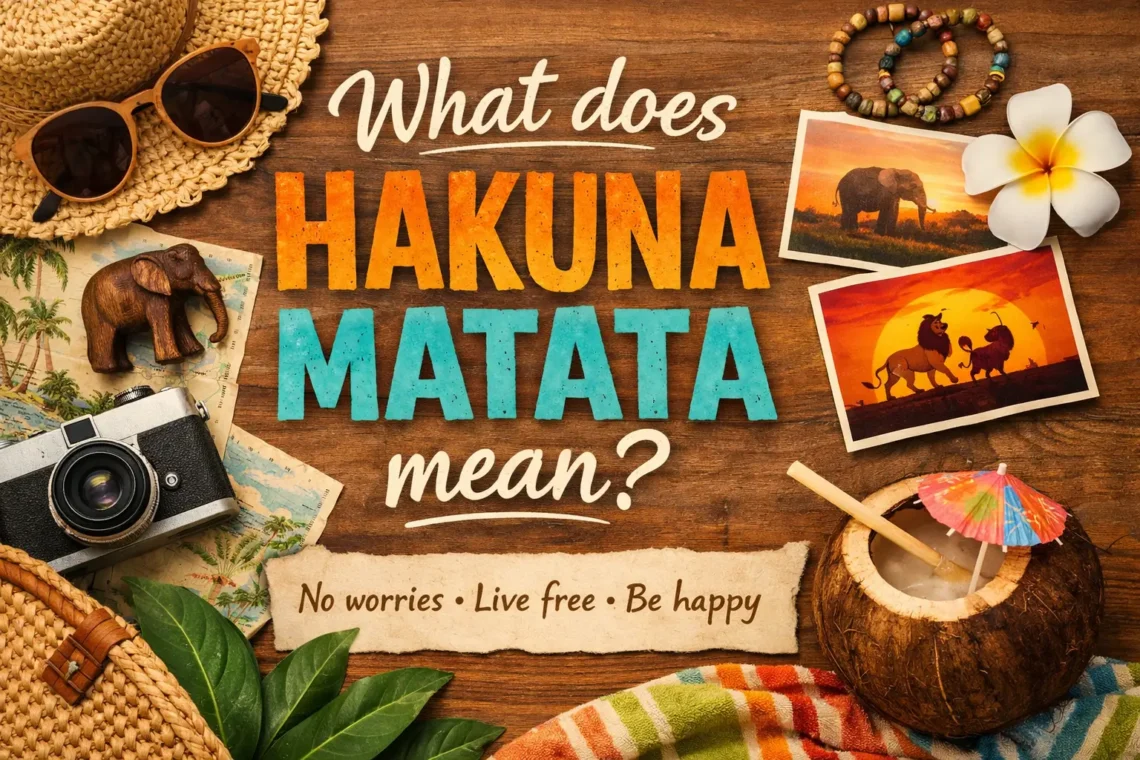
Hakuna Matata is a Swahili phrase that means:
“No worries”
“No problems”
“There are no troubles”
Word-by-Word Breakdown
- Hakuna = There is no / There are no
- Matata = Problems / Troubles
So, when combined, Hakuna Matata literally means “There are no problems.”
What It Really Means in Everyday Life
Beyond the literal translation, Hakuna Matata represents a relaxed attitude toward life. It encourages people to:
- Let go of stress
- Stop worrying about things they can’t control
- Focus on the present moment
Simple Examples in Conversation
Casual talk:
“I was stressing about the exam, but then I thought—Hakuna Matata.”
Encouraging a friend:
“Relax. We’ll figure it out. Hakuna Matata.”
Social media caption:
“Beach day vibes 🌴 Hakuna Matata.”
Key takeaway:
Hakuna Matata is not about ignoring responsibility. It’s about choosing peace over panic.
Background & History of Hakuna Matata
Swahili Language Origins
Hakuna Matata comes from Swahili, a language spoken widely in:
- Kenya
- Tanzania
- Uganda
- Parts of East Africa
Swahili blends African, Arabic, and other cultural influences. Hakuna Matata has been used for generations as a normal, everyday phrase.
Life Before Pop Culture
Before movies and music made it famous, people used Hakuna Matata simply to say:
- “Everything is fine”
- “No issue”
- “Don’t worry about it”
Shopkeepers, elders, parents, and friends used it in daily conversation.
Global Rise in Popularity
The phrase became globally famous after appearing in Disney’s The Lion King (1994). From that moment:
- The phrase spread worldwide
- It became associated with happiness and freedom
- People started using it as a life philosophy
Despite its popularity, in East Africa, Hakuna Matata remains a normal, respectful phrase, not slang.
Usage in Different Contexts
Hakuna Matata is flexible. It works in many situations.
Casual Conversations
Used to calm someone or lighten the mood.
- “Missed the bus? Hakuna Matata.”
- “We’ll try again tomorrow. Hakuna Matata.”
Social Media
Popular in:
- Instagram captions
- Travel posts
- Beach photos
- Motivational quotes
Example:
“Sun, sand, and peace. Hakuna Matata 🌊”
Travel & Tourism
Tour guides often use it to make visitors feel welcome.
- “Your room isn’t ready yet? Hakuna Matata.”
Daily Life Situations
| Situation | Meaning |
|---|---|
| Small mistake | Don’t stress |
| Delay | It’s okay |
| Bad day | Stay calm |
| Relaxing moment | Enjoy now |
Hakuna Matata in Professional Communication
Is It Appropriate at Work?
Sometimes yes. Sometimes no.
Appropriate when:
- Team culture is relaxed
- Used informally
- Speaking casually, not officially
Not appropriate when:
- Writing formal emails
- Dealing with serious problems
- Speaking with clients professionally
Safer Professional Alternatives
Instead of saying Hakuna Matata, use:
- “No problem”
- “That’s manageable”
- “We’ll take care of it”
Rule of thumb:
Use Hakuna Matata for tone, not for solutions.
Hidden Meanings & Cultural Sensitivity
Does Hakuna Matata Have Negative Meaning?
No. It is not offensive.
But problems arise when:
- People treat it as a joke only
- The cultural roots are ignored
- It’s used sarcastically in serious situations
Respectful Use
- Understand its origin
- Use it positively
- Avoid mocking tone
Respect turns a phrase into wisdom.
Hakuna Matata in Online Communities & Dating Apps
Online Usage
People use Hakuna Matata to show:
- Calm personality
- Easy-going mindset
- Positive vibes
Dating Apps
Often used in bios:
“Travel lover. Good vibes only. Hakuna Matata.”
Messaging Example
User A:
“Sorry I replied late.”
User B:
“Hakuna Matata 😊”
It signals patience and understanding.
Comparison with Similar Expressions
| Phrase | Meaning | Tone |
|---|---|---|
| Hakuna Matata | No worries | Calm & positive |
| No worries | It’s okay | Casual |
| Chill | Relax | Informal |
| It’s fine | Acceptable | Neutral |
| Don’t stress | Calm down | Supportive |
Hakuna Matata stands out because it feels warm, global, and philosophical.
10 Popular Phrases Related to Hakuna Matata
- No worries – English equivalent
- Chill vibes – Relaxed mood
- Easy going – Calm personality
- Go with the flow – Flexible mindset
- Live in the moment – Mindfulness
- Stress-free – No tension
- Peaceful life – Inner calm
- Positive energy – Optimistic attitude
- Carefree – Light-hearted
- Good vibes only – Emotional boundary
How to Respond When Someone Says Hakuna Matata
Casual Responses
- “Thanks 😊”
- “Appreciate it!”
- “That helps.”
Friendly Responses
- “Love that mindset!”
- “Exactly! Hakuna Matata!”
Professional Responses
- “Thank you for understanding.”
- “That sounds good.”
Emoji-Friendly Replies
- 😌 🌴 ✨
Regional & Cultural Differences
East Africa
- Common everyday phrase
- Used seriously
- Not slang
Western Countries
- Motivational phrase
- Pop culture reference
- Symbolic meaning
Cultural Tip
In Africa, it’s language.
Outside Africa, it’s philosophy.
Both are valid when used respectfully.
FAQs
Q1: What does Hakuna Matata mean literally?
It literally means “There are no problems.”
Q2: Is Hakuna Matata a real phrase?
Yes. It’s a real Swahili phrase used daily.
Q3: Is Hakuna Matata only from The Lion King?
No. The movie made it famous, but it existed long before.
Q4: Can I use Hakuna Matata in texting?
Yes. It’s friendly and widely understood.
Q5: Is it okay to use Hakuna Matata as a tattoo?
Yes, many do—but understand its meaning first.
Q6: Is Hakuna Matata slang?
No. It’s a real phrase, not slang.
Conclusion (100 Words)
So, what does Hakuna Matata mean? It means more than “no worries.” It represents calm, balance, and a peaceful way of handling life’s ups and downs. Rooted in the Swahili language and embraced worldwide, Hakuna Matata reminds us not to let stress control our happiness. Whether used in conversation, texting, travel, or social media, the phrase spreads positivity and patience. When used respectfully, Hakuna Matata becomes more than words—it becomes a mindset. Sometimes, the best solution isn’t panic. It’s peace.