You might have heard the term grooming in conversations about social media, online safety, or even everyday life. But what does grooming mean exactly?
Grooming isn’t just about personal care—it can also refer to behaviors aimed at building trust, often with harmful intentions, especially online. Understanding grooming is vital for teenagers, young adults, parents, and even professionals. In this article, we’ll explore the definition of grooming, different contexts where it occurs, signs to watch out for, and tips on staying safe online and offline.
By the end, you’ll be equipped to recognize grooming behaviors and respond appropriately.
Definition & Meaning of Grooming
Grooming can have multiple meanings depending on context:
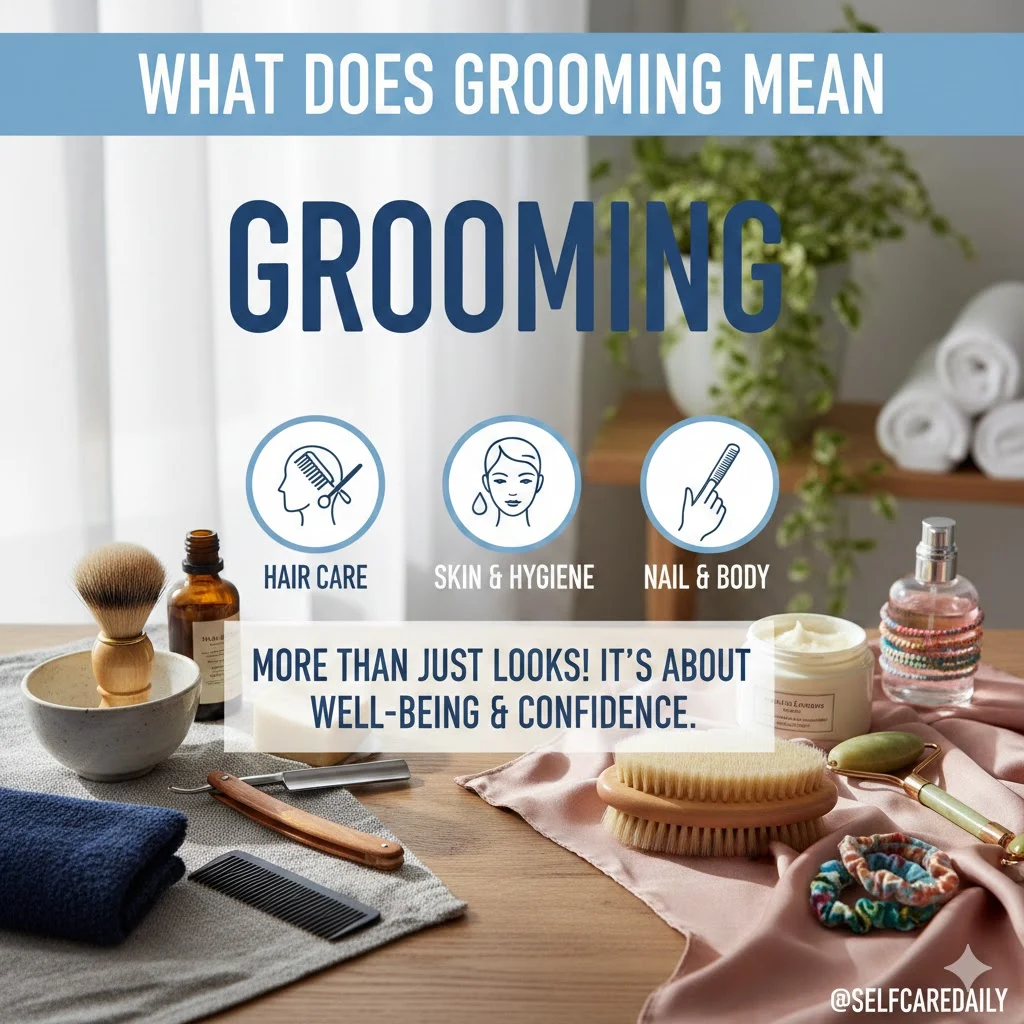
- Personal Grooming: The most familiar meaning, referring to self-care, hygiene, and appearance.
- Example: brushing hair, washing, or maintaining clean clothes.
- Social/Professional Grooming: Preparing someone for a role or task, like mentoring, training, or skill development.
- Example: “The company is grooming interns for management positions.”
- Predatory Grooming (Online & Offline): A dangerous type of behavior where someone builds trust to exploit or manipulate another person, often targeting minors.
Key Points:
- Grooming can be harmless (self-care) or harmful (predatory behavior).
- Context is critical—especially in online interactions.
- Awareness is essential for safety, particularly for teenagers and social media users.
Examples in Dialogue:
Casual chat (self-care context):
Mia: “I spent the morning grooming for the party.”
Alex: “Looking forward to seeing you shine!”
Professional context:
Manager: “We’re grooming Sarah for the next team lead position.”
Online safety context:
Parent: “Make sure your child knows the signs of grooming on social apps.”
Background & History of Grooming
The term grooming comes from the idea of “preparing” or “training” someone. Its usage evolved over time:
- Personal grooming: Dates back centuries, emphasizing hygiene, style, and self-presentation.
- Professional grooming: Used since the 20th century to describe mentorship and career development.
- Predatory grooming: Became widely recognized in the 1990s with the rise of the internet and chat rooms targeting children.
Cultural and Regional Influence:
- Online grooming is a global concern, with variations in terminology and awareness across countries.
- Governments and social media platforms increasingly focus on identifying and preventing predatory grooming.
Types of Grooming
Grooming behavior can occur in multiple forms:
1. Online Grooming
- Occurs through social media, chat apps, gaming platforms, and dating apps.
- Predators often gain trust gradually before exploiting victims.
- Example: “The stranger kept sending gifts and compliments AWL until the child shared personal info.”
2. Offline Grooming
- Happens in schools, clubs, workplaces, or social events.
- Could involve teachers, coaches, or adults building influence over a minor.
3. Self-Grooming & Professional Grooming
- Safe and positive forms of grooming.
- Prepares someone for social or career success.
Table: Types of Grooming
| Type | Context | Purpose / Example |
|---|---|---|
| Personal Grooming | Self-care, hygiene | Hair, nails, clothing |
| Professional Grooming | Career development | Mentorship, skill-building |
| Online Grooming | Social media, chats | Building trust to exploit (dangerous) |
| Offline Grooming | School, workplace | Manipulation or predatory influence |
Signs of Predatory Grooming
Recognizing grooming early is crucial. Key warning signs include:
- Excessive flattery or gifts.
- Asking for private information.
- Encouraging secrecy.
- Isolating the person from friends/family.
- Gradual desensitization to inappropriate topics.
Example dialogue:
Predator: “You’re special… don’t tell anyone about our chats.”
Teen: Feels uneasy but unsure what to do.
Grooming in Online Communities & Social Media
Online platforms can be breeding grounds for grooming due to anonymity and easy access.
Tips for staying safe:
- Avoid sharing personal info with strangers.
- Report suspicious accounts.
- Enable privacy settings on social media.
- Recognize manipulative behavior early.
Example in social media chat:
Stranger: “You’re so mature for your age, I can tell you secrets.”
Safe response: Block and report.
Professional Grooming
In a professional sense, grooming is positive preparation for leadership or skill development.
- Example: A mentor grooming a junior employee to become a team leader.
- Encourages learning, responsibility, and confidence.
Tips:
- Accept mentoring opportunities.
- Understand boundaries between professional guidance and personal manipulation.
Comparison With Similar Terms
| Term | Meaning | Tone | Usage |
|---|---|---|---|
| Grooming | Self-care, mentorship, predatory | Mixed | Personal, professional, online |
| Mentoring | Guidance, career development | Positive | Professional context |
| Exploitation | Taking advantage of someone | Negative | Criminal behavior |
| Coaching | Training and skill improvement | Positive | Sports, career |
How to Respond
Safe responses to grooming situations:
Casual / Online:
- “I don’t feel comfortable sharing that.”
- Block or report the account.
Professional:
- Seek HR or supervisor guidance.
- Document any concerning interactions.
Parent / Guardian Guidance:
- Monitor online activity.
- Talk openly about boundaries and online safety.
See Also: What Does Spotting Mean? – Definition, Causes & Examples
Regional & Cultural Differences
- US & UK: Strong focus on online safety education for minors.
- Europe: Laws against grooming vary by country; awareness campaigns are common.
- Asia & Australia: Growing concern, especially on popular social media and gaming platforms.
Example:
In the UK, online grooming is a criminal offense with strict penalties, while awareness programs teach teens to identify signs early.
FAQs
Q1: Is grooming always harmful?
A: No, personal and professional grooming can be positive. Predatory grooming is harmful.
Q2: Can adults be groomed online?
A: Yes, anyone can be manipulated, though minors are most vulnerable.
Q3: How can I report grooming online?
A: Most social media platforms have “report abuse” features; local authorities can also be contacted.
Q4: What are the first signs of grooming?
A: Flattery, gifts, secrecy requests, isolating the person.
Q5: Can mentoring ever be grooming?
A: Mentoring is safe when transparent and professional; grooming becomes negative if manipulative.
Conclusion
Understanding what grooming means is essential in today’s digital and social world. While personal and professional grooming are positive, predatory grooming, especially online is a serious risk. Awareness of its signs, contexts, and regional differences empowers teens, parents, and professionals to respond safely. Use privacy settings, monitor interactions, and maintain open communication to stay protected. Remember, not all grooming is harmful, but knowing the distinction can prevent dangerous situations. Educating yourself and your loved ones about grooming creates safer online communities and strengthens personal boundaries, helping everyone navigate social, professional, and online spaces responsibly.