Texting has its own language. Short forms. Slang. Quick replies. One of the most common abbreviations you’ll see today is DW. If someone has ever replied to you with “dw” and you paused for a second, you’re not alone.
So, what does DW mean in text, and why do people use it so often?
This phrase appears everywhere—WhatsApp, Instagram, Snapchat, gaming chats, and even work messages. Sometimes it feels comforting. Other times, it can sound cold or confusing.
In this guide, you’ll learn the exact DW meaning in text, how tone changes its message, and when it’s safe—or risky—to use. Whether you’re a teen, social media user, or professional, this article makes DW crystal clear.
Definition & Meaning of DW
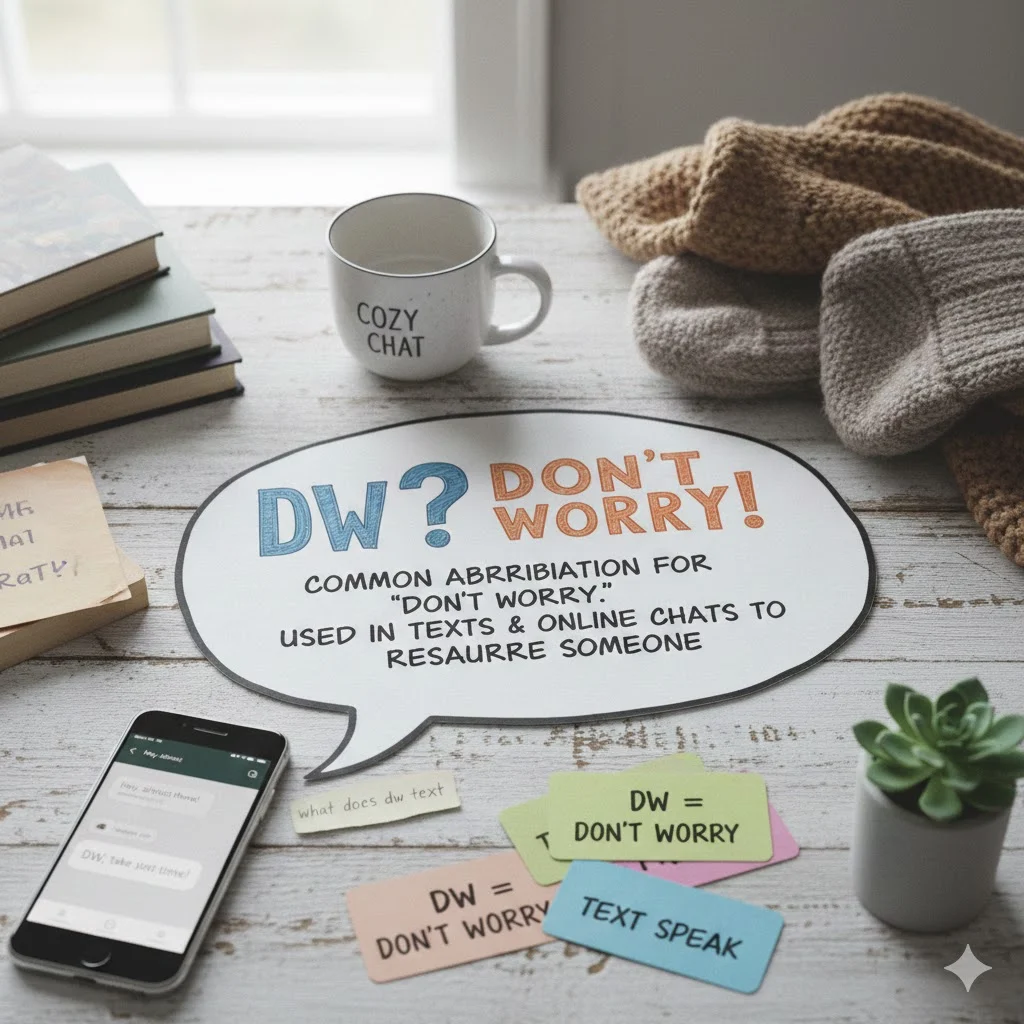
DW most commonly stands for “Don’t Worry.”
It’s used to:
- Reassure someone
- Reduce stress
- Show kindness or calm
- End a concern quickly
Simple Meaning
DW = Don’t worry
It tells the other person that everything is okay or that something is not a big deal.
Common Text Examples
Friend chat:
“Sorry I replied late.”
“DW 😊”
Casual reassurance:
“I’ll send it tomorrow.”
“DW, no rush.”
Key Points to Remember
- DW is positive, not rude by default
- Tone depends on context and emojis
- It’s informal and conversational
- It saves time in fast chats
In rare cases, DW can also mean “Dear Wife” or “District Watch”, but in texting and social media, “Don’t Worry” is the standard meaning.
Background & History of DW
The abbreviation DW became popular with the rise of SMS texting in the early 2000s. Character limits pushed users to shorten common phrases.
How It Evolved
- Early SMS and chat rooms
- MSN Messenger and Yahoo Chat
- Social media platforms
- Mobile messaging apps
As texting culture grew, DW became a default comfort phrase, similar to:
- LOL
- NP (No Problem)
- IDC (I Don’t Care)
Cultural Influence
- Younger users prefer short reassurance
- Emojis now soften its tone
- Used globally in English chats
Today, DW is understood across generations, though older users may still prefer full sentences.
Usage in Different Contexts
DW changes meaning based on where and how it’s used.
Texting & Messaging
Most common usage.
Example:
“I think I messed up.”
“DW, I’ll fix it.”
Social Media
Used in comments and DMs.
Example:
“Sorry for the spam.”
“DW 😄”
Gaming Chats
Often quick and supportive.
Example:
“I lagged.”
“DW, we still won.”
Context Comparison Table
| Context | Meaning | Tone |
|---|---|---|
| Friends | Comfort | Warm |
| Social Media | Casual reassurance | Friendly |
| Gaming | Quick support | Relaxed |
| Work chat | Depends on tone | Risky |
Professional Communication
Using DW at work can be tricky.
When It’s Okay
- Casual team chats
- Friendly coworkers
- Internal messaging tools
Example:
“Sorry for the delay.”
“DW, thanks for the update.”
When to Avoid DW
- Client emails
- Formal discussions
- Performance reviews
Safer Professional Alternatives
- “No problem at all.”
- “That’s completely fine.”
- “Thanks for letting me know.”
Tip: If you wouldn’t say it in a meeting, don’t text it.
Hidden or Negative Interpretations
Although DW is usually kind, tone matters a lot.
When DW Feels Supportive
- Paired with emojis 😊
- Used after apologies
- Sent with reassurance
When DW Feels Cold
- Short replies
- No emoji
- After emotional messages
Risky Example:
“I’m really upset.”
“DW.”
This can feel dismissive.
Better Version:
“DW, I’m here for you ❤️”
Usage in Online Communities & Dating Apps
DW is very common on dating apps.
Why People Use It
- To sound relaxed
- To avoid pressure
- To keep things light
Dating App Examples
“Sorry, I’m bad at replying.”
“DW, take your time 🙂”
Tips for Dating Chats
- Add emojis for warmth
- Don’t overuse DW
- Follow up with interest
DW works best when paired with kindness.
Comparison With Similar Terms
| Term | Meaning | Tone |
|---|---|---|
| DW | Don’t worry | Calm |
| NP | No problem | Casual |
| IDC | I don’t care | Risky |
| It’s fine | Neutral | Context-based |
| All good | Friendly | Positive |
Key Difference:
DW reassures. IDC can dismiss.
10 Slang Terms & Acronyms Related to DW
- DW – Don’t worry
- NP – No problem
- NBD – No big deal
- IDM – I don’t mind
- All good – Everything is okay
- No stress – Relax
- It’s cool – Casual approval
- Chill – Calm down
- YW – You’re welcome
- BRB – Be right back (often paired with DW)
How to Respond to DW
Casual Replies
- “Thanks 😊”
- “Appreciate it!”
- “Got it!”
Friendly Replies
- “You’re the best!”
- “That helps, thanks.”
Professional Replies
- “Thank you for understanding.”
- “Much appreciated.”
Privacy-Conscious
- 👍 emoji
- 😊 emoji
Choose responses based on tone and platform.
Regional & Cultural Differences
DW is widely understood, but reactions vary.
United States & UK
- Friendly and normal
- Common in texting
South Asia
- Used often in WhatsApp
- Sometimes sounds too casual
Non-Native English Speakers
- May misunderstand tone
- Prefer full sentences
Tip: When unsure, spell it out.
FAQs
Q1: What does DW mean in text?
It means Don’t Worry.
Q2: Is DW rude?
No, but tone matters.
Q3: Can I use DW professionally?
Only in casual work chats.
Q4: Is DW used on social media?
Yes, very commonly.
Q5: What’s a safer alternative?
“No problem” or “That’s fine.”
Q6: Does DW ever mean something else?
Rarely. In texting, it almost always means Don’t worry.
Conclusion
Understanding what does DW mean in text helps you avoid confusion and communicate with confidence. DW usually means “Don’t worry”, offering comfort, reassurance, and calm in casual conversations. It’s perfect for friends, social media, and relaxed chats—but should be used carefully in professional or emotional situations. Tone, emojis, and context make all the difference. When used thoughtfully, DW keeps conversations friendly and stress-free. Now that you know its meaning and proper usage, you can reply naturally and clearly wherever you see it online.