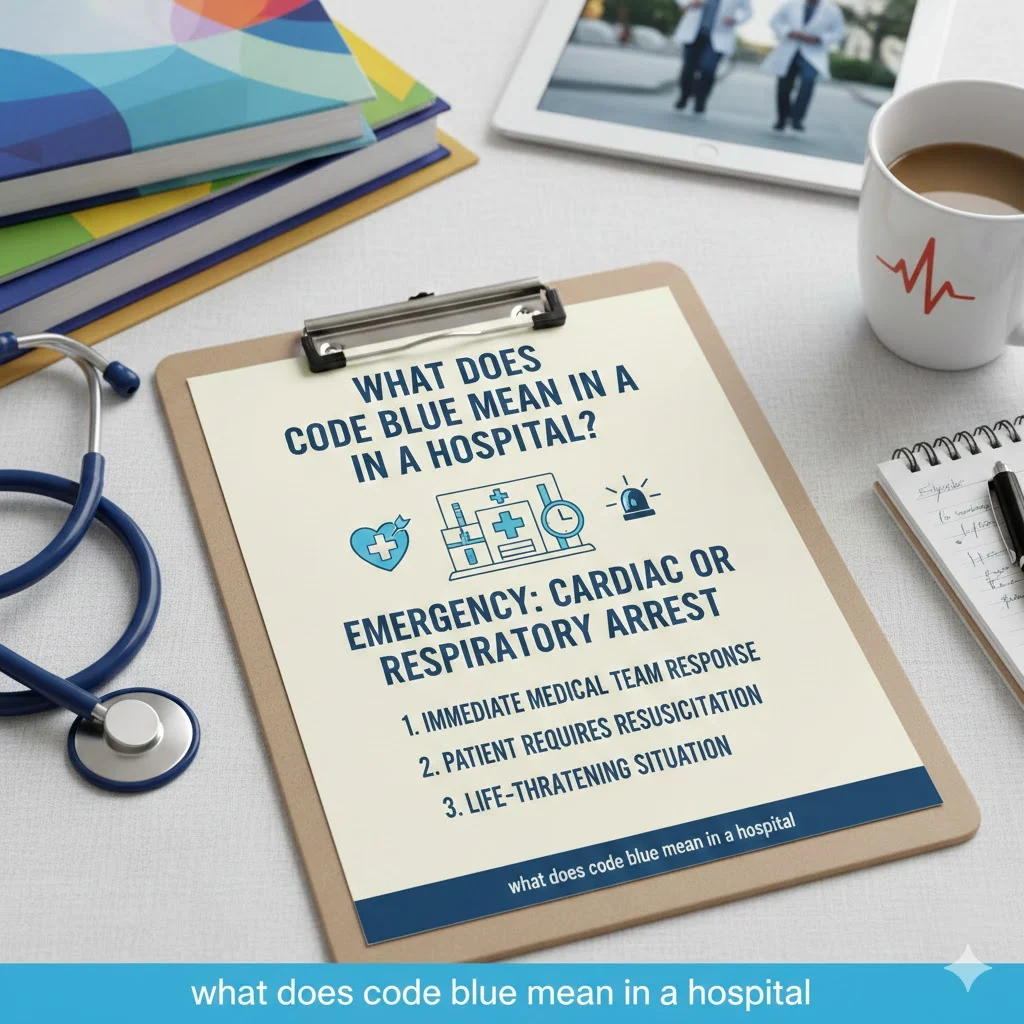
Hospitals are full of specialized codes, alarms, and emergency signals. Among them, Code Blue is one of the most critical. But what exactly does code blue mean in a hospital?
Whether you’re a visitor, patient, or aspiring healthcare professional, understanding this term can help you appreciate the urgency and precision of hospital operations. A Code Blue isn’t just jargon—it signals life-threatening emergencies, often requiring immediate action from trained medical teams.
In this comprehensive guide, we’ll explore the meaning, history, procedures, and real-life examples of Code Blue, as well as related codes you may encounter in hospitals.
Definition & Meaning of Code Blue
A Code Blue is a hospital emergency code that indicates a patient is in cardiac arrest, respiratory failure, or another life-threatening medical crisis.
Key Points:
- Typically triggers the rapid response of the resuscitation team.
- Usually involves doctors, nurses, respiratory therapists, and other medical staff.
- Time is critical; every second counts.
Example in Context:
Nurse: “We have a Code Blue in room 305!”
Response: “Team, prepare crash cart and defibrillator immediately.”
Common Tools Used During Code Blue:
- Crash cart (emergency medication & equipment)
- Defibrillator (for cardiac resuscitation)
- Oxygen and ventilation devices
- Monitoring equipment for vital signs
Background & History of Code Blue
Code Blue originated in the late 20th century as hospitals adopted standardized emergency communication systems.
- Purpose: To alert staff quickly without alarming patients or visitors unnecessarily.
- Evolution: Different hospitals may have variations, but Code Blue is almost universally recognized as a life-threatening patient emergency.
- Regional Influence: While many countries use “Code Blue,” some hospitals use numerical or color-coded systems.
Fun Fact:
- Some hospitals combine code alerts with paging systems and overhead announcements to ensure rapid team mobilization.
Typical Procedures During a Code Blue
When a Code Blue is called, hospital staff follow precise steps to maximize patient survival:
- Immediate Assessment – Check patient responsiveness, breathing, and pulse.
- Activation of Code Team – A dedicated team responds within minutes.
- Resuscitation Measures – CPR, defibrillation, and emergency medication administration.
- Monitoring & Documentation – Track vital signs, interventions, and outcomes.
Example Dialogue During a Code Blue:
Nurse: “Patient pulseless. Start CPR!”
Doctor: “Defibrillator charged. Clear!”
Respiratory Therapist: “Administering oxygen now.”
Key Takeaways:
- Speed is critical; survival rates drop by ~10% per minute without intervention.
- Hospitals conduct frequent drills to maintain readiness.
Code Blue vs Other Hospital Codes
Hospitals use a range of color-coded alerts. Understanding these can help visitors and new staff:
| Code | Meaning | Typical Response |
|---|---|---|
| Code Blue | Cardiac or respiratory emergency | Resuscitation team mobilizes |
| Code Red | Fire or smoke | Evacuation procedures |
| Code Yellow | Disaster or mass casualty | Activate emergency plan |
| Code Pink | Infant or child abduction | Security team alerts |
| Code Gray | Combative person | Security intervention |
Key Insight:
- Code Blue is specifically for life-threatening patient emergencies, not safety threats.
Usage in Different Hospital Settings
ICU / Emergency Room:
- High frequency of Code Blue calls due to critically ill patients.
General Wards:
- Rare but highly critical; staff must react quickly.
Operating Rooms:
- Code Blue may be called if complications arise during surgery.
Ambulatory or Outpatient Clinics:
- Less common, but staff are trained for rare emergencies.
Professional & Ethical Considerations
Using Code Blue appropriately is critical to ensure safety and ethical care.
Do:
- Activate only during true life-threatening emergencies.
- Follow hospital protocol for communication and patient care.
- Document all actions accurately.
Don’t:
- Call Code Blue as a prank or by mistake—this can delay real emergency response.
Alternative Terms:
- Some hospitals use Rapid Response Team (RRT) for early intervention before Code Blue.
Hidden or Misunderstood Aspects
Many people think Code Blue always means death—but it indicates an emergency, not an outcome.
Safe Understanding:
- It’s a life-saving alert, not a declaration of death.
Common Misconceptions:
- Only ICU patients can have a Code Blue (False)
- Visitors are supposed to respond (False)
Code Blue in Online & Media Context
- Portrayed in medical dramas like ER, Grey’s Anatomy, or The Resident.
- Often dramatized; in reality, hospitals follow structured, calm protocols.
Example Media Reference:
“Code Blue! Room 402!”—seen in hospital TV shows frequently, often leading to suspenseful dramatization.
Comparison With Similar Emergency Terms
| Term | Meaning | Urgency | Frequency |
|---|---|---|---|
| Code Blue | Life-threatening patient emergency | Very High | Moderate |
| Rapid Response | Early intervention before cardiac arrest | High | High |
| Code Red | Fire alert | High | Low |
| Code Pink | Infant/child abduction | High | Rare |
Tip: Knowing the difference can save lives and prevent confusion.
Top 10 Related Hospital Acronyms
- CPR – Cardiopulmonary resuscitation
- AED – Automated External Defibrillator
- RRT – Rapid Response Team
- ICU – Intensive Care Unit
- ER – Emergency Room
- DNR – Do Not Resuscitate
- PPE – Personal Protective Equipment
- OR – Operating Room
- EMR – Electronic Medical Record
- ED – Emergency Department
Pro Tip: Understanding these acronyms helps new staff and visitors navigate hospitals safely.
How to Respond as a Visitor or Family Member
- Stay calm—don’t panic.
- Clear the area to allow medical staff to work.
- Follow instructions from nurses or security.
- Do not call Code Blue yourself unless instructed.
Dialogue Example:
Visitor: “Is everything okay?”
Nurse: “Please step back. Medical team responding to Code Blue.”
Regional & Cultural Differences
- United States: Code Blue = cardiac/respiratory emergency.
- UK / Europe: Similar usage; some hospitals may use numerical codes.
- Asia & Other Regions: Hospitals may have color-based or alert systems; Code Blue is widely recognized in international hospitals.
FAQs
Q1: Can anyone call a Code Blue?
A: Only trained hospital staff or in extreme emergencies following protocol.
Q2: Does Code Blue always mean death?
A: No, it signals a medical emergency; outcomes vary.
Q3: What happens after a Code Blue?
A: Patient receives intensive treatment, vital signs are monitored, and documentation is completed.
Q4: How long does a Code Blue last?
A: Duration varies, typically until patient stabilizes or is transferred to ICU.
Q5: Are visitors allowed in the room during Code Blue?
A: Usually not; staff clear the area to focus on emergency care.
Q6: What equipment is most important during Code Blue?
A: Crash cart, defibrillator, oxygen, and emergency medications.
Conclusion
Understanding what Code Blue means in a hospital is essential for anyone interacting with healthcare settings. It is a life-saving alert, signaling a cardiac or respiratory emergency that requires immediate medical attention. While it can seem alarming, Code Blue ensures a rapid, coordinated response from trained medical professionals. Knowing how hospitals handle Code Blue, the procedures involved, and your role as a visitor or family member can reduce confusion, improve safety, and save lives. Always stay calm, follow instructions, and appreciate the critical work of hospital staff responding during these emergencies.