If you’ve spent time chatting online, scrolling social media, or using dating apps, you’ve probably seen the term ASL pop up more than once. But what does ASL mean exactly? Is it about language, texting shorthand, or something else entirely? This guide dives deep into everything you need to know about ASL, its origins, uses, and how to use it safely and correctly.
Whether you’re a casual texter, a gamer, or someone curious about internet slang, this article will clear all confusion around ASL and show you how it fits into modern online communication.
What Does ASL Stand For?
The abbreviation ASL has two main meanings depending on the context. Understanding which one applies is crucial to avoid misunderstandings.
| Context | Meaning | Usage Example |
|---|---|---|
| Internet Slang | Age, Sex, Location | “ASL?” in chatrooms or dating apps |
| Language | American Sign Language | “She communicates using ASL.” |
ASL as Internet Slang: Age, Sex, Location
In the world of online chat, ASL is shorthand for Age, Sex, and Location. It’s a quick way for people to introduce themselves or get basic information about someone new in chatrooms, messaging platforms, or online games.
Example usage:
- Person A: “Hi! ASL?”
- Person B: “22, F, New York.”
This meaning originated in the early days of online chatrooms and instant messaging platforms like AOL and ICQ. Back then, users wanted a fast way to find people with similar interests or in nearby locations.
ASL as American Sign Language
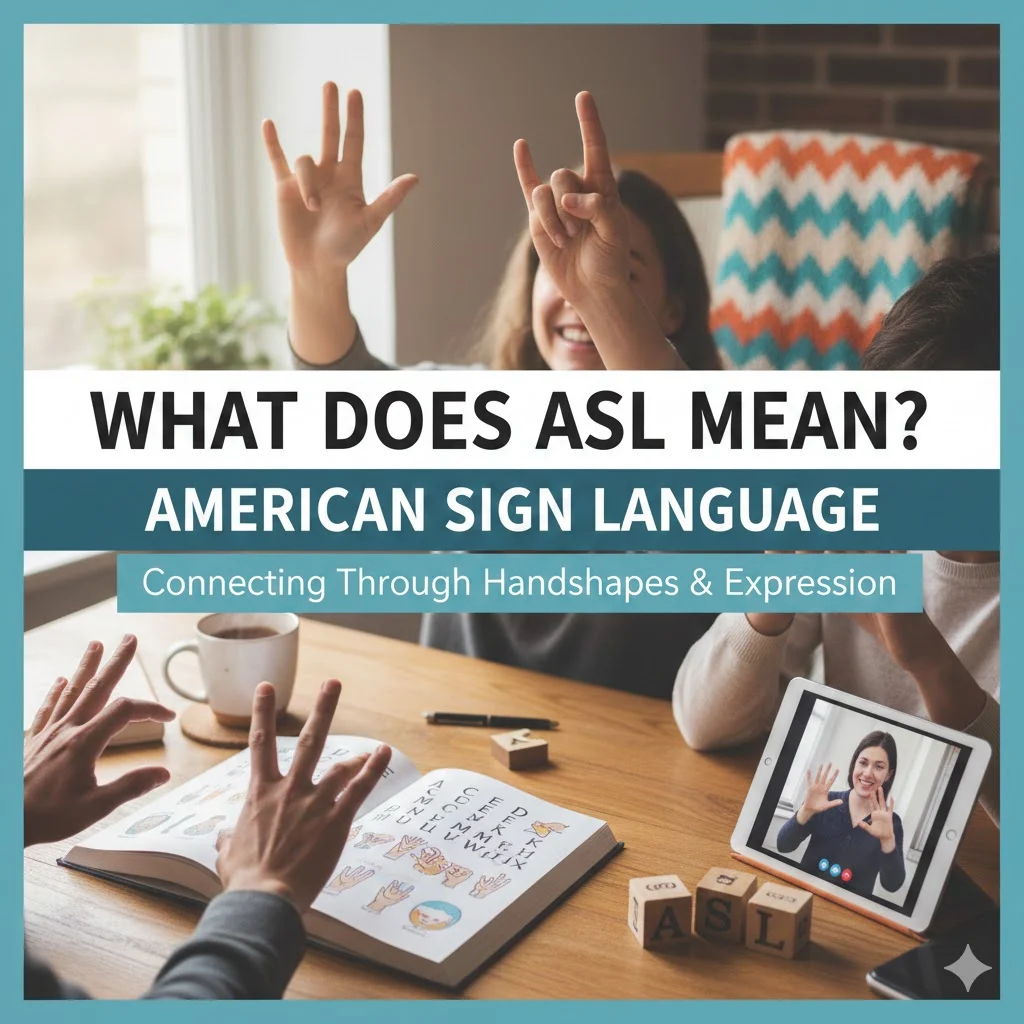
Outside online texting, ASL also refers to American Sign Language, a visual language used by deaf and hard of hearing communities. This is a fully structured language with its own grammar, syntax, and culture.
Example usage:
- “I learned ASL in school to communicate with my deaf friend.”
It’s important to recognize the context because asking someone “ASL?” in a text message and referring to the language are completely different.
ASL in Online Chat and Texting
For most internet users, ASL refers to Age, Sex, Location. It’s commonly used in messaging apps, dating platforms, and old-school chatrooms.
Why ASL is Used
- Quick Introductions: Asking “ASL?” is a fast way to know the basics about someone.
- Matching Interests: People often want to connect with those in a similar age group or region.
- Casual Conversation Starter: It’s less formal than asking a series of questions.
Example conversation in texting:
- Alex: “Hey, ASL?”
- Jordan: “25, M, Chicago.”
- Alex: “Cool, I’m 23, F, NYC. What games do you play?”
Platforms Where ASL is Common
- Chatrooms: Especially old-school platforms like IRC or Yahoo Chat.
- Dating apps: Helps users quickly gauge potential matches.
- Messaging apps: Snapchat, WhatsApp, or Discord sometimes still see ASL usage.
- Gaming platforms: Multiplayer games often include quick text chats where users ask ASL to know who they’re playing with.
Safety Tips When Sharing ASL
While ASL is convenient, it’s important not to overshare personal information online. Here are some tips:
- Avoid giving your exact location; general city or state is enough.
- Never share information like your full address or workplace.
- Use ASL only with trusted communities or friends.
Quote:
“ASL is useful for quick introductions, but privacy always comes first in online spaces.”
ASL in Social Media and Gaming
ASL is not just for chatrooms; it appears in modern social media and online games.
Social Media Usage
On platforms like Instagram, Facebook, or Twitter, ASL is used to quickly start conversations, especially in messaging or comment threads. People often ask “ASL?” to break the ice in a light, non-formal way.
Gaming Usage
In multiplayer games with chat features, ASL helps players:
- Know the approximate age of other players.
- Understand the gender ratio in teams.
- Identify potential friends nearby.
Example in gaming chat:
- Player 1: “ASL?”
- Player 2: “19, F, California.”
- Player 1: “Nice, let’s team up!”
Using ASL in gaming is generally casual, but players must remain cautious about privacy, just like in social media.
How to Use ASL in Text and Chat
Knowing what ASL stands for is one thing, but using it correctly is just as important.
Step-by-Step Guide
- Start with a greeting: “Hi!” or “Hey!”
- Ask ASL politely: “ASL?” or “Can I know your ASL?”
- Provide your own info first: This makes others more comfortable.
- Respect boundaries: If someone declines, don’t push.
Alternative Phrases to ASL
Some users prefer less direct methods:
- “Where are you from?”
- “How old are you?”
- “What’s your gender?”
This avoids oversharing and keeps conversations safer.
Dos and Don’ts
Do:
- Use ASL for casual chats.
- Share general info, not exact details.
- Respect privacy.
Don’t:
- Force someone to answer.
- Reveal your home address.
- Use ASL in professional or formal chats.
Misunderstandings and Confusions
One of the biggest issues with ASL is confusion with American Sign Language. Context is key.
How to Avoid Misinterpretation
- Check the platform: Chatroom? Gaming? Professional email?
- Look at previous messages: Are people talking about texting or language?
- If unsure, ask: “Do you mean ASL as in chat or American Sign Language?
Example of misinterpretation:
- Person A: “I’m learning ASL.”
- Person B: “Cool! How old are you and where do you live?”
This shows how easily ASL can be misunderstood if context isn’t clear.
Variations and Related Abbreviations
ASL isn’t the only shorthand in online chats. Other popular chat acronyms include:
- BRB – Be Right Back
- TTYL – Talk To You Later
- LOL – Laugh Out Loud
- OMG – Oh My God
- AFK – Away From Keyboard
Understanding these abbreviations helps users navigate online communication more effectively.
Fun Facts About ASL
- ASL as chat slang dates back to the 1990s during the rise of IRC and AOL chatrooms.
- American Sign Language is used by over 500,000 people in the United States and parts of Canada.
- ASL is not universal; other countries have their own sign languages, like BSL (British Sign Language) or LSQ (Langue des Signes Québécoise).
Interesting fact: Many people assume ASL in texts is related to the language, showing how internet slang evolves alongside real-world terminology.
Quick Reference Section
Here’s a concise table to remember all ASL meanings in context:
| Meaning | Context | Example |
|---|---|---|
| Age, Sex, Location | Chat/Dating | “ASL?” |
| American Sign Language | Communication/Language | “I learned ASL in school.” |
Tips for Using ASL Properly:
- Always read the context.
- Share general information only.
- Avoid professional or formal situations.
- Remember privacy first.
Conclusion
ASL is a small acronym with big significance in online communication. In chat, it’s a fast way to ask someone’s Age, Sex, and Location. In real-world communication, it represents American Sign Language, a rich and fully developed language used by the deaf community.
Whether you’re texting friends, meeting new people online, or learning a new language, knowing the difference is key. Use ASL wisely, respect privacy, and enjoy smoother conversations in digital spaces.
Quote to remember:
“In the fast-paced world of online chat, ASL helps you connect quickly—but context and caution are your best guides.
ASL Cheat Sheet for Chatting
- ASL? → Ask for age, sex, location
- Responding example: 25, F, Los Angeles
- Avoid sharing: Exact address, full name, financial info
- Alternatives: “Where are you from?”, “How old are you?”