When browsing real estate listings, you might come across properties marked as “Active Under Contract”. For first-time homebuyers or even seasoned investors, this status can be confusing. Does it mean the property is sold? Can you still make an offer?
Understanding what “Active Under Contract” means is crucial if you want to navigate property deals effectively. In this guide, we’ll break down the term, explain its implications for buyers and sellers, provide real-life examples, and offer tips to make informed decisions in today’s competitive real estate market.
Definition & Meaning of Active Under Contract
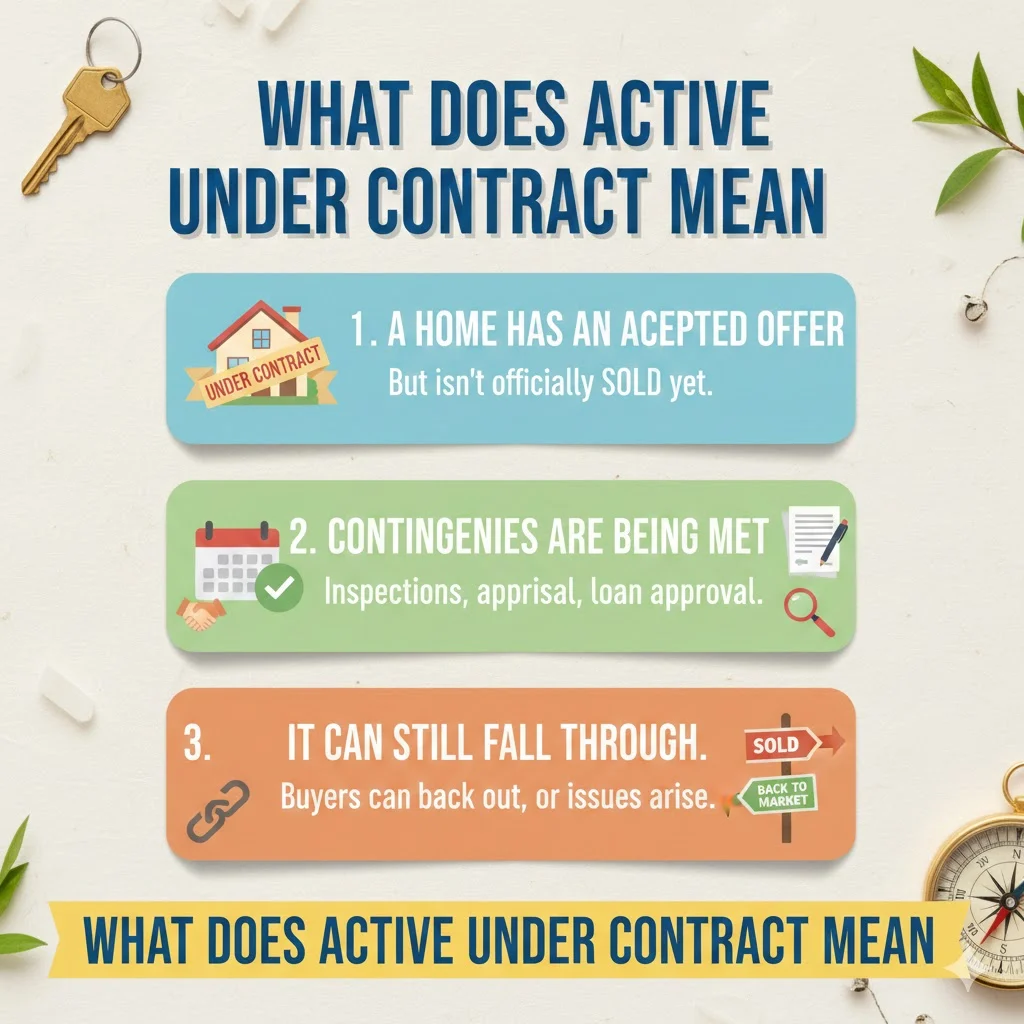
Active Under Contract is a real estate listing status indicating that a seller has accepted an offer from a buyer, but certain conditions—like inspections, financing, or contingencies—still need to be completed before the sale is finalized.
Key Points:
- The property is not officially sold yet, but it’s off the fully active market.
- Contingencies might include:
- Home inspection
- Mortgage approval
- Appraisal
- Sale of the buyer’s existing home
Example in Dialogue:
Buyer: “I love this house! Is it still available?”
Agent: “It’s Active Under Contract, so the seller has accepted an offer, but the sale isn’t closed yet.”
Why it matters:
- You may still submit backup offers, depending on local laws and seller preferences.
- Properties in this status often attract serious buyers and can close quickly.
Background & History
Real estate listing statuses have evolved to give buyers and sellers more transparency about a property’s availability.
- Before digital listings: Buyers relied on agents and MLS updates. Miscommunication about availability was common.
- Introduction of “Active Under Contract”: Helps clarify that the property is pending sale but still technically active.
- Regional differences: Some MLS platforms may call it “Pending” or “Conditional Sale,” but the concept is the same.
This status has become increasingly important in competitive markets, helping sellers manage offers while keeping potential buyers informed.
Usage in Different Contexts
Active Under Contract can have different implications depending on whether you’re a buyer, seller, or real estate agent.
For Buyers:
- Understand that the property might still be open for backup offers.
- Check the listing notes for contingencies.
Sellers:
- It signals that an offer has been accepted.
- You must continue negotiating or processing contingencies until closing.
For Agents:
- Communicate clearly with clients about the status.
- Avoid misrepresenting availability to other buyers.
Example Table:
| Party | Implication of Active Under Contract | Recommended Action |
|---|---|---|
| Buyer | Property has an accepted offer | Submit backup offer or monitor status |
| Seller | Offer accepted, contingencies pending | Complete necessary contingencies |
| Agent | Listing still technically visible | Provide updates and clarity to clients |
Professional & Legal Implications
Active Under Contract also has legal and professional significance.
- Contractual obligations: The seller must honor contingencies before closing.
- Deposit handling: Earnest money or deposits may be held in escrow.
- Disclosure requirements: Sellers and agents must disclose the current status to avoid misrepresentation.
Tips for Buyers:
- Always consult your agent about backup offers.
- Be aware of deadlines and contingencies.
Tips for Sellers:
- Keep paperwork organized.
- Communicate with all parties to avoid misunderstandings.
Risks and Considerations
Although a property is Active Under Contract, there are risks for both parties:
For Buyers:
- The deal may fall through if contingencies aren’t met.
- Backup offers may not be considered immediately.
For Sellers:
- A buyer might back out.
- Multiple backup offers may create competition and negotiation challenges.
Examples:
Buyer: “Can I submit a backup offer?”
Agent: “Yes, the current deal hasn’t closed yet, but it’s subject to contingencies.”
Usage in Online Listings & Platforms
Real estate websites often indicate Active Under Contract status clearly.
Platform-specific tips:
- Zillow / Realtor.com: Usually shows as “Pending” or “Active Under Contract.”
- MLS: Notes contingencies and offer acceptance.
Buyer tip:
- Set alerts for properties in this status—sometimes sales fall through, giving you a chance to act quickly.
Comparison With Similar Terms
| Term | Meaning | Buyer Implication | Seller Implication |
|---|---|---|---|
| Active | Property fully on the market | Can make offers freely | Listing fully open |
| Active Under Contract | Offer accepted, contingencies pending | Backup offers possible | Must complete contingencies |
| Pending | Sale is mostly finalized | Rarely accept new offers | Closing in progress |
| Sold | Sale complete | No action possible | Transaction finalized |
How to Respond as a Buyer or Seller
Buyer responses:
- “I understand it’s Active Under Contract. Can I submit a backup offer?”
- “Please notify me if the current contract falls through.”
Seller responses:
- “We have an accepted offer, but backup offers are welcome.”
- “Contingencies are being processed; we will keep you updated.”
Professional approach:
- Always keep communication clear and documented.
- Avoid misleading statements about availability.
See Also More: What Does Chromakopia Mean? Full Explanation, Origin & Usage
Regional & Market Differences
- US vs Canada: Status terminology may differ; “Pending” vs “Active Under Contract.”
- High-demand markets: Deals can close quickly; backup offers are common.
- Low-demand markets: Properties may stay in this status longer due to contingencies or financing delays.
Example:
In California, “Active Under Contract” often allows backup offers.
In New York, similar listings may show as “Pending” without accepting backups.
FAQs
Q1: Can I make an offer on a property marked Active Under Contract?
A: Often yes, as a backup offer. Always check with the agent.
Q2: How long does a property stay Active Under Contract?
A: Depends on contingencies and buyer financing; usually 1–4 weeks.
Q3: Is Active Under Contract the same as Sold?
A: No, the sale isn’t finalized until closing.
Q4: Can the current contract fall through?
A: Yes, if contingencies are not met, the property may return to Active status.
Q5: Should buyers avoid these listings?
A: Not necessarily—backup offers can be strategic in competitive markets.
Q6: What contingencies are most common?
A: Inspection, appraisal, financing approval, and sale of the buyer’s existing home.
Conclusion
Understanding what Active Under Contract means is essential for anyone navigating real estate markets. This status signals that a property has an accepted offer, but contingencies like inspections, financing, or appraisals must still be completed before closing. Buyers can often submit backup offers, while sellers must manage obligations carefully. Being informed about this term helps avoid confusion, miscommunication, and missed opportunities. Whether you’re buying, selling, or investing, knowing how to interpret and respond to Active Under Contract listings gives you a competitive edge and ensures smoother, more confident real estate transactions.