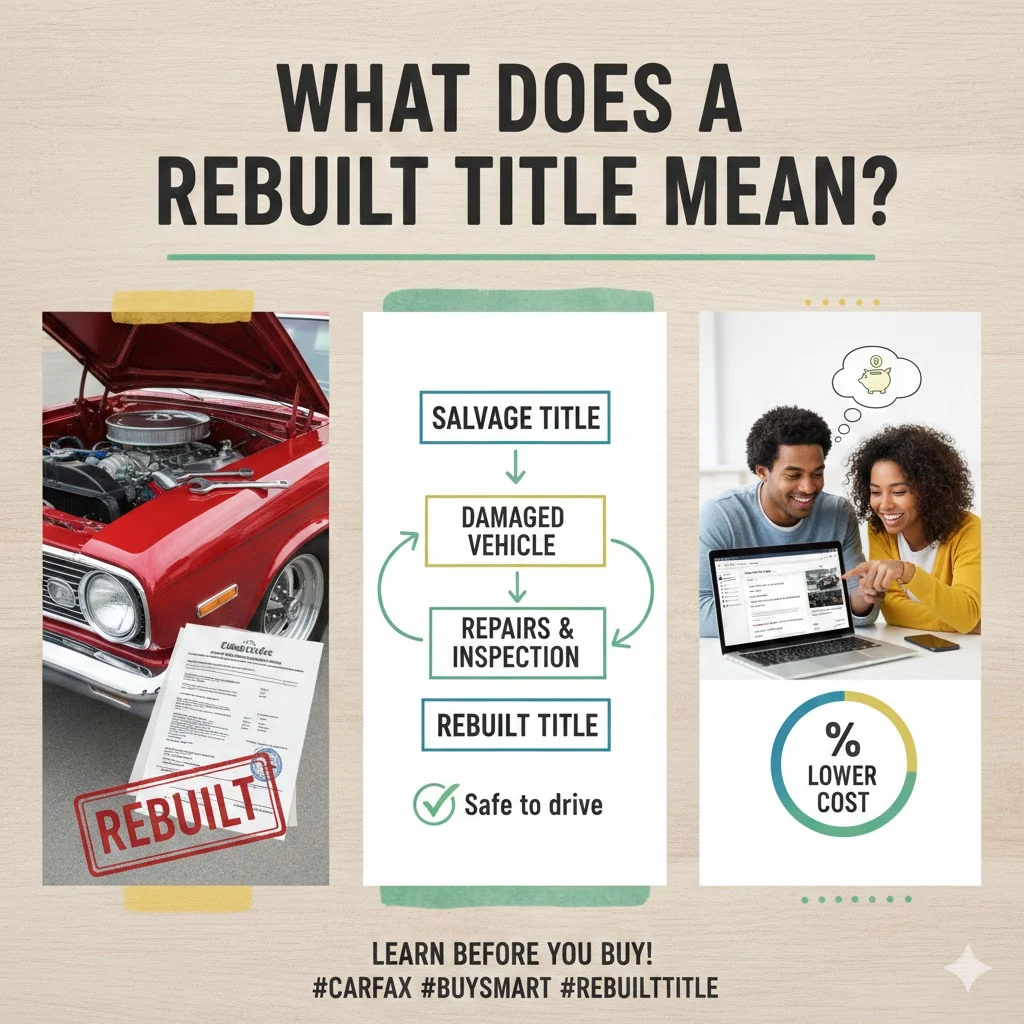
If you’re buying or selling a used car, you may have come across the term rebuilt title. Understanding what a rebuilt title means is crucial because it affects your car’s value, insurance options, and long-term reliability.
A rebuilt title is issued for a vehicle that was previously declared a total loss due to damage but has since been repaired and inspected. For young adults, social media enthusiasts, and first-time car buyers, knowing this term can prevent costly mistakes. In this guide, we’ll explore what a rebuilt title means, its implications, safety concerns, and tips for making smart decisions when buying or selling such vehicles.
Definition & Meaning of Rebuilt Title
A rebuilt title refers to a vehicle that:
- Was previously salvaged due to damage from accidents, floods, or other incidents.
- Has been fully repaired and passed state inspection.
- Is now legal to drive on public roads.
Key Points:
- Not all salvaged cars get a rebuilt title; only those repaired properly and approved by the DMV.
- A rebuilt title impacts the vehicle’s resale value—usually 20–40% less than similar clean-title cars.
- Always check repair history and inspection certificates.
Examples:
John: “I found a Honda Civic for $6,000.”
Lisa: “Check if it has a rebuilt title. It could affect insurance and resale.”
Background & History of Rebuilt Titles
The concept of a rebuilt title originated in the automotive insurance industry to distinguish between vehicles that are:
- Totaled and scrapped (salvage title).
- Totaled but repaired (rebuilt title).
- Why it exists: To prevent unsafe vehicles from being resold without disclosure.
- Insurance role: Insurance companies declare a vehicle a total loss if repair costs exceed a certain percentage of its value.
- Regional differences: Some states have stricter rules about inspections, while others require only minimal documentation.
Knowing the history helps buyers understand the risks and benefits of purchasing a rebuilt car.
How Rebuilt Titles Affect Car Value
Buying a car with a rebuilt title can save money upfront, but there are trade-offs:
Pros:
- Lower purchase price than a clean title vehicle.
- Fully repaired cars can run safely if maintained well.
Cons:
- Reduced resale value.
- Harder to finance; some banks may refuse loans.
- Insurance premiums may be higher or limited.
Example Table:
| Vehicle Type | Clean Title Price | Rebuilt Title Price | Estimated Difference |
|---|---|---|---|
| 2018 Honda Civic | $15,000 | $10,500 | 30% lower |
| 2020 Toyota Corolla | $18,000 | $12,600 | 30% lower |
Safety Considerations
A rebuilt car may be safe if:
- Repairs were done by certified mechanics.
- Inspections were officially approved.
- Critical systems like brakes, airbags, and frame were properly repaired.
Tips:
- Hire a third-party mechanic to inspect the vehicle.
- Check for hidden damage like electrical or structural issues.
- Avoid cars with flood damage as it can cause long-term problems.
Dialogue Example:
Buyer: “The car runs fine, but will it be safe long-term?”
Mechanic: “It’s rebuilt, so check the frame and electrical systems carefully before buying.”
Discover related article:-
- What Does Torta Mean? Definition, Origins, Food Uses & Cultural Differences
- What Does a Butterfly Tattoo Mean? | Symbolism, Types & Deep Meanings Explained
Professional & Legal Implications
When buying a rebuilt title vehicle professionally:
- Some companies may not accept rebuilt vehicles for fleet or commercial use.
- Reselling rebuilt vehicles requires full disclosure.
- Some states require rebuilt title stickers or permanent markings.
Safer Alternatives:
- If you need a car for business, consider clean-title vehicles to avoid liability.
- If buying for personal use, always check insurance and registration laws.
Insurance & Financing
Rebuilt title cars affect both insurance and financing:
- Insurance: Some companies cover rebuilt vehicles, but coverage may be limited to liability.
- Financing: Many banks or lenders avoid loans for rebuilt cars.
- Tip: Ask for insurance quotes before purchase.
Comparison with Salvage Title
| Term | Meaning | Usage | Pros/Cons |
|---|---|---|---|
| Salvage Title | Declared a total loss | Cannot be driven until repaired | Low cost, high risk |
| Rebuilt Title | Repaired salvage car | Legal to drive after inspection | Lower value, usable |
How to Check a Rebuilt Title
Steps to verify a rebuilt title:
- Ask the seller for repair documentation.
- Check state DMV records.
- Use vehicle history reports like Carfax or AutoCheck.
- Hire a professional inspector for a detailed check.
Buying Tips for Rebuilt Title Cars
- Always get a mechanic inspection.
- Check parts quality and ensure all repairs meet standards.
- Consider future resale value before purchase.
- Use a test drive to detect hidden issues.
Regional & State Differences
- California & New York: Strict inspection requirements for rebuilt vehicles.
- Texas & Florida: Easier to get rebuilt titles but check flood damage history.
- Canada: Some provinces allow rebuilt vehicles with inspections; rules vary by province.
FAQs
Q1: Can I get insurance for a rebuilt title car?
A: Yes, but coverage may be limited. Always check with your provider.
Q2: Will a rebuilt title car lose value faster?
A: Typically, yes—resale value is often 20–40% lower than clean-title cars.
Q3: Is a rebuilt car safe to drive?
A: If repaired correctly and inspected, it can be safe. Always hire a mechanic to check.
Q4: Can I get financing for a rebuilt title vehicle?
A: Many lenders are hesitant. Some may offer loans at higher rates.
Q5: How is a rebuilt title different from salvage?
A: Salvage cars are totaled and cannot be legally driven until repaired; rebuilt cars are repaired and inspected.
Conclusion
Understanding what a rebuilt title means is essential for making informed decisions when buying or selling a used vehicle. While these cars are often cheaper upfront, they come with trade-offs in value, insurance, and long-term reliability. Always verify repair history, get professional inspections, and consider the risks before committing. A rebuilt title doesn’t mean the car is unsafe, but knowledge and caution are key to ensuring a smart, safe investment.