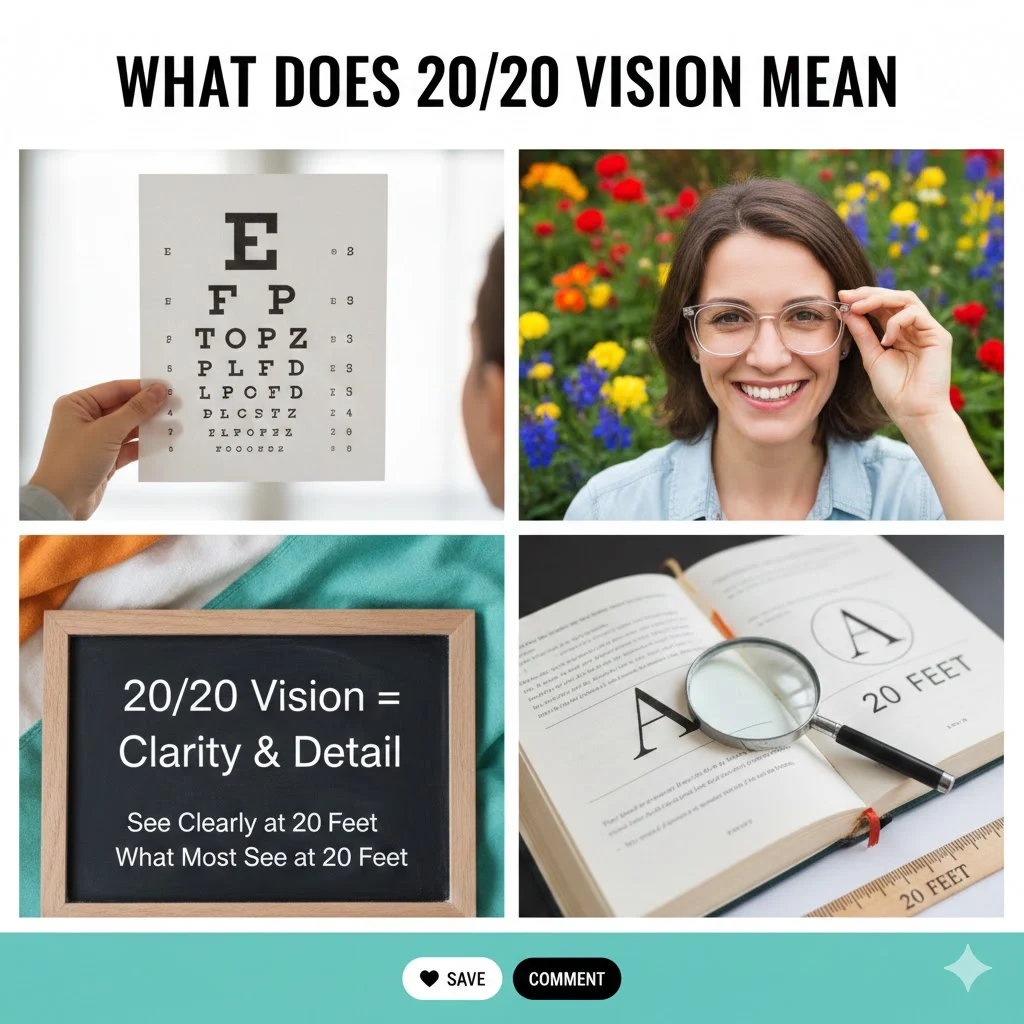
You’ve probably heard someone say, “I have 20/20 vision,” but what does that really mean? Whether you’re a student, professional, or just curious about your eyesight, understanding what 20/20 vision means helps you grasp how eye health is measured and why it matters.
In this article, we’ll explain the definition, measurement, and real-life significance of 20/20 vision, along with common misconceptions, professional considerations, and tips for maintaining healthy eyesight.
Definition & Meaning of 20/20 Vision
20/20 vision is a term used to describe normal visual acuity, which is the clarity or sharpness of your eyesight.
Key points:
- 20/20 refers to what a person with normal vision can see at 20 feet.
- If you have 20/20 vision, you can see clearly at 20 feet what an average person can see at the same distance.
- Numbers worse than 20/20 (like 20/40) mean your vision is less sharp; better numbers (like 20/15) indicate sharper vision.
Example in dialogue:
Friend: “Do you have perfect vision?”
You: “Yeah, I have 20/20 vision, so I see clearly without glasses at standard distances.”
Background & History of 20/20 Vision
The concept of 20/20 vision originated from eye charts developed in the 19th century, most notably the Snellen chart, created by Dutch ophthalmologist Hermann Snellen.
- Evolution: The Snellen chart standardized vision testing in feet, mostly in English-speaking countries.
- Cultural impact: 20/20 has become a universal benchmark for “normal” eyesight.
- Regional differences: Some countries use meters instead of feet, like 6/6 vision in the metric system.
How 20/20 Vision is Measured
Eye doctors measure vision using eye charts at a standard distance of 20 feet.
Measurement steps:
- Cover one eye.
- Read the letters or numbers on the chart.
- Repeat with the other eye.
- Results like 20/20, 20/40, or 20/15 indicate visual acuity.
Table: Visual Acuity Levels
| Score | Meaning | Example |
|---|---|---|
| 20/20 | Normal vision | Sees what most can at 20 ft |
| 20/40 | Below average | Needs correction to see clearly |
| 20/15 | Sharper than normal | Sees clearly beyond 20 ft |
Usage in Different Contexts
Everyday life:
- Driving, reading, screen use, sports, and recognizing faces.
Professional context:
- Pilots, surgeons, and other professionals often require better than 20/20 vision.
Casual chat example:
Friend: “How’s your eyesight?”
You: “Pretty good, I have 20/20 vision, no glasses needed.”
Common Misconceptions
- 20/20 doesn’t mean perfect: It only measures clarity, not peripheral vision, depth perception, or color vision.
- Better than 20/20 exists: Scores like 20/15 or 20/10 indicate sharper vision.
- Glasses or contacts: Some people with corrected vision can achieve 20/20 with lenses.
Importance of Eye Health
Maintaining good vision involves:
- Regular eye exams
- Healthy diet rich in vitamin A and omega-3
- Limiting screen strain
- Protective eyewear in bright sunlight or hazardous environments
20/20 Vision vs Similar Terms
| Term | Meaning | Notes |
|---|---|---|
| 20/20 | Standard visual acuity | Normal clarity at 20 ft |
| 20/15 | Sharper than average | Can see smaller details |
| 20/40 | Below average | May need corrective lenses |
| 6/6 (metric) | Equivalent of 20/20 in meters | Used in countries using metric |
FAQs
Q1: Can you have 20/20 vision but still need glasses?
A: Yes, for issues like astigmatism, near/far sight problems, or eye strain.
Q2: Is 20/20 vision the same worldwide?
A: The concept is universal, but some countries use meters (6/6 vision).
Q3: Can vision improve naturally to 20/20?
A: Rarely; usually requires corrective measures.
Q4: Does 20/20 mean perfect eyesight?
A: Not necessarily. It measures clarity, not color vision or depth perception.
Q5: How often should I get an eye exam?
A: Every 1–2 years, depending on age and eye health.
Conclusion
Understanding what 20/20 vision means is more than just knowing your eyesight score. It indicates standard visual acuity, helps identify vision issues, and informs daily activities like reading, driving, or sports. While 20/20 vision is commonly seen as “perfect,” it doesn’t measure peripheral vision, depth perception, or color accuracy. Regular eye exams, healthy habits, and protective measures can maintain or improve vision. Knowing your visual acuity empowers you to make informed choices about eye health and corrective options. Stay aware, protect your eyes, and appreciate the clarity that 20/20 vision represents.