Have you ever seen someone text “10-4” and wondered what it actually means? Maybe you’ve seen it in movies, social media, or even online forums and didn’t want to ask. Whether you’re a casual texter, a social media user, or someone exploring CB radio culture, understanding 10-4 meaning is handy.
In this guide, we’ll break down what does 10-4 mean, explore its origin, and show how to use it confidently in casual and professional communication. Plus, we’ll give you examples, slang alternatives, and tips to avoid misunderstandings. By the end, you’ll be able to respond like a pro whenever someone drops “10-4” in a conversation.
Definition & Meaning of 10-4
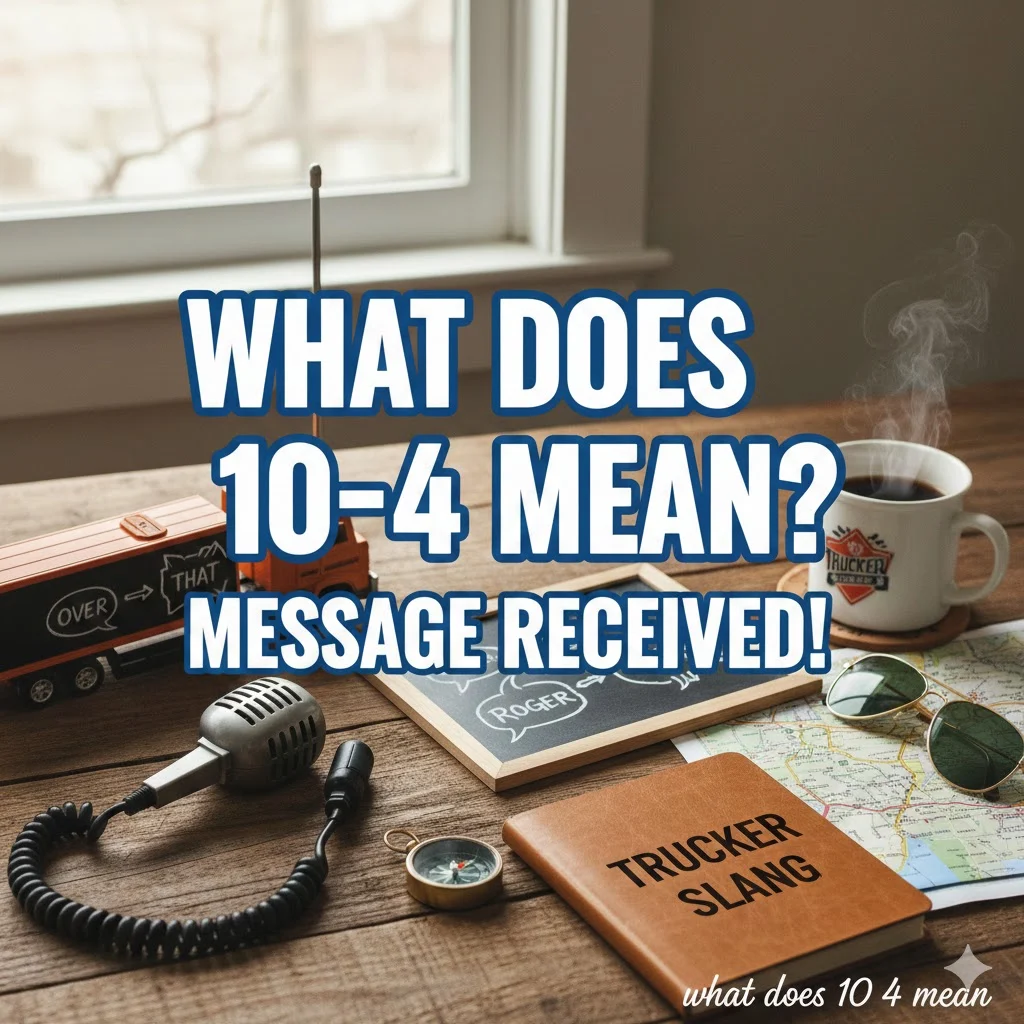
10-4 is a code primarily used in radio communications, such as CB radios, police radios, and emergency services. In texting and online slang, it has carried over to mean “Message received” or “Understood”.
- Primary meaning: Affirmative acknowledgment.
- Secondary meaning in casual texting: “Got it” or “Okay.”
Examples in Dialogue:
Texting example:
Alex: “Meet me at the park at 5 PM.”
Jamie: “10-4 👍”
Online chat:
“I’ll submit the report by tonight.”
“10-4, thanks!”
Key Points:
- 10-4 is short, precise, and universally understood in radio or professional contexts.
- In casual texting, it adds a fun, retro vibe.
- It’s important to not confuse 10-4 with numbers in phone shortcuts—context matters.
Background & History of 10-4
The term 10-4 comes from the ten-codes system, which was developed in the 1930s for CB (Citizens Band) radio operators and law enforcement.
Historical Highlights:
- Origin: 1930s, Association of Public-Safety Communications Officials (APCO).
- Purpose: Quick, concise communication over radios to reduce misunderstandings.
- Popularization: Movies, trucker culture, and CB radio enthusiasts in the 1970s.
Fun Fact:
- The phrase “10-4, good buddy” became popular in trucking culture. It means “Understood, friend” and was widely used in CB radio slang.
Why it stuck online:
- Simple, short, and easy to type.
- Conveys understanding without long explanations.
- Adds a playful or retro touch to texting and social media messages.
Usage in Different Contexts
10-4 isn’t just for radio—it’s versatile in modern communication.
Texting & Messaging:
- Confirming plans or instructions.
- Example:
“I’ll pick up groceries on the way home.”
“10-4!”
Social Media & Gaming:
- Online communities may use 10-4 to confirm understanding during gameplay or coordination.
Professional Communication:
- Appropriate in workplace messaging apps when acknowledging receipt of instructions.
Casual vs Professional Contexts:
| Context | Usage Example | Notes |
|---|---|---|
| Casual Chat | “I’ll meet you at 7.” “10-4 😎” | Friendly, casual tone |
| Gaming | “Move to base, now!” “10-4” | Clear acknowledgment |
| Professional | “Please review the attached files.” “10-4” | Safe, concise acknowledgment |
CB Radio & Trucker Culture
10-4 has deep roots in CB radio culture. Truckers, law enforcement, and hobbyists used it to communicate quickly on the road.
- Trucker slang: “10-4, good buddy” means “Roger that, friend”.
- Usage tips: In radio communication, always follow it with clear context.
- Movies & media: CB radio phrases became iconic in films like Convoy.
Dialogue Example (CB Radio):
“Breaker, breaker, we’ve got a slow truck at mile 42.”
“10-4, good buddy, I see it.”
Professional Communication
In professional settings, 10-4 can be safe when used in internal messaging to acknowledge tasks or instructions.
Do’s:
- Use in informal internal chats.
- Keep it short and clear.
Don’ts:
- Avoid in formal emails or client-facing messages.
- Do not overuse—it may seem overly casual.
Alternative phrases:
- “Understood.”
- “Received.”
- “Noted.”
Hidden or Risky Meanings
Generally, 10-4 is safe. But context matters:
- Misinterpretation: Some people unfamiliar with CB slang may not understand it.
- Overuse: Using it too frequently can sound robotic or outdated.
- Risky usage in professional settings: Avoid using it in formal reports or external emails.
Safe example:
“Please submit your weekly report.”
“10-4, will do.”
Risky example:
Email to client: “We’ll handle it 10-4.” → Too informal, could be misunderstood.
Usage in Online Communities & Dating Apps
10-4 has a subtle playful vibe online. It signals acknowledgment without being overly formal.
Tips:
- Pair with emojis to make tone clear.
- Use sparingly in dating chats to avoid sounding robotic.
Dialogue Example:
Sam: “Let’s meet at 8 PM.”
Riley: “10-4 😁”
Comparison with Similar Terms
| Term | Meaning | Tone | Usage |
|---|---|---|---|
| 10-4 | Understood / Message received | Casual/professional | Texts, chats, radio |
| Roger | Affirmative / Acknowledged | Formal/radio | Aviation, military |
| Copy that | Confirmed | Casual/professional | Email, chat, radio |
| OK / Okay | Understood | Universal | Texts, speech |
Key takeaway:
- 10-4 is informal yet professional-safe in the right contexts.
- Slightly retro and fun, unlike standard “OK.”
10 Fun Slang & Acronyms Containing 10-4
- 10-4 – Message received / Understood
- 10-4, good buddy – Friendly acknowledgment (trucker slang)
- 10-4 on that – Confirmation of statement
- 10-4 copy – Acknowledgment in CB and aviation
- 10-4, roger – Combining slang with radio terminology
- 10-4 👍 – Texting + emoji confirmation
- 10-4 all clear – Clear or safe message acknowledgment
- 10-4 loud and clear – Emphasized acknowledgment
- 10-4, on it – Task accepted
- 10-4, will comply – Formal/professional acknowledgment
How to Respond
Responses vary depending on context:
Casual:
- “10-4 😎”
- “Got it, 10-4”
Professional:
- “Acknowledged.”
- “Noted, 10-4.”
Funny / Playful:
- “10-4, Captain!”
- “Roger that, good buddy!”
Privacy-conscious / Emoji only:
- ✅
- 👌
Regional & Cultural Differences
- US & UK: Widely understood as “Message received.”
- Canada & Australia: Less common but recognized in CB or radio circles.
- Non-native English speakers: May need explanation—context helps.
Example:
“10-4, I’ll bring the documents.” → US audience: clear
“10-4” → Some regions may require “Got it” instead
FAQs
Q1: Can I use 10-4 in texting?
A: Yes, it’s casual and fun for acknowledging messages.
Q2: Is 10-4 outdated?
A: Not really—it has a retro charm, still recognized online and in media.
Q3: What’s the difference between 10-4 and Roger?
A: 10-4 is casual/fun; Roger is more formal, often used in aviation or military.
Q4: Can 10-4 be used professionally?
A: Yes, in internal chats or informal workplace messages. Avoid external client emails.
Q5: What does “10-4, good buddy” mean?
A: Friendly acknowledgment, popularized in CB radio culture.
Q6: Are there emojis that pair well with 10-4?
A: 👍, ✅, 😎, or 😁 help convey friendly acknowledgment.
Q7: Is 10-4 universally understood?
A: Mostly in English-speaking countries and among people familiar with CB/radio slang.
Conclusion
10-4 is a versatile, fun, and clear way to say “message received” across texting, social media, gaming, and radio communication. It’s concise, retro, and works well in casual and semi-professional settings, but always consider your audience. Knowing its history—from CB radio to trucker culture—adds context and charm to its usage. Use it with emojis for playful tones, or in short internal workplace messages for clarity. By understanding what 10-4 means and when to use it, you can communicate confidently and avoid misunderstandings. Keep it simple, clear, and context-appropriate!