Poop. It’s something we all do, yet most of us don’t talk about it. Surprisingly, your poop is one of the best indicators of your overall health. By observing its color, shape, frequency, and consistency, you can detect digestive issues, nutritional deficiencies, or even early signs of diseases. This guide dives deep into the world of poop, providing you with everything you need to know about bowel movements, poop health, and maintaining a happy gut.
What Is Poop?
Poop, medically known as feces, is the solid or semi-solid waste your body expels after digesting food. It’s made up of water, fiber, bacteria, cells, and waste products. On average, a healthy adult produces about 100 to 250 grams of poop per day, though this varies depending on diet, hydration, and activity level.
Your poop isn’t just waste—it’s a reflection of your digestive system’s health. Changes in poop color, texture, or frequency can signal underlying issues like infections, constipation, diarrhea, or nutrient absorption problems. Even the poop emoji has become a cultural symbol of humor, but in reality, poop is a serious health indicator.
Key Components of Poop:
- Water (75%) – keeps it soft and easy to pass
- Fiber (25–30 grams daily) – helps regulate bowel movements
- Bacteria – healthy gut bacteria aid digestion
- Cells & Waste – undigested food, bile, and metabolic waste
Types of Poop and What They Mean
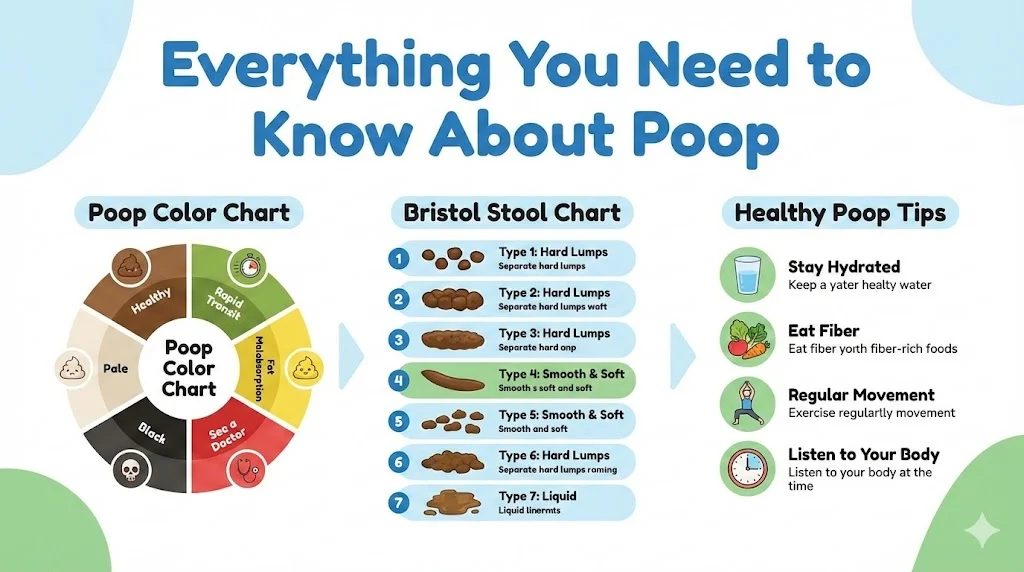
Understanding the types of poop can help you monitor your digestive health. Doctors often use the Bristol Stool Chart, which categorizes poop into seven types based on shape and consistency.
| Type | Description | What It Means |
|---|---|---|
| Type 1 | Separate hard lumps, like nuts | Constipation; slow digestion |
| Type 2 | Sausage-shaped but lumpy | Mild constipation; low fiber intake |
| Type 3 | Like a sausage but with cracks | Normal; healthy digestion |
| Type 4 | Smooth, soft sausage or snake | Ideal poop; indicates a balanced diet |
| Type 5 | Soft blobs with clear edges | Slight diarrhea; may be due to stress or diet |
| Type 6 | Fluffy pieces with ragged edges | Diarrhea; often caused by infection or stress |
| Type 7 | Watery, no solid pieces | Severe diarrhea; risk of dehydration |
Differences in Babies and Pets
- Babies: Breastfed babies usually have soft, yellow poop, while formula-fed babies may have darker, firmer stools.
- Dogs & Cats: Normal pet poop is brown and firm. Changes in color, consistency, or odor can indicate digestive issues, parasites, or dietary problems.
Poop Color Chart & What Your Poop Color Tells You
Poop color reveals a lot about your digestive health. Here’s a simple chart:
| Color | Possible Causes | Health Implications |
|---|---|---|
| Brown | Normal | Healthy bile and digestion |
| Green | Leafy greens, supplements, antibiotics | Rapid transit time, diet-related |
| Yellow | High fat content, malabsorption | Possible liver or pancreas issue |
| Black | Iron supplements, bleeding in upper GI tract | May indicate bleeding; see a doctor |
| Red | Beets, red foods, bleeding in lower GI tract | Could signal hemorrhoids or colon issues |
| Pale/Clay | Lack of bile, liver or gallbladder problems | Requires medical attention |
Quick Fact: Diet can drastically change poop color. For example, beets turn poop reddish, while iron supplements darken it. But persistent unusual colors should always be checked by a doctor.
Poop Frequency & Healthy Bowel Habits
Frequency matters just as much as appearance. Normal poop frequency ranges from three times a day to three times a week, depending on diet, age, and metabolism.
Factors Affecting Frequency:
- Diet: Fiber-rich foods promote regularity.
- Hydration: Dehydration can lead to hard, infrequent stools.
- Exercise: Physical activity stimulates the gut.
- Stress: High stress can trigger diarrhea or constipation.
Tips for Healthy Poop Frequency:
- Eat 25–30 grams of fiber daily from fruits, vegetables, and whole grains.
- Drink at least 8–10 glasses of water daily.
- Include probiotics like yogurt or fermented foods.
- Exercise 20–30 minutes daily.
Poop Consistency & Smell: What It Reveals About Your Health
Your poop’s texture and smell are crucial health indicators.
Consistency Guide:
- Hard, lumpy stools: May indicate constipation or dehydration.
- Soft, well-formed stools: Ideal and healthy.
- Watery stools: Sign of diarrhea, infection, or rapid transit.
Smell Insights:
- Mild odor: Normal digestion.
- Foul odor: Could indicate malabsorption, infection, or high-fat diet.
- Chemical smell: Rare, may suggest liver or pancreatic issues.
Pro Tip: Keep track of changes. Even small differences in consistency or smell can hint at underlying issues.
Poop in Babies, Dogs, and Cats
Monitoring poop in infants and pets is essential since they can’t verbalize digestive discomfort.
Babies:
- Breastfed: Soft, yellow, sometimes seedy.
- Formula-fed: Firmer, darker yellow or brown.
- Abnormal: Green, bloody, or very watery may signal infection or digestive issue.
Pets:
- Dogs: Firm, brown stools are normal; loose stools may indicate stress or diet change.
- Cats: Normal is firm and brown; diarrhea may indicate parasites or dietary intolerance.
Tip: Keep a log of changes, as patterns can help veterinarians or pediatricians diagnose problems quickly.
Poop-Related Diseases & Digestive Problems
Your poop can reveal serious health conditions. Pay attention to persistent changes.
Common Disorders:
- Irritable Bowel Syndrome (IBS): Causes diarrhea, constipation, or alternating symptoms.
- Crohn’s Disease: Chronic inflammation affecting stool frequency and consistency.
- Infections: Bacterial or viral infections can lead to diarrhea and foul-smelling stools.
- Constipation: Often caused by low fiber, dehydration, or medication.
- Diarrhea: Can result from infections, stress, or digestive disorders.
Stool testing is often recommended to detect infections, digestive disorders, or malabsorption issues.
Tips for Healthy Poop & Digestive Health
Maintaining a healthy gut improves not only bowel movements but overall wellness.
Dietary Tips:
- Eat fiber-rich foods like beans, oats, fruits, and vegetables.
- Include probiotics: yogurt, kefir, kimchi.
- Stay hydrated with water and herbal teas.
- Limit processed foods and excessive sugar.
Lifestyle Tips:
- Exercise regularly to stimulate digestion.
- Practice stress management: meditation, breathing exercises, or yoga.
- Avoid delaying the urge to poop.
Home Remedies for Constipation:
- Warm water with lemon in the morning.
- Prunes or prune juice.
- Gentle abdominal massage.
Tracking Poop Health:
- Keep a poop diary noting frequency, color, and consistency.
- Use tracking apps for long-term observation.
- Consult a doctor if abnormal changes persist.
Fun & Fascinating Poop Facts
Poop might seem gross, but it’s full of fascinating facts:
- The average adult poops 1–2 times per day, totaling 100–250 grams.
- Human poop is 75% water and 25% solid matter.
- Elephant poop can weigh up to 50 kg per day.
- Fiber-rich diets make stool softer and easier to pass.
- The Bristol Stool Chart was developed in 1997 and is used worldwide.
Quote: “Your poop tells a story about your health before your doctor even asks a question.”
Conclusion
Poop is more than just waste—it’s a window into your digestive health, diet, and overall well-being. By paying attention to your poop color, type, consistency, and frequency, you can detect issues early, improve your gut health, and even prevent diseases. Remember: healthy poop is firm but soft, brown, and easy to pass. Track it, understand it, and respect it—it truly reflects how well your body is functioning.