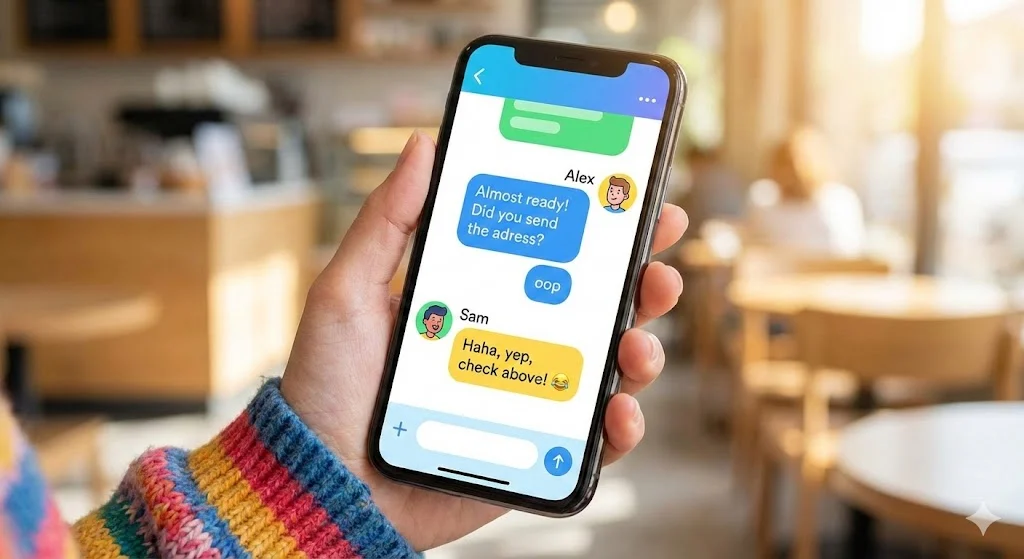
Have you ever typed something embarrassing in a chat and quickly followed it with “oop”? Or seen someone reply with “oop” after a typo, mistake, or awkward moment? If yes, you are not alone.
The internet loves short words that express feelings fast. One of those words is oop. It looks simple, but its meaning depends heavily on context. Many people search for oop meaning in text because they see it everywhere in messages, comments, memes, and social media replies.
Teenagers use it. Adults use it. Even professionals sometimes slip it into casual chats.
In this guide, you will learn exactly what oop means in text, how it started, how to use it correctly, when to avoid it, and how it changes meaning across platforms and cultures. By the end, you will never feel confused when someone sends you “oop” again.
What Does OOP Mean in Text?
At its core, oop is an informal expression used to react to a small mistake, surprise, or awkward moment.
It is not a traditional acronym. It is more of a reaction sound turned into text.
Common meanings of OOP in text
- Acknowledging a small mistake
- Reacting to something unexpected
- Expressing mild embarrassment
- Softening an awkward moment
- Showing playful surprise
Think of oop as the texting version of saying “oops” but shorter and more casual.
Simple examples
Example 1
Person A: I will meet you on Tuesday
Person B: Today is Tuesday
Person A: oop
Example 2
I just sent that message to the wrong group chat oop
Example 3
Oop I forgot my keys again
In all these cases, oop signals a small error without drama.
Is OOP the Same as Oops?
They are similar, but not identical.
Oops
- Slightly more formal
- Used in speech and writing
- Accepted in professional tone if casual
Oop
- Internet slang
- Casual and playful
- Mostly used in texting and online chat
Oop feels lighter and more humorous than oops. It often shows self awareness rather than apology.
The Origin and History of OOP
The use of oop as a reaction comes from spoken language. People have been saying “oop” or “oop sorry” for decades, especially when bumping into someone.
How it moved online
- Early chat rooms and instant messaging
- Tumblr and Twitter popularized it
- Meme culture amplified its use
- TikTok turned it into a viral reaction
One major boost came from internet personalities and meme creators who used oop to react to awkward or shady moments.
Cultural influence
In online culture, oop became a way to say:
“I noticed that”
“That just happened”
“I am embarrassed but laughing”
It is often used when something mildly dramatic happens but you do not want to escalate the situation.
OOP Meaning in Text Messaging
In private messages, oop is extremely common.
Why people use oop in texts
- It feels friendly
- It reduces tension
- It shows humor instead of seriousness
- It avoids awkward silence
Text message examples
Mistake related
- Oop wrong emoji
- Oop typo my bad
Surprise related
- Oop did not expect that
- Oop that plot twist
Awkward moment
- Oop I overshared
- Oop that was loud
Oop helps people recover smoothly without apologizing too much.
OOP Meaning on Social Media
On platforms like TikTok, Instagram, X, and Facebook, oop is often used as a reaction rather than a sentence.
Common social media uses
- Reacting to drama
- Commenting on awkward videos
- Responding to unexpected posts
- Playful shade without being rude
Example comments
- Oop that went left fast
- Oop not me seeing this at 3am
- Oop the silence says everything
Here, oop often implies humor mixed with observation.
OOP in Gaming and Online Communities
Gamers use oop a lot during live chats and streams.
Gaming usage
- When making a mistake
- When losing unexpectedly
- When triggering something accidentally
Examples
- Oop wrong button
- Oop fell off the map
- Oop friendly fire
In gaming, oop keeps things light and avoids frustration.
OOP in Casual vs Professional Communication
Casual communication
Oop is completely fine in:
- Chats with friends
- Family group messages
- Social media DMs
- Online communities
It adds personality and warmth.
Professional communication
Oop should be used carefully.
Usually inappropriate for
- Work emails
- Client communication
- Formal meetings
- Academic writing
Safer professional alternatives
Instead of oop, use:
- Sorry about that
- My mistake
- Correction noted
- Apologies for the error
Using oop at work may appear too informal or immature unless you have a very relaxed team culture.
Can OOP Ever Be Rude or Offensive?
Oop itself is not offensive. However, context matters.
When oop can feel rude
- Used to dismiss someone’s feelings
- Used after calling someone out publicly
- Used sarcastically
Example
Someone shares something serious
Replying only with “oop” may seem dismissive
When oop is safe
- Self directed mistakes
- Light humor
- Casual chats
Always consider tone and timing.
OOP Meaning in Dating Apps and Flirting
Dating apps love casual language, and oop fits right in.
How oop is used in dating chats
- Recovering from awkward messages
- Light teasing
- Breaking tension
Examples
- Oop that came out wrong
- Oop did I just flirt too hard
- Oop not me smiling at my phone
Tips for dating apps
- Use oop sparingly
- Pair it with emojis for clarity
- Avoid using it during serious conversations
Oop works best early on when chats are playful.
Different Meanings of OOP Based on Context
| Context | Meaning |
|---|---|
| Texting | Small mistake or embarrassment |
| Social media | Reaction to drama or surprise |
| Gaming | Accident or misclick |
| Dating apps | Awkward flirt recovery |
| Professional | Usually avoided |
OOP vs Similar Slang Terms
| Term | Meaning | Tone |
|---|---|---|
| OOP | Small mistake or surprise | Casual |
| Oops | Mistake acknowledgment | Neutral |
| LOL | Laughter | Casual |
| SMH | Disapproval or disbelief | Casual |
| Yikes | Awkward or concerning | Casual |
Oop is softer and more playful than most alternatives.
10 Slang Expressions Related to OOP
- Oop
Quick reaction to a mistake - Oop sorry
Adds politeness - Oop my bad
Casual apology - Big oop
Bigger mistake or moment - Lil oop
Minor slip - Oop moment
Awkward situation - Oop there it is
Playful realization - Oop wrong chat
Classic texting mistake - Oop accidental
Unintentional action - Oop okay
Accepting what happened
How to Respond When Someone Says OOP
Casual responses
- Haha it happens
- You are good
- All good
Funny responses
- Classic oop moment
- Iconic honestly
- We have all been there
Professional responses
- No worries
- Thanks for clarifying
- Noted
Privacy focused responses
- Emoji reaction
- Simple acknowledgment
Match your response to the situation.
Regional and Cultural Differences
Oop is mostly used in English speaking internet culture.
United States and UK
- Very common
- Mostly playful
Canada and Australia
- Similar usage
- Casual tone
Non native English speakers
- Sometimes confusing
- Often mistaken for a typo
Because oop is slang, it may not translate well globally.
FAQs About OOP Meaning in Text
Is oop a real word?
No. It is internet slang based on a reaction sound.
Can oop mean object oriented programming?
Yes, but only in technical contexts. In texting, it almost never means that.
Is oop the same as oops?
Similar, but oop is more casual and playful.
Is oop okay to use with strangers?
Yes, in casual online spaces.
Should I use oop at work?
Usually no, unless the environment is very relaxed.
Does oop show embarrassment?
Yes, often light and humorous embarrassment.
Conclusion
Understanding oop meaning in text helps you navigate modern conversations with confidence. Oop is a small word with big emotional value. It softens mistakes, adds humor, and keeps interactions relaxed. While it works perfectly in texts, social media, gaming, and dating apps, it should be avoided in professional settings. Context is everything. When used correctly, oop makes communication feel more human and less stressful. Now that you know what it means and how to use it, you can respond naturally without overthinking. Small words like oop shape how we connect online every day.