Let’s be honest being asked “What are your pronouns?” can feel awkward, especially if you want to keep the vibe light and humorous. We’ve all had that moment: meeting new people at a party, joining a group chat, or navigating social spaces, and suddenly someone asks about pronouns. Some people feel stressed or unsure how to respond, but this is a perfect opportunity to show personality, make people smile, and keep the interaction memorable.
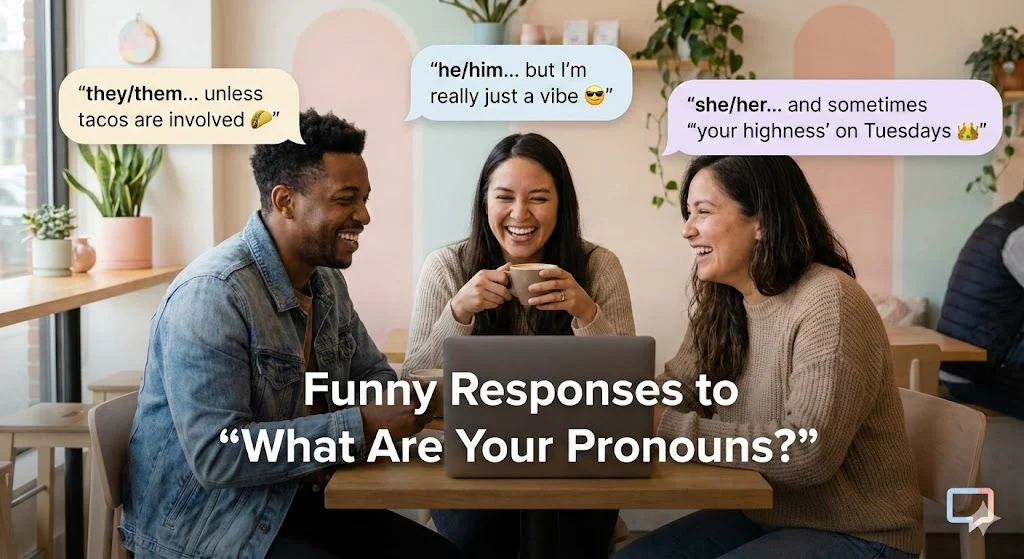
Instead of panicking or feeling pressured, you can use witty, funny, and socially intelligent responses. Humor works as a social lubricant, easing tension and creating connection. Lines like, “I use ‘they/them’… unless tacos are involved,” or “Call me whatever makes you happy” show confidence and approachability while still respecting identity. This article will give you 50+ funny pronoun responses, psychological insights into why humor works, and tips on handling the topic respectfully.
Quick-Witted Funny Responses
These short, clever comebacks work in almost any situation, from casual conversations to online chats:
- “I use ‘they/them’… but only on Tuesdays.”
- “Call me whatever makes you smile.”
- “Prefer pizza/pizza—it works in all situations.”
- “My pronouns are legend/legend.”
- “I answer to superhero/superhero.”
- “I’m fluent in sarcasm/sarcasm.”
- Depends… do we mean in this lifetime or past lives?
- “I answer to ‘hey you’ most efficiently.”
- “Preferably coffee/coffee in the morning.”
- “Use whatever makes this sentence sound funnier.”
- “My pronouns are ‘always right/always right.’”
- “Call me ‘master of snacks/snacks.’”
- “They/them… but only when feeling dramatic.”
- “I answer to ‘mystery/mystery.’”
- “Whatever pronouns go with your favorite emoji.”
Pro Tip: Quick-witted responses make a lasting impression, especially when you want to lighten the mood without overexplaining.
Clever and Playful Responses
These are slightly longer or more thought-provoking, keeping humor without feeling flippant:
- “Pronouns? I go by ‘icon/icon.’”
- “Call me chaos/chaos if you must.”
- “I use ‘obviously/obviously,’ because it should be obvious.”
- “They/them, but only if you promise to add emojis.”
- “Depends… which pronouns boost my confidence more?”
- “I accept flattery/flattery as a pronoun substitute.”
- Use whatever keeps the conversation short.
- “I’m flexible—like a yoga master.”
- “I go by ‘legendary’ in formal settings.”
- Just call me ‘awesome’—simpler that way.”
- “Call me the person who brings snacks/snacks.”
- “My pronouns are ‘coffee/coffee’ until lunch.”
- “I answer to ‘insert joke here/joke here.’”
- “They/them… but only in parallel universes.”
- “Use ‘professional overthinker/professional overthinker’ if you like.”
Responses for Specific People
Friends
- “Call me whatever makes your Instagram captions cooler.”
- “I use ‘legend/legend,’ trust me, it suits me.”
- “Depends—what’s trending on TikTok today?”
- “I answer to snacks/snacks more reliably.”
- “They/them—but only if we’re talking about tacos.”
- “Call me ‘bestie/bestie,’ works in any group chat.”
- “I respond best to ‘team player/team player.’”
- “Preferably ‘king of memes/queen of memes.’”
- “They/them when sober, unicorn/unicorn after coffee.”
- “Call me the snack distributor/snack distributor—mandatory for group hangouts.”
Coworkers
- “I use ‘efficient/efficient’—gets work done.”
- “Depends on which meeting we’re in.”
- “I accept email/email in professional settings.”
- “I go by coffee/coffee until 10 AM.”
- “Whatever pronouns make the report easier.”
- “Call me ‘deadline master/deadline master’.”
- “I answer to ‘calendar keeper/calendar keeper’.”
- “They/them—or KPI/KPI if you prefer metrics.”
- “My pronouns are ‘organized/organized.’”
- “Use ‘meeting survivor/meeting survivor’ during long calls.”
Strangers / Social Settings
- “I prefer ‘awesome/awesome’—works in every language.”
- “Call me ‘legendary’—it’s shorter and cooler.”
- “Pronouns? I use whatever sounds dramatic.”
- “I answer to ‘hey you’ in crowded places.”
- “Depends… emoji pronouns or real ones?”
- “They/them, or mystery/mystery if you like puzzles.”
- “Use ‘conversation starter/conversation starter’—it’s effective.”
- “Call me ‘friendly stranger/friendly stranger.’”
- “My pronouns are ‘adventurer/adventurer.’”
- “Whatever pronouns keep this party interesting.”
Lighthearted & Meme-Friendly Responses
- “I use ‘they/them’… unless snacks are involved.”
- “Call me ‘me/me,’ works universally.”
- “Pronouns? I prefer ‘insert witty comment here.’”
- “I answer to chaos/chaos in mornings before coffee.”
- “Use whatever makes your TikTok captions funnier.”
- “I go by ‘your favorite human.’”
- “Depends on the vibe of this group chat.”
- “Call me ‘hero/hero,’ because why not?”
- “They/them… but only in Narnia.”
- “Whatever pronouns keep the memes alive.”
- “I go by ‘professional meme curator/meme curator.’”
- “My pronouns are ‘overthinker/overthinker.’”
- “Call me ‘snack enthusiast/snack enthusiast.’”
- “Use ‘legend in my own mind/legend in my own mind.’”
What This Behavior Says About a Person
Humor in pronoun responses often signals:
- Confidence and comfort with identity: People who can joke show they are secure in themselves.
- Social intelligence: Humor demonstrates awareness of others’ reactions.
- Approachability and friendliness: Witty answers make people feel at ease.
- Boundary awareness: Using jokes while still respecting pronouns shows maturity.
People using funny responses are often using emotional intelligence to navigate potentially awkward social interactions, which can make them appear charming, relatable, and approachable.
How It Affects Relationships
- Build rapport and connection in social and professional spaces.
- Reduce tension during introductions.
- Encourage open, positive communication.
- Model socially intelligent ways to handle potentially sensitive topics.
- Show personality and humor without disrespecting identity.
These responses can also encourage others to feel comfortable sharing their pronouns or being themselves, fostering inclusive and friendly environments.
How to Handle It Calmly and Smartly
- Respect context: Humor should be appropriate to the situation.
- Keep it friendly: Avoid jokes that could offend.
- Combine honesty with humor: You can joke and still share real pronouns.
- Read the room: Not everyone reacts the same way to humor.
- Use humor to build connection: Humor is most effective when it helps, not hinders, communication.
- Maintain emotional intelligence: Pay attention to cues and adjust tone accordingly.
- Pause if needed: If unsure, a short moment to think prevents awkwardness.
- Offer context when necessary: In professional or sensitive settings, clarity is better than ambiguity.
Quotes on Humor and Pronouns
- “Laughter is universal, and respect is timeless.”
- “Humor can ease tension but never replace empathy.”
- “Playfulness shows confidence and social intelligence.”
- “Inclusivity and fun can coexist in one conversation.”
- “Witty responses can show personality while respecting others.
- “Humor creates connection when words alone might fail.”
- “Respect first, jokes second.”
- “Lightheartedness opens doors to deeper conversations.”
- “Confidence is showing up and laughing at yourself.”
- A good joke is both smart and kind.
- “Wit is a tool to build bridges, not walls.”
- “Funny responses can teach social awareness subtly.
FAQs
Q1: Can pronouns be answered humorously?
A: Yes, as long as the response is respectful and friendly. Humor can ease awkwardness without dismissing the importance of pronouns.
Q2: How do I respond if I don’t know what to say?
A: Safe responses include “they/them” or lighthearted options like “insert witty comment here.”
Q3: Can funny pronoun responses help in social settings?
A: Absolutely. They break tension, create rapport, and showcase personality while respecting identity.
Q4: Should I always give my real pronouns?
A: Yes, especially in professional or sensitive settings. Humor can be used alongside actual pronouns for clarity.
Q5: How do I make humor safe and inclusive?
A: Avoid targeting individuals or groups, and keep jokes self-referential or playful. Focus on lighthearted, positive humor.
Ending Thoughts
Answering “What are your pronouns?” doesn’t need to be stressful. Funny, witty, and lighthearted responses help you navigate social interactions with confidence, humor, and emotional intelligence. Humor eases tension, fosters connection, and lets your personality shine while still respecting identity. By balancing wit with respect, you can leave a memorable impression and build positive social interactions.